Feds agree to review endangered status of caribou
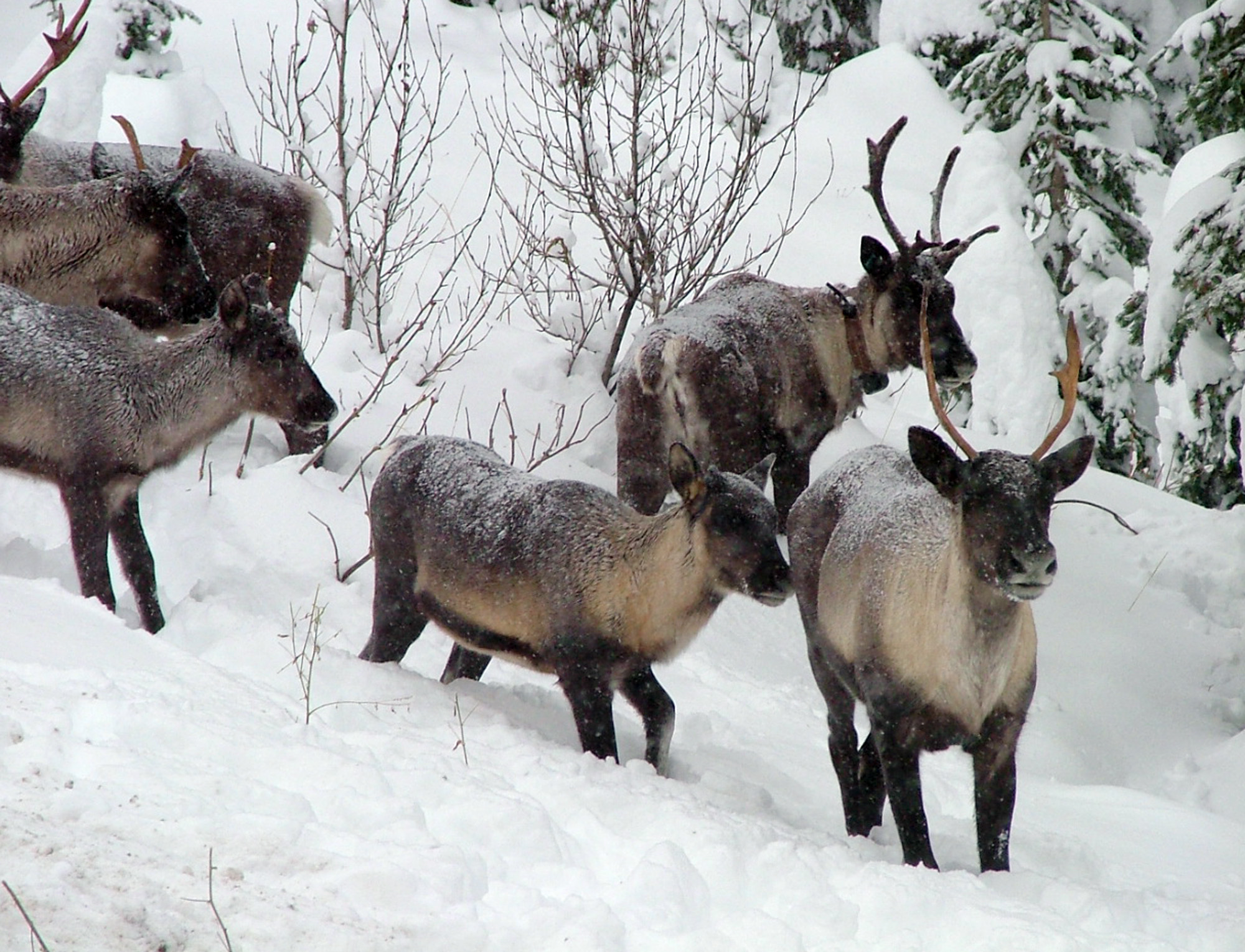
ENDANGERED SPECIES -- "Maybe you got a point there," the U.S. Fish and Wildlife Service seemed to say today as it annouced its response to a petition questioning whether the Southern Selkirk Mountains Population of Woodland Caribou deserves status as an endangered species.
The petition to remove the rarest mammal to venture into the USA from Endangered Species Act protection was filed in May, 2012, by the Pacific Legal Foundation (representing Bonner County, Idaho), and the Idaho State Snowmobile Association.
The southern Selkirk Mountains woodland caribou was protected under the ESA in 1983 as an endangered species stemming from the threats posed by poaching, habitat loss due to timber harvest and wildfire, motor vehicle collisions and genetic problems through inbreeding. It occupies high-mountain habitat in the Selkirk Mountains of northern Idaho and northeastern Washington and southern British Columbia.
Most of the controversy over caribou protections stems from the habitat issues that have precluded winter snowmobiling into their high habitat at their most vulnerable time of year.
The Fish and Wildlife Service recently announced a dramatic scaling back from its original recommendation for designating critical caribou habitat in the Selkirks.
Brian T. Kelly, the Service’s Idaho State Supervisor, said today that the separate petition from Idaho groups "questions whether the southern Selkirk Mountains population of woodland caribou warrants listing under ESA. Our initial review found that information in the petition was substantial enough to conduct an in-depth status review.”
More information is available on the Idaho website for the U.S. Fish and Wildlife Service.http://www.fws.gov/idaho/
Here's the viewpoint of the petitioners. (I must point out that this website uses a photo of the barren ground caribou that roams this Alaska tundra by the hundreds of thousands. This woodland caribou that range into Idaho and Washington are a different subspecies that has a much smaller population.)
Here is the viewpoint of the Center for Biological Diversity.