
Diversity short
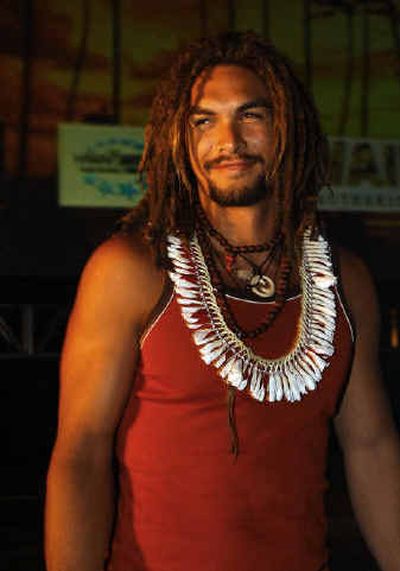
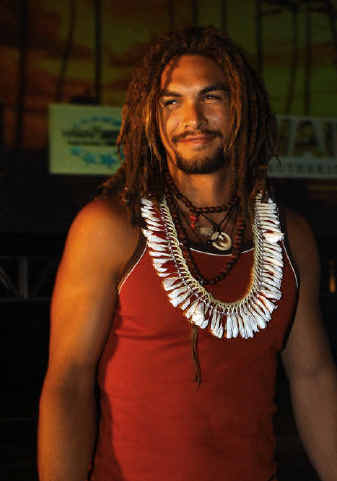
The Hawaii that Lori Kim sees on TV these days looks like a nice place, but she wouldn’t want to live there.
“I wouldn’t fit in,” says Kim, a 24-year-old office clerk. “There are no Asians.”
Kim, who is a mixture of Chinese and Hawaiian-Korean, has been watching Fox’s “North Shore,” one of three major network series being shot in Hawaii, and has been disappointed — though not shocked — by what she’s seen.
“It’s like, ‘Here we go again,’ ” she says. “The show itself is OK, but it’s all Caucasians. Where’s the diversity? If this is supposed to be Hawaii, where’s all the locals?”
Kim raises issues that haunt every TV and film production in Hawaii: How far is Hollywood willing to go in representing Hawaii’s racially diverse population to a mainland audience accustomed to monochrome casting?
The degrees to which different Hawaii-based shows have addressed that question has been inconsistent at best.
One of the earliest network shows to be shot in Hawaii, the phenomenally popular “Hawaii 5-0,” was progressive for its time in trying to represent the mix of races and cultures in Honolulu, with several Asian and Pacific islander actors making regular appearances.
The core cast of “Magnum, P.I.,” also set in Hawaii, was less diverse, but the show did include several local actors in guest appearances.
Many consider “Byrds of Paradise” to be among the best at portraying the local lifestyle — but its brief run may also serve as a cautionary tale to producers.
“Baywatch Hawaii” featured Jason Momoa, who was born in Hawaii, and local actress Stacy Kamano as part of its core cast.
Producers and casting directors say they’d love to cast more local talent, but the pool of qualified actors and extras just isn’t big enough to meet the demand.
“North Shore,” the first of the three new Hawaii shows to air (Mondays at 8 p.m. on KAYU-28 in Spokane), is an ensemble drama set at a fictitious luxury hotel on Oahu. The core cast of eight includes one actor with local ties: Momoa, who has paternal roots in Nanakuli, Hawaii, but was raised primarily in Iowa.
“Jason is cool,” Kim says. “But I don’t actually get a real local vibe from him. He seems kind of ‘L.A.’ — no disrespect or anything.”
Kim isn’t alone in her dismay about the way the new wave of Hawaii-based shows seems to be shaping up. Internet chat boards for “North Shore,” NBC’s “Hawaii” and ABC’s “Lost” have been buzzing with criticism about a perceived lack of diversity in the shows’ casting.
“Hawaii,” which premieres Aug. 30, is an hourlong ensemble cop drama set in Honolulu with at least three Asian-American and Pacific Islander actors in its core cast. “Lost,” a survival drama shot in various remote locations on Oahu but not actually set in Hawaii, includes two Asian Americans in its cast; it will air Wednesdays on ABC starting Sept. 22.
“North Shore” producers say they are striving to capture a mix that will truly reflect the Islands.
“Of all the shows done in Hawaii, this one really attempts to capture the beauty of Hawaii,” says Executive Producer Bert Salke. “There is a big element of wish fulfillment in the show, but we also want to ground it in the reality of what Hawaii is.”
To reach its target audience of 18- to 35-year-olds, the show has assembled a cast of attractive, young stars — headed by Brooke Burns and Kristoffer Polaha — to play up-and-coming professionals living and working in a tropical paradise.
The upscale hotel guests have an understandably mainland look, while the background actors and extras are pulled from a mix of local and mainland talent.
By all accounts, “Hawaii” is pushing to properly reflect the state’s diverse population in its casting decisions. The core cast includes veteran actor Cary-Hiroyuki Tagawa, Aya Sumika and Peter Navy Tuiasosopo.
Producers also intend to show a decidedly grittier side of Honolulu than has any show previously shot there.
Where “North Shore” operates primarily in the closed, rarefied environment of a luxury hotel, and “Lost” in isolated jungle and mainland flashbacks, “Hawaii” will bear the burden of trying to depict the range of urban Honolulu experience in as realistic a manner as possible.
“There’s a responsibility we have to be true and respectful to what Hawaii really is,” says Sumika, who was raised in Washington and has family on Maui. “For me, it’s an honor to be an Asian American representing the people of Hawaii.
“It’s our time to have a voice,” she says. “I hope that more Asian Americans will get the opportunity to work and get jobs. I need the support of my people around me.”
Adds Momoa, who plays bartender Frankie Seau on “North Shore”: “I encourage every brother and sister to just go out there and do it. Go to acting school. Get to know the casting directors. Go to L.A.
“The talent has to step it up,” he says. “These shows need Hawaiians and Asians, so the opportunity is there.”