
G-rated Tequila tour still packs some punch

TEQUILA, Mexico — A sticky, sweet scent wafted in the air, reminding us how the town of Tequila got its name.
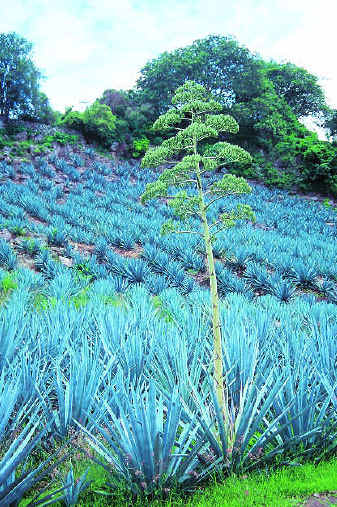
Home to more than 30 distilleries that produce the world-famous liquor, Tequila is surrounded by thousands of acres of blue agave — the indigenous plant used to produce the drink.
A visit to this colorful town can be an intoxicating treat, even if you decide not to down numerous shots of liquor.
Many people discover Tequila by embarking on the Tequila Express or the Tequila Bus. Both depart from Guadalajara, Mexico’s second-largest city, located about an hour away. The train and bus rides include tours of the agave fields and distilleries, along with food, mariachi music and copious amounts of tequila. (The train ride includes an open bar.)
With a baby along, however, we opted for the G-rated version of the Tequila tour. We arrived by car on a partly cloudy June morning armed with bottles of purified water to remain hydrated in the heat, as well as to flush out our systems in case of overdose during the tequila tasting portion of our trip.
As we drove off the main highway and into town, we were surrounded by blue-green hills covered by agave. Every 800 meters or so, we also were greeted by large billboards cut out in the shape of bottles, each one advertising Sauza, Cuervo or one of the other brand names of tequila from the area.
We parked at the zocalo, the center of town, where we ran into a woman advertising two- to three-hour tours for 50 pesos a person (roughly $5, during our visit). We got into a 1972 Chevy Suburban driven by Armando, a native of Tequila who spent a few years working in Southern California. Armando drove us to La Cofradia, one of the lesser-known distilleries but well-known among aficionados for producing the boutique tequila called Casa Noble.
Until this trip, I knew little about tequila. As far as I was concerned, it was a liquor you drank in shot glasses or the main ingredient in a margarita. As Armando quickly pointed out, I had been drinking the cheap tequila, not the superior Reposado or Anejo, which are distilled three times and aged in French white oak barrels.
Before it was used to create Mexico’s national drink, agave was used by indigenous Mexicans for thread, rope, soap, sugars and other products. Today, the blue agave — agave tequilana weber azul — can only be grown in the state of Jalisco as well as parts of Michoacan, Tamaulipas, Nayarit and Guanajuato, according to the museum at La Cofradia, founded in 1992 by the Hernandez family. Only in these parts can blue agave grow in mineral-rich soil and optimal conditions.
It takes eight to as long as 14 years to grow the blue agave for fermentation. Before it is cooked in stone or brick ovens for up to three days, the agave heart or pina can weigh anywhere from 80 to as much as 300 pounds, Armando told us.
Breathing inside La Cofradia’s distillery was enough to give us all a buzz. We inhaled the strong, sugary smell from the moment we stepped out of the Suburban. It quickly intensified as we walked among the 18,000-litre steel tanks full of bubbly, foaming liquid.
Since we were the only tourists that morning, Armando and the workers gave us an intimate look inside the distillery —from the oak barrels of aging tequila to the votive candles that flickered in front of their makeshift altar to the Lady of Guadalupe in the back of the factory. They even offered us small amounts of the fermenting tequila in test tubes straight from the vats.
Outside, we scanned La Cofradia’s seven hectares of agave fields before heading to the tasting room. Before we left his hometown, Armando wanted to make sure we knew the difference between the varieties of tequila available and why we shouldn’t be shocked to pay top dollar for his personal favorite, a swanky cobalt blue bottle of Casa Noble Reposado.
“Here’s to my new friends,” he said, as we toasted shot glasses of the full-bodied drink.
After sipping several varieties, we still didn’t buy the fancy $100 bottle of Anejo. But we did acquire a taste for the stuff, even if our budget dictated the purchase of cheaper alternatives. And the taste test made for a mellow afternoon.