
True believer
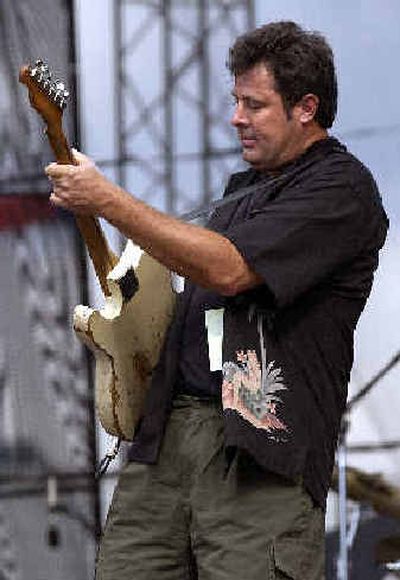
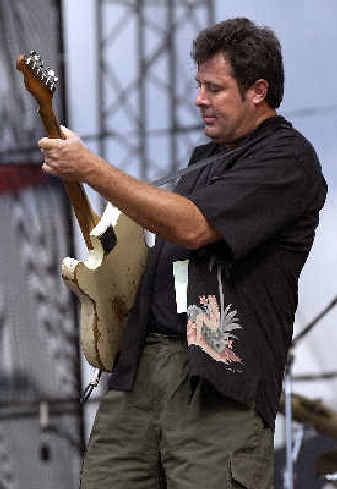
Vince Gill isn’t ready to relegate the Grand Ole Opry to the ash heap of history just yet.
At a time when most Music Row hipsters view the country music institution as a dusty relic of America’s hayseed past, Gill remains a true believer.
“I think I’m one of the younger Opry members who really does revere that place,” Gill says by phone from his Nashville home. “I want to keep it current and on everybody’s mind. I remember growing up and how I revered it and thought: ‘All the coolest country music people play the Opry on Saturday night.’ I’d like to see that continue.”
The affable Gill, who dominated country radio throughout much of the ‘90s and won a boatload of industry awards during those years, is doing his part to keep the Opry vital this summer by touring with the Grand Ole Opry American Road Show.
Also on the bill are Patty Loveless, who has clung tenaciously to country’s rough-hewn past at a time when most of Nashville’s mainstream female singers have been more than happy to ape Celine Dion; the Del McCoury Band, a respected bluegrass outfit that plays mostly by the strict rules laid down by founding father Bill Monroe; and Rebecca Lynn Howard, who has shown a wise-beyond-her-years respect for country music’s past and traditions.
“There’s a lot of intermingling, a lot of duets,” Gill says of the show. “We play some bluegrass together, and we play some gospel together. There are some jokes. It’s reminiscent of what a real Opry show is like.”
Gill is still highly regarded by country purists, but like Loveless, Clint Black, Randy Travis and the Opry itself, he’s no longer one of the hottest tickets in Nashville.
The singer’s mournful tenor, which made big ‘90s hits of tunes like “Pocket Full of Gold,” “I Still Believe in You” and “When I Call Your Name” (an awe-inspiring duet with Loveless), began to lose traction with country audiences as the decade neared its end.
A hard-country album titled “The Key,” released in 1998, won rave reviews from critics but proved no match for the country-pop onslaught being led that year by Tim McGraw, Kenny Chesney, Faith Hill and Shania Twain. The follow-up, 2000’s upbeat, pop-leaning “Let’s Make Sure We Kiss Goodbye,” released soon after Gill’s marriage to Christian-turned-pop singer Amy Grant, fared poorly with both fans and critics.
Gill, 47, candidly addressed his waning popularity on “Next Big Thing,” the album he released early last year to lukewarm fan response. The somber “Young Man’s Town” included backup vocals by Emmylou Harris and wounded-soul lines like: “You wake up one morning and it’s passed you by/You don’t know when and you don’t know why.”
“As I was writing that song, it became so much more about life than it did just a country music singer,” Gill says. “It’s lifelike in that somebody works his whole life, and then the next generation comes and pushes him aside. That’s how it all works for everybody, no matter what you do.
“You can be gracious about it, or you can be bitter about it. I always hated seeing people be bitter when the phone stopped ringing for them.”
The latest twist in Gill’s career involves his reuniting with old pal Rodney Crowell to make “The Notorious Cherry Bombs,” an album of old-school country and alt-country tunes written mostly by Gill and Crowell. It was released late last month to very good reviews.
The Cherry Bombs was the name given to Crowell’s backup band in the late ‘70s and early ‘80s, when a very young Gill was a member. Most of them got together again in 2002 to perform at an industry event honoring Crowell, and the warm response from the audience convinced them they should collaborate on an album.
Though “The Notorious Cherry Bombs” includes some of best country songwriting Nashville has heard in years (including Gill’s “Forever Someday” and Crowell’s “Making Memories of Us”), Gill has doubts about how well it will be received.
“I wish that we’d be given a chance,” he says. “I just wonder if everyone is going to take it seriously. Just because we’ve all had 30-year careers, we shouldn’t be cast aside as though we just did (the album) for fun. It’s a pretty valid record.”