
Don’t be shocked if Melvin’s canned
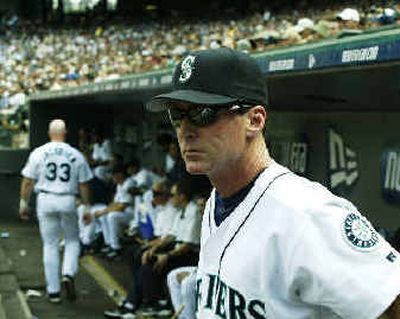

Given the state of the 2004 Seattle Mariners, Bob Melvin could be forgiven this morning if he looked beyond it and into the future of the franchise.
It won’t help his frame of mind — Melvin isn’t part of that future.
The last time the Mariners were this bad was 1992, a year the franchise gave first-time manager Bill Plummer little to work with and then fired him for what he did with it.
Toward the end of that season, Plummer stared into the Mariners future and couldn’t find himself in it.
In a town spoiled by the success of the last decade, Melvin is about to join Plummer in the it’s-not-your-fault-but-go-away club. Like Plummer, who watched a disastrous offseason deal gut his bullpen, Melvin will have spent 162 games trying to win while those around him picked up bigger checks and sympathized.
For Plummer, the end came in a December deal that sent Mike Jackson, Bill Swift and Dave Burba to the Giants for an over-the-hill Kevin Mitchell.
That season, the Mariners broke camp with co-closers — Gene Harris and Calvin Jones — who each had spring earned run averages over six.
It was a disaster of near epic proportions when Seattle finished 1992 with 98 losses a year after its first winning season.
Melvin will need luck to lose only 98 games.
Two years ago, Lou Piniella saw this coming — the end of a marvelous run with wonderful players who were getting older fast.
One year ago, Pat Gillick saw it coming. A man who clearly wants to be a general manager — he applied for the job with the Dodgers this spring — Gillick took a hard look at what he had and walked away from the Mariners job.
Not with the cleanest of hands. It was Gillick who saddled Melvin in his first season with Jeff Cirillo.
Asked to shore up a failing roster this season, new GM Bill Bavasi tried first to sign Miguel Tejada, then trade for Omar Vizquel — who failed a team physical.
When his third option was signing Rich Aurilia or holding on to Carlos Guillen, everyone with a vote — including Melvin — went for Aurilia.
Aurilia, Scott Spiezio, Quinton McCracken and pitcher Kevin Jarvis, obtained when Bavasi dumped Cirillo, failed miserably this season.
The bullpen that once dominated games late collapsed in on itself — Shigetoshi Hasegawa, Julio Mateo and J.J. Putz couldn’t handle the eighth inning, left-hander Mike Myers couldn’t handle more than a hitter an outing.
The closer became a moot point — the Mariners couldn’t get a game to him.
The rotation won’t have a single pitcher with as many as 200 innings pitched or 10 wins this year.
Offensively, Aurilia and Spiezio were non-factors. Worse, so were veterans John Olerud and Edgar Martinez and even Bret Boone.
Melvin tried to run more, but Ichiro Suzuki not only declined to run when given the green light option — he occasionally stayed put when given the straight steal sign.
All of which implies the team failed Melvin rather than the other way around. And there’s much evidence of that.
But Melvin never put his stamp on the Mariners, never showed his team, its fans or the media much of a personality at all.
Like most first-time managers, Melvin didn’t delegate well — he tried to take responsibility for all aspects of the team, never held his coaches accountable enough.
And though he might call a player in for a chat after a disastrous performance, it never seemed to have an impact.
Last week at Safeco Field, the Old Lion and the Young One were all too evident. Melvin made the right calls — at one point bunting what could have been the winning run into scoring position, only to watch his best hitters fail to bring it home.
Piniella bunted, too, and his players got the job done.
Was the difference strictly in the talent of the players?
Probably not.
The aspect of failing in the clutch and then facing the wrath of Sweet Lou is a factor for any player who has ever played for Piniella.
The wrath of Melvin? Well …
The comparison between Melvin and Piniella has always been an unfair one. Major league baseball is a bit like the PGA now. There are three or four managers everyone knows — and then a boatload of managers who occasionally rate a headline.
Know who manages Milwaukee? Arizona? Cleveland? Toronto?
You may know their names, do you know their games?
No manager loses 100 games in a season without about 90 games worth of “help” from his team and front office. Melvin had more than his share of that this season.
Next year, he’ll be paid by the Mariners — just not for managing them.
When the offseason campaign to rebuild a franchise begins, the Mariners will be trying to change their roster and their image. They must convince fans before a game is played that the future is theirs.
Which means Melvin isn’t in it.