
Campaign trail
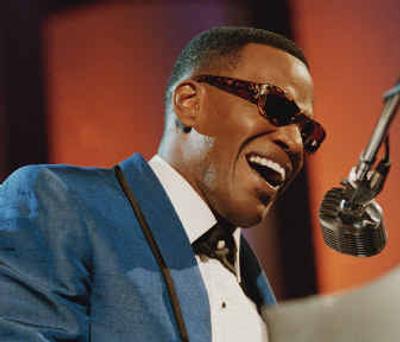
December in Hollywood means the approach of awards season. Ad campaigns are under way. Special screenings are set up. And the industry publicity machine is in overdrive for a series of upcoming films, from Martin Scorsese’s “The Aviator” to Clint Eastwood’s “Million Dollar Baby.” The armchair critics at the National Board of Review have already sung the praises of “Finding Neverland,” Jamie Foxx in “Ray” and Annette Bening in “Being Julia.” On Monday, the tougher New York Film Critics Circle will announce its honors. Two days later, the glitzy Golden Globe nominations will be released.
And, finally, on the morning of Jan. 25, the Oscar nominations will be broadcast to a bleary cable-TV audience.
Consider the following not a prediction, but a snapshot of what the race for top honors looks like right now, and of which big-buzz films you’re definitely going to want to see over the weeks ahead. (Many will be released in major cities before year’s end for Oscar consideration, but won’t reach the Spokane area until next year.)
Best film
The choice seems pretty clear, with Oscar voters always predisposed to uplifting stories like “Ray” and critics having sung the praises of the quirky “Sideways” since September.
But there also are the upcoming “Phantom of the Opera” for the mainstream folks and “Kinsey” for the highbrow types. Oscar voters may also respond to the “Schindler’s List”-style drama of the upcoming “Hotel Rwanda,” while critics may remember that, long before “Sideways” sidled on screen, they were raving just as much over “Eternal Sunshine of the Spotless Mind.”
In front: Although “Ray” seems like Oscar’s favorite, and “Sideways” the critics’ choice, “The Aviator” (which expands to theaters nationwide on Christmas Day) might just have enough broad-based appeal to win over both groups.
Dark horse: Yeah, “Spanglish” (opening Dec. 17) stars Adam Sandler – but director James L. Brooks’ track record (“Terms of Endearment,” “Broadcast News,” “As Good As It Gets”) suggests there’s more to the upcoming comedy than meets the smile.
Best actor
A slew of biographies drives the best-actor races this year. Among the actors who brought real people to the screen: Foxx as Ray Charles in “Ray,” Kevin Spacey as Bobby Darin in the upcoming “Beyond the Sea,” Liam Neeson as Alfred Kinsey in “Kinsey,” Leonardo DiCaprio as Howard Hughes in “The Aviator” and, of course, Jim Caviezel as Jesus in “The Passion of the Christ.”
All but Caviezel are strong possibilities for prizes, as are the actors who played other real, but less famous people this year, including Javier Bardem as a Spanish quadriplegic in the upcoming “The Sea Inside,” Sean Penn as a malcontent misfit in “The Assassination of Richard Nixon,” and Don Cheadle as a modern African hero in “Hotel Rwanda.”
And what about Kevin Bacon’s fictional (but no less real) pedophile in the upcoming “The Woodsman”? Or Paul Giamatti’s winning loser in “Sideways”?
The saddest fact? That despite all the diverse movies the talented Jude Law managed to do this year (“I Heart Huckabees,” “Sky Captain and the World of Tomorrow,” “Alfie,” “Closer,” “Lemony Snicket’s A Series of Unfortunate Events,” “The Aviator”), there’s still not one sure-thing nomination among them.
In front: Foxx (Oscars); Bacon (critics).
Dark horse: Johnny Depp may make a few lists, less for his Scottish accent in this year’s “Finding Neverland” than for his scene-stealing in last year’s “Pirates of the Caribbean.”
Best actress
It’s almost become a cliche that “there are no good parts for women,” but this year’s fairly thin collection of outstanding performances tends to prove it. Bening, for example, is a fine actress and a well-liked member of the Hollywood set – but does anyone really think that “Being Julia” was a great movie?
Still, she’s a contender this awards season, along with Imelda Staunton for “Vera Drake,” Nicole Kidman for “Birth,” Julia Roberts for “Closer” and Kate Winslet for either “Eternal Sunshine of the Spotless Mind” or “Finding Neverland.”
Still, it makes you wonder what the race would have been like if Gwyneth Paltrow’s “Proof” hadn’t been delayed until next year.
In front: Bening (Oscars); Staunton (critics).
Dark horse: It would be criminal if people didn’t remember how fearless Laura Dern was as the wronged wife in “We Don’t Live Here Anymore.”
Best supporting actor
Everyone expects to see him show up on the leading-actor lists, but don’t be surprised if Foxx gets a few supporting-actor nods, too, for his buttoned-down work as the quiet cabbie in “Collateral.”
Other possibilities include John Lithgow for a terrific job as the fire-and-brimstone father of “Kinsey” and Thomas Haden Church for his very funny work in “Sideways.” Sentimental voters also may want to honor James Garner for “The Notebook” or Morgan Freeman for “Million Dollar Baby.”
But will Lithgow siphon off votes from Peter Sarsgaard, also excellent in “Kinsey”? And can voters also find room for Willem Dafoe’s weepy German in the upcoming “The Life Aquatic With Steve Zissou,” a charmingly offbeat characterization (and one of the best parts of the picture)?
In front: Sarsgaard (Oscars); Church (critics).
Dark horse: Wouldn’t you want to give an award to David Carradine for “Kill Bill: Vol. 2” – just to hear his acceptance speech?
Best supporting actress
Supporting-performance nominations are often consolation prizes given to veterans who’ve put in their time. So a nod to Lauren Bacall for “Birth” is a real possibility this year, and there’s some buzz around Cloris Leachman’s work in “Spanglish.”
Other, more on-the-merit contenders include Regina King for her ferocious “other woman” part in “Ray,” Cate Blanchett for her Kate Hepburn impression in “The Aviator,” Laura Linney as the ever-patient wife of “Kinsey,” and Natalie Portman for her change-of-pace stripper in “Closer.”
In front: Portman may have the edge with Oscar voters, who also remember her from “Garden State”; Linney with critics who’d like to find some way to honor her for “P.S.,” too.
Dark horse: Susan Sarandon, whose performances in “Shall We Dance” and “Alfie” were so much better than the movies that surrounded them.
Best director
If a lack of strong female performances was one constant this year, and a slew of male biographies another, the third was, sadly, a dearth of well-directed films.
“Ray” may have boasted some great performances, but can anyone make a convincing case for Taylor Hackford as a great director? And as affecting as “Hotel Rwanda” is, the picture often seems to work despite Terry George’s efforts, instead of because of them.
Critics loved Wes Anderson’s “Rushmore” and “The Royal Tenenbaums,” but “The Life Aquatic With Steve Zissou,” a major Oscar hopeful that goes nationwide on Christmas Day, left a number unmoved. And although “The Passion of the Christ” is the sort of confident epic Hollywood often honors, Mel Gibson is turning into the kind of hard-right iconoclast it hates.
In better shape are directors who, even if this year’s efforts weren’t their best, still delivered – including Martin Scorsese (“The Aviator”), Clint Eastwood (“Million Dollar Baby”), Mike Nichols (“Closer”) and James L. Brooks (“Spanglish”). And critics are sure to want to remember Alexander Payne’s four-star “Sideways.”
In front: Scorsese (Oscars); Payne (critics).
Dark horse: Bill Condon did a lively, inventive job with “Kinsey,” and its message of tolerance for everyone (except for prudes and censors) is one that will resonate with many voters.