
Classic shortage
The good news for Christmas film fans is that some great holiday pictures have been coming our way this season. The bad news is they’ve been coming to our TV sets, and they’re the same ones that have been coming for decades: “It’s a Wonderful Life,” “Miracle on 34th Street,” “A Christmas Carol.”
The last holiday movie to reach classic status was Bob Clark’s “A Christmas Story” – released 21 years ago.
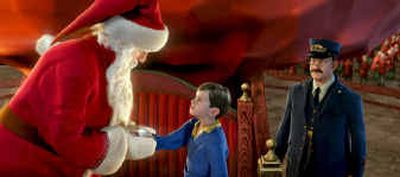
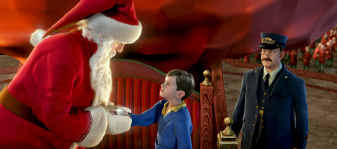
Last year’s gentle Will Farrell comedy “Elf” may eventually charm its way into the mix, and the current “The Polar Express” certainly expresses all the right messages.
But most of Hollywood’s recent Christmas movies have been lumps of something worse than coal – including this season’s dumb and dumber entries, “Surviving Christmas” and “Christmas with the Kranks.”
These cynical, slapstick confections mock holiday tradition, then tack on redemptive endings that are without a whit of conviction. If the filmmakers don’t believe in their material, how can they expect us to?
The answer is, we don’t.
“Surviving Christmas” with Ben Affleck, released in late October, barely survived Thanksgiving. It will end its run with less than $15 million in ticket sales.
“Christmas with the Kranks,” starring Tim Allen and Jamie Lee Curtis, opened Nov. 24 to some of the year’s most pained reviews. It did a less-than-stellar $31.2 million over the long Thanksgiving weekend and didn’t crack the $50 million mark until last weekend.
These movies could stand on each other’s shoulders and still not be able to see the classics – even if they used a boost from Ron Howard’s‘ labored “Dr. Seuss’s The Grinch Who Stole Christmas” and Billy Bob Thornton’s bawdy, drunk, filthy-mouthed “Bad Santa.”
So, what’s up? If Americans are still desperate for holiday movies – and people who bought tickets to “Surviving Christmas” and “Christmas With the Kranks” were nothing if not desperate – why can’t Hollywood make `em like them like they used to?
The answer, in a roasted chestnut-shell, is that the film business and American culture aren’t what they used to be.
With the exception of “A Christmas Story,” the movies we regard as evergreens were made before the breakup of the studio system and the beginning of the cultural revolution. Through the 1930s and ‘40s and into the ‘50s, Hollywood made one-size-fits-all products, movies conceived and created with the entire family in mind.
Take Henry Koster’s “The Bishop’s Wife” (1947), starring David Niven as a distressed bishop, Loretta Young as his neglected wife and Cary Grant as an angel who responds to his prayer for guidance.
The couple has a small child for kids to identify with, and the angel whips up some mighty entertaining miracles – like decorating the Christmas tree with the wave of his hands.
But what makes “The Bishop’s Wife” a classic is the romantic tension between the wife and the smitten angel, and the growing insecurity of the bishop. It’s mature stuff that doesn’t get in the way of the kids’ enjoyment – such as when the bishop gets his butt glued to a chair.
Frank Capra’s “It’s a Wonderful Life” (1946) is a dark movie with many bright spots and one of the greatest endings. And it, too, is laced with sexual tension.
The scene where James Stewart’s George Bailey throws away his dreams of travel for Donna Reed’s Mary Hatch after becoming intoxicated by the smell of her hair is one of the most powerful romantic moments in film – and way, way over kids’ heads.
Look how the culture has changed. “Family movies” are now those that appeal to adults and to pre-pubescent children. Teenagers are a separate category, as are young adults without kids.
Instead of making movies with overlapping content appealing to each age group, we have separate classes of movies organized by the ratings system. Each rating has its commercial advantages and limitations, and it’s the rare exception that has across-the-board appeal.
The closest that modern films come to having the double layers of content for family audiences is in animated features like “Shrek” and “Shark Tale,” where kids are mesmerized by the colors, characters and action and their parents are kept alert by the pop references.
The business of distributing films has changed, too. Though a good Christmas movie can still make it into holiday TV syndication, that’s not where the big money is. A movie has to have a video afterlife these days, and films that people are likely to buy or rent only during the holidays don’t have great prospects. Video chains aren’t going to stock them in large numbers year-round.
Finally, we are still living in the Age of Irony. Thus, we get the sourness of “Grinch,” “Bad Santa” and Richard Donner’s 1988 “Scrooged” – the Madison Avenue version of “A Christmas Carol” starring Bill Murray at his smarmiest.
Even the seemingly gentle “The Santa Clause” movies began with Tim Allen’s suburban dad accidentally killing the real Santa, And now there’s “Surviving Christmas” and “Christmas With the Kranks,” glib and soulless comedies made only because of their studios’ unwarranted faith in the drawing power of Affleck and Allen.
In case they need help understanding the message shared by every holiday classic, here it is: When telling stories about the spirit of Christmas, put your faith in the stories, not in the stars.