
Pakistan nabs key al Qaeda figure
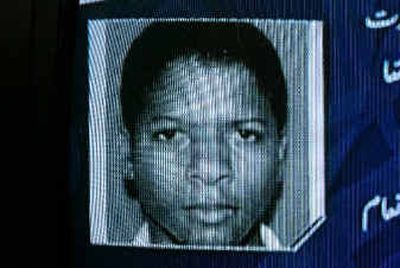
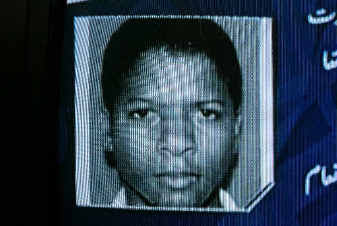
WASHINGTON – Pakistan has captured one of the United States’ 22 most wanted terrorists accused of being a key al Qaeda operative who may have been involved in plotting new attacks inside the United States, authorities said Thursday.
The capture of Ahmed Khalfan Ghailani, the target of an intensive dragnet by U.S. authorities who placed a $25 million bounty on his head, was announced by Pakistani Interior Minister Faisal Saleh Hayyat.
Approximately 30 years old, Ghailani was wanted by U.S. authorities on charges related to the 1998 bombings of U.S. embassies in Tanzania and Kenya that killed at least 224 people, including 12 Americans. Ghailani, a Tanzanian, may have been involved in other al Qaeda operations in Africa, Pakistan, Afghanistan and elsewhere since then and may have been organizing new attacks, several U.S. counterterrorism officials said.
One U.S. official who confirmed Ghailani’s capture said Thursday that the CIA and Justice and State departments still were sorting out the details of the raid, which occurred several days ago in Gujarat, a rough-and-tumble city about 100 miles southeast of the capital, Islamabad.
“It’s very good news,” said the U.S. official, who said he could speak only on the condition of anonymity. “This is a significant event in the war on terrorism. He’s a very bad guy.”
According to Hayyat and other Pakistani authorities, Ghailani was among a dozen militants arrested as long ago as Sunday after engaging security forces in a protracted shootout during a raid of a suspected hideout. A second U.S. official confirmed that American and Pakistani counterterrorism authorities have been working closely, sharing information and intelligence. But the official added that “to say U.S. troops took part in this would be wrong.”
The suspects, including several Africans, appear to have been trying to evacuate their families from Pakistan in the face of an escalating crackdown by President Pervez Musharraf against Islamic militants affiliated with al Qaeda, Pakistani officials said.
Since his capture, Ghailani has given Pakistani authorities “some very valuable and useful leads,” Hayyat said, adding that it would be premature to speculate whether the Tanzanian was planning attacks in the U.S. or overseas or even working with al Qaeda.
Another U.S. counterterrorism official said Ghailani’s capture would have been even more significant if not publicized so quickly.
“He’s been on the run since 1998 so you have five years of critical intelligence that can be mined: where he has been, who he has been with, how his operations worked,” said the counterterrorism official.
“Now, anything that he was involved in is being shredded, burned and, thrown in a river. Those things are all going away as we speak,” the official said. “We have to assume anyone affiliated with this guy is on the run … when usually, we can get great stuff as long as we can keep it quiet.”
Several U.S. officials said it was unclear why Pakistan publicized the arrest, and a spokeswoman at the Pakistani embassy in Washington said she had no information on such details.
But the Bush administration has rejected as false a recent article in New Republic magazine that said the Bush administration has been increasing pressure on Pakistan to kill or capture Osama bin Laden and other al Qaeda fugitives before the November presidential election.
The New Republic reported that a White House aide told Pakistani intelligence chief Ehsan ul-Haq that the best days to announce the killing or capture of any target would be July 26, 27 or 28, coinciding with the first three days of the Democratic National Convention. The magazine cited an unidentified subordinate of ul-Haq as a source.
“There is no truth to that statement,” National Security Council spokesman Sean McCormack said Thursday. In the article, McCormack said the U.S. policy of capturing such fugitives whenever possible was unchanged by the election.
Ghailani was being held at an undisclosed location in Pakistan, and U.S. and Pakistani authorities were still in their initial stages of whether – and how quickly – to take him into U.S. custody.
“It depends on what the Pakistanis want to do, and what the United States wants to do,” said one senior Justice Department official, who did not want to comment on whether Attorney General John Ashcroft would push for extradition so Ghailani could stand trial in the embassy bombing case. Ghailani could face the death penalty if convicted of charges that include murder of U.S. nationals outside the United States.
Ghailani most likely will be kept out of the U.S. criminal justice system for some time, and be interrogated as to what he knows about ongoing al Qaeda operations.