
Euro habits need to change
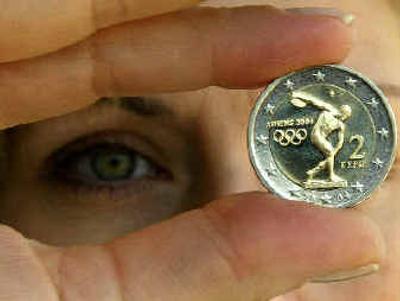
BERLIN – Give us your small change – your one, your two, your five-cent coins.
Germany’s central bank complained Tuesday that Europeans are refusing to pay with the little copper-colored coins and letting them lie unused at home, leading to shortages in several of the 12 countries that use the euro.
The Bundesbank said it had asked German mints to produce more of the small coins. It appealed to Germans to shop with the coins and “pay in exact change wherever possible.”
Many people regard the coins as a nuisance and simply keep them after receiving them as change, taking them out of circulation.
But Germans have a traditional attachment to small change.
“If I have the coins, I use them,” said Christa Pichota, 67, shopping at the Kaufhof department store on downtown Berlin’s Alexanderplatz. But “young people don’t bother with the small coins – for them it’s not money.”
Manuela Schadt, a cashier at the Schlecker drugstore, said she goes through rolls of small change every day because customers – particularly the younger ones – rarely have the smallest coins.
“I throw them in a corner of the room when I get home,” said 17-year-old Chris Jurgens, arguing that there was nothing worth buying with the small coins. “I never take them along.”
But the problem has only now come to a head with the euro after 2 1/2 years’ worth of hoarding.
The Bundesbank said many euro-zone countries have a similar problem, especially the larger nations. The European Central Bank said it had no information, saying coin supplies are overseen by individual countries.
The euro is used by Austria, Belgium, Finland, France, Germany, Greece, Ireland, Italy, Luxembourg, the Netherlands, Portugal and Spain.