
Healthy exchange

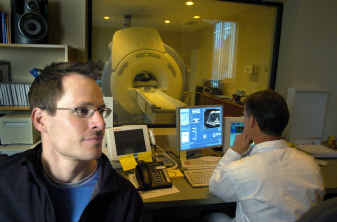
KELOWNA, British Columbia – On a busy street in the biggest city in the Okanagan Valley, a new private clinic operates where Canadians can pay their own money to get a magnetic resonance imaging test. Depending on one’s viewpoint, the clinic is either a sign of hope or a step toward a dreaded “Americanization” of Canada’s health-care system.
In both Canada and the United States, people are debating the best fixes for health care. And in both nations, the other nation’s system is held up as a bugaboo, a system no one wants. At the same time, both countries flirt with reforms that would bring them closer to their neighbor’s way of providing health care.
With thousands of bargain-hunting Americans buying their prescription drugs from Canadian Internet pharmacies, U.S. interest in Canada’s health-care system and its ability to control prices has never been higher. Neither presidential candidate proposes a single-payer system like Canada’s, but the goal of getting more Americans covered by health insurance – with tax credits, if need be – is embraced by both President Bush and Sen. John Kerry.
The United States boasts more doctors per person and spends more on health care than Canada does, but Americans are not getting more for their money. According to the CIA World Factbook, Americans have a lower life expectancy, higher death rates for heart disease and cancer, a lower measles immunization rate and a higher infant mortality rate than Canadians. A Harvard Medical School study last year estimated that Americans pay three times more per capita than Canadians do – just for health-care bureaucracy and paperwork.
But waiting 18 months for a new hip?
“C’mon. You’re kidding,” most Americans would say if told by a doctor they’d have to wait more than a year for a procedure. Eighteen months is the current expected wait for hip-replacement surgery at Kelowna General Hospital. Meanwhile, in Spokane, a patient in need of a hip might wait two to six weeks.
Canadian Prime Minister Paul Martin recently announced a $9 billion plan to reduce wait times, hire new doctors and establish a national home-care program. He pledged to do it without a tax increase or added health-care premiums. (British Columbia and Alberta currently charge annual premiums to help pay for health care; many employers pay their workers’ premiums.) Critics predicted pouring money on the problem won’t work.
“I don’t think anybody’s satisfied with their health-care system,” said Michael Decter, chairman of the Health Council of Canada, an expert task force charged by the Canadian government with monitoring reform. “In the U.S., the main issue is cost. In Canada, the main issue would be wait times.
“The U.S. has newer buildings, a newer capital plant and somewhat larger facilities, but it’s not clear that gets you better outcomes in care,” Decter said. “Canadians have a more modest system, but it has everybody covered. One’s not better than the other; they are just different.”
But Canadians may be more satisfied with their system. Gallup polled 1,003 Canadians and 1,004 Americans this year and found that 61 percent of Canadians were either “very” or “somewhat” satisfied with the availability of affordable health care in their country. Of Americans polled, 27 percent were either “very” or “somewhat” satisfied. On the quality of health care, 55 percent of Canadians reported being satisfied, compared to 48 percent of Americans.
Christina Rosario, an American story
Christina Rosario, of Spokane, and Chris Collins, of Kelowna, almost fell through the cracks of their countries’ health-care systems. Their stories illustrate the respective shortcomings of health care in the United States and Canada.
Rosario, 48, is one of 44 million people in the United States with no health insurance. Earlier this year, she learned she had a life-threatening brain aneurysm.
Her husband has health insurance through his job at Nordstrom. Their children are covered by a government program. But the family decided not to buy health insurance for Christina, director of a nonprofit outreach ministry. She gets her basic care through Spokane’s Christ Clinic, a charity.
To get treatment for the brain aneurysm, she had to find her way through the American patchwork of government and charity programs that form a safety net for the uninsured. She first had to apply for Medicaid, the state-federal medical program for the poor. When she was rejected because her family income was too high, Spokane’s Project Access program accepted her and made sure she found a specialist who would treat her. An endovascular procedure to block blood flow to the aneurysm was successful.
Not all cities have Project Access, a charity organized by doctors, and not all patients are as determined to get help as Rosario. In Canada, she would have received care, like everyone else, without making the rounds of charity programs.
Stories like Rosario’s appall many Canadians, who are proud their system covers everyone. Canadians just can’t get their minds around the vast number of uninsured Americans, said Alison Paine, spokeswoman for Interior Health, the regional agency that oversees health care in the Kelowna area.
“Forty-four million (without insurance) is more than our entire population,” Paine said, awe apparent in her voice, while giving a visitor a hospital tour.
Canadians, in general, believe that health care is a universal right.
That consensus evolved through political struggle and several leaps of faith, writes political scientist Antonia Maioni in “Parting at the Crossroads.” The 1998 book analyzes why Canada and the United States developed different health-care systems despite many historical similarities.
In Canada, Maioni writes, a social-democratic third party and the labor movement championed the cause of universal health care and succeeded in establishing universal hospital coverage in Saskatchewan in the 1940s. That province, which also later adopted universal medical coverage, became a model for the rest of Canada.
Canadian doctors organized against government involvement in health care, but they weren’t able to wield as much influence as doctors did in the United States. Canada’s federal government passed key laws in 1957 and 1966 that secured universal hospital and medical coverage.
Like in Canada, the labor movement in the United States supported universal health care in the early part of the 20th century. But as other reforms such as Social Security passed after the Great Depression, the American Medical Association was able to keep government-financed universal health insurance off the table.
The American labor movement changed its strategy and fought to make health care part of collective-bargaining agreements, thus cementing health insurance as a benefit of employment.
In the 1960s, labor supported government programs to cover the elderly, the disabled and the poor. Medicare and Medicaid passed Congress, despite being labeled the first step to “socialized medicine” by the AMA. In the early 1990s, doctors, small-business owners and insurance companies fought and defeated President Clinton’s health-care plan, which sought to provide universal coverage through government control of private insurers.
Today, the United States has a system that’s often described as a “patchwork” of public programs, charity care and private insurance. Canada has 10 provincial systems united by common principles of universality, comprehensive benefits and public administration.
Chris Collins, a Canadian story
Rosario’s story illustrates what happens when an uninsured American faces a major health crisis. Chris Collins’ story is about rationing of care in Canada.
Collins, a 32-year-old snowboarder, couldn’t convince his doctor that he needed an MRI scan of his wobbly knee. Even if he had obtained his doctor’s permission, he then would have had to wait “in queue” many months for the test.
He lucked out. A gray area in provincial law allowed him to pay $875 for an MRI out of his own pocket and have the imaging done immediately at Image One MRI, a rare private center in Kelowna. This unusual private MRI clinic represents a trend.
Laws prevent Canadians from paying for treatments and tests provided by the government’s health system, but a parallel private system is springing up through loopholes in the laws. Some groups want to see more free-market competition.
“We need to cement a patient’s right to pay for their care with their own resources,” said Nadeem Esmail, senior health policy analyst at the Fraser Institute, a Canadian think tank. Esmail helped write a report that was released last month by the institute. It concludes that Canada spends more on health care than any other industrialized country providing universal access (the United States wasn’t included because it doesn’t cover everyone). Yet Canada ranks low in access to care.
“Allowing patients to care for themselves is sold in Canada as the destruction of the public health-care system. The evidence refutes that,” Esmail said. “We’re the only developed country that won’t allow individuals to use their own resources to care for themselves.”
A torn ligament and damaged cartilage showed up in Collins’ MRI. He plans to read up on different surgical procedures before choosing a surgeon and proceeding with care in Canada. In the United States, he would have had no trouble getting his knee scanned. Because he has a good job as a teacher, he would have had health insurance that covered much of the cost.
Kris Stewart is the registered nurse who wrote a business plan, wooed investors, recruited a radiologist, bought an MRI machine and, nine months ago, opened Image One MRI in Kelowna. The clinic has seen about 800 patients at about $800 a scan.
Stewart said she got the idea for the business after she jumped the official queue herself for an MRI of an old sports injury. She got her MRI done at a similar private clinic in Vancouver, British Columbia, two years ago.
“I wasn’t known in the industry. I was a girl. And I was a nurse,” she said, sitting in her small office. “You want to talk about barriers? I”m a poster child for barriers.”
So when critics called her business a step toward “two-tier medicine” – political shorthand for “one health-care system for the rich and another for the poor” – it didn’t faze her much.
Dr. Michael Golbey, a Kelowna family doctor, has sent some patients to the private MRI clinic without qualms. He said that allowing more affluent Canadians to pay for their own care would ease pressure on the resource-strapped system.
“But that’s political dynamite,” he said. “Opponents say, ‘It’s not the Canadian way.’ ”
He doesn’t envy his American counterparts’ struggles with rising medical malpractice insurance rates or their fights with insurers who don’t want to pay for certain tests. (Malpractice settlements tend to be lower in Canada; doctors’ malpractice insurance premiums are built into their government fee schedules.) But he’s tired of hearing about an estimated 100,000 British Columbia residents who are unable to find a family doctor because of a doctor shortage. And he’s tired of waiting 12 weeks for a patient to get an “urgent” CT scan.
He and other Canadians don’t want the American health-care system.
“We want something somewhere in between the two,” he said.
Theodore Marmor, a professor of political science, public policy and management at Yale University, has written books and articles about health-care reform in Canada and the United States.
Interviewed by phone, Marmor was asked whether he would rather be a patient in the United States or Canada. He said:
“If I were a world champion tennis player and I needed my shoulder operated on by the most specialized shoulder surgeon, I’d rather be in America. If I were any random pregnant woman or any random person with a chronic disease, I’d rather be in Canada. If I were a researcher on the frontier of genetic research, I’d rather be in America. But if I were any random citizen? Are you kidding? There isn’t even an argument: Canada.”