
Silvery Slocan trip reveals remote areas, nature, past
Venture north into Canada and discover a remote area of southern British Columbia treasured for its pristine beauty and lack of commercial development.
Recently designated a super side trip of the 280-mile International Selkirk Loop, this smaller loop runs from Ainsworth Hot Springs north to Kaslo, west to New Denver, south through Slocan and east to Nelson. Known as the North Kootenay Lake-Silvery Slocan Super Side Trip, the 110-mile route offers world-class outdoor recreational opportunities and a rich chapter of Canadian history along with the famous Kokanee Glacier as its centerpiece. The laid-back villages and unspoiled splendor promise pleasurable memories to those seeking off-the-beaten-track recreation.
The big International Selkirk Loop encircles the Selkirk Mountain Range on both sides of the border and travels through Idaho, Washington and British Columbia.
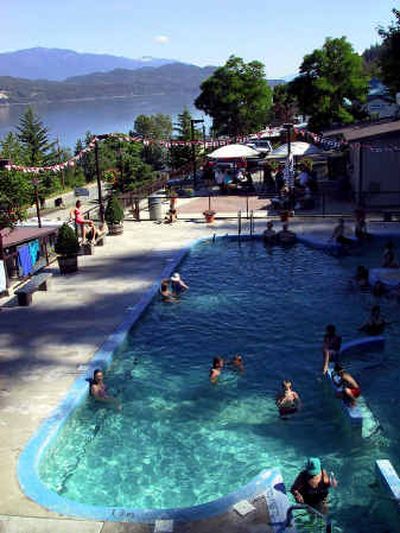
Our starting point is Ainsworth Hot Springs Resort, open year-round with a large hot pool, an icy dipping pool and caves complete with waist-high hot water and dripping stalagmites. After soaking your road-weary bones, enjoy a fine dining experience in the restaurant overlooking Kootenay Lake. Just three miles further brings you to Cody Caves and a guided underground tour.
Our next stop is Kaslo, also on the shores of Kootenay Lake and voted one of the prettiest small towns in Canada. Home to the annual Kaslo Jazz Festival in August, the village offers charming Victorian inns plus fine galleries and eateries. A must-see is the SS Moyie, a dry-docked sternwheeler that once plied the waters of 90-mile-long Kootenay Lake transporting ore to U.S. smelters. Nowadays, other boats can be chartered for those intent on the record-holding Gerrard rainbow trout in season.
From Kaslo head west on Highway 31A and follow the historic trail of two prospectors who hacked their way through this isolated stretch of forest in search of pay dirt. At Retallack, you’ll notice some derelict buildings. It’s hard to believe hundreds of miners once lived and worked there. The site was the headquarters of the Whitewater Mining Co.
Today, tucked in the woods on the other side of the highway, a high-end snow-cat ski operation runs out of a timber-frame chalet during snow season. But from June until September, the resort offers passersby fine dining by a German master chef. Before enjoying dinner, take the 15-minute walk through an old growth cedar forest.
This secluded stretch is now known as the Valley of the Ghosts for the many mining settlements that once thrived here. Watch out for moose, elk, deer and black bear. The illusive grizzly can be found at higher elevations in the Goat Range to the north. Mount Brennan, the highest peak at 9,815 feet, offers views of both Kootenay and Slocan lakes. Throughout the area, forests of pine and Douglas fir are interspersed alder, birch, aspen and tamarack, which offer a spectrum of color during autumn.
In 1891, those two prospectors — John Seaton of Knoxville, Tenn., and Eli Carpenter of Paris, France — staked the now famous Payne Mine on the face of Mount Idaho. The ore proved rich in silver — up to 140 ounces per ton — and its discovery launched a rush and put the Silvery Slocan on the map.
Neither of those two early prospectors profited much from their venture, but today two creeks bear their names. Seaton and Carpenter creeks join Kane Creek at Three Forks at the turn-off to the historic town site of Sandon.
In the 1890s, Sandon was the largest center of mining activity in the region and was serviced by two narrow-gauge railways. Now the old rail beds provide excellent trails for hiking, horse-back riding and mountain biking. From Three Forks to Rosebery, the eight-mile Galena Trail is complete with a gondola tram over Carpenter Creek.
In its heyday, Sandon boasted 23 hotels and saloons, restaurants, general stores and an opera house. Today, some of those buildings have been restored and an award-winning museum invites you into this bygone era. The hydro-generating plant is also open to visitors.
You can also venture along the eight-mile single-lane dirt road up to an alpine parking lot and enjoy a 45 ridge walk to Idaho Peak. This short hike offers abundant wildflowers and a postcard view of Slocan Lake and the peaks of the Valhalla Range.
On the shores of Slocan Lake, you’ll find the Village of New Denver straddling Carpenter Creek. Early civic leaders expected the settlement to become larger than Denver, Colo.
Today, the single main street offers all the usual items essential for year-round rural living as well as galleries and gift shops, pizza and cappuccino, health food and hemp clothing. Recreational gear and clothing are also available in season — plus maps and access information to the three nearby parks: Valhalla Wilderness Park and Kokanee Glacier and Goat Range Provincial Parks.
From June until September, the New Denver Friday market offers visitors the chance to purchase garden-fresh produce and local crafts and other treasures. New Denver also hosts the Silvery Slocan Museum, housed in a restored heritage building.
On the south side of the creek is a neighborhood called The Orchard. It consists primarily of renovated 14-by-20-foot huts that accommodated the 4,000 Japanese-Canadians (Nikkei) interned here during World War II. Only 30 Nikkei remain in the community, and the Nikkei Memorial Internment Center tells their story.
Also in The Orchard you will find the Kohan Reflection Garden, a volunteer-maintained site. This public lakeside garden is an eclectic mix of indigenous and Japanese plants and the centerpiece of the annual July garden tour. Adjacent to the garden is the municipal campground and Centennial Park.
Just 2.5 miles apart, the Villages of New Denver and Silverton were originally settled by miners busy extracting the ore from the face of Idaho Mountain, but today the area thrives in part on the spirit and initiative of a creative artistic community.
Silverton, the smallest municipality in the province with only 231 residents, is home to seven galleries. The Silverton Gallery hosts fine art exhibitions and entertainment year-round. A mining museum shares the site. Nearby, the historic Fingland Cabin and adjoining blacksmith shop give a glimpse of a miner’s lifestyle.
Today, the two villages offer accommodations in a historic hotel, unique geodesic domes, new log cabins (both at lakeshore and nestled in the woods) and a tastefully restored Tudor-style B&B. Plus, there are municipal campgrounds on the beach. Nearby are tennis courts, a golf course, playgrounds and boat launch. It’s a safe and comfortable spot to bring the kids and bikes, enjoy the swimming and fishing and kick back under the big shady cedars. From Silverton you can access many hiking trails into Kokanee Glacier Park.
You can launch a boat from the public marina at either village, and in summer you’ll find the many little beaches are alive with people enjoying the 19-mile-long Slocan Lake in canoes, kayaks and sail boats. Rock paintings, or pictographs, and the hulk of a sunken barge, enjoyed by scuba divers, are on the opposite shore — both remnants of a former era. A water taxi provides access to Valhalla Wilderness Park. White sand, rushing waterfalls and virgin forest await you there.
As you wend your way southward out of Silverton, Highway 6 climbs up above the lake. Stop at the lookout and take a final look at the breathtaking expanse of the shimmering lake and the snow-capped peaks of the Valhalla Range before you descend into the Slocan River Valley.
The Village of Slocan offers a variety of accommodations and campgrounds along with Logger Sport’s Day on July 1 and a Snow Sculpture competition in January. The award-winning Canadian Snow Sculpture Team hosts this fun winter event. Hiking trails into Valhalla Wilderness Park begin here.
From Slocan City to Crescent Valley, the 4,500 residents enjoy lively community farms and gardens and small galleries nestled in the valley’s hills. The meandering Slocan River flows through pastoral countryside near the Valley-View Golf Course. Alongside the river, portions of an abandoned rail bed now provide a recreational corridor for walking, biking and cross country skiing. Backcountry skiing opportunities are also available from here.
Further along Highway 6 at the Passmore turnoff is the site of one of early valley sawmills. Since then logging and milling have been economic mainstays and you share the road with logging and double-axle chip trucks on a regular basis.
At the junction of Highways 6 and 3 you re-enter the hubbub of traffic and bright lights. Head west to Nelson and its charming Victorian architecture and bohemian artistic culture and take the ferry route back to the U.S. border via Balfour. Or head south through Salmo.