
Premera argues for conversion
TUMWATER, Wash. _ With protesters picketing outside and attorneys skirmishing inside, Washington’s largest health insurer on Tuesday wrapped up its case for converting from a nonprofit to a for-profit company owned by shareholders.
It’s a $35 million gamble by Premera Blue Cross. That’s what the company figures it will have spent on the proposal – more than half of it on state-ordered consultants – by the time Washington Insurance Commissioner Mike Kreidler makes his decision.
Kreidler has spent the last two weeks as a jury of one, listening to testimony from a parade of Premera executives, doctors, and consultants, some of them paid $500 an hour. His decision is due by July 19.
Premera officials say the change would have far-reaching benefits. They hope to raise $150 million in stock sales, which would bolster the company’s cash reserves. The money would also allow the insurer to add more members and add more computerized technology.
“The whole purpose of conversion is to strengthen our balance sheet immediately,” said Premera CEO Gubby Barlow.
Premera insures about 1.4 million people in Washington and Alaska. About 300,000 of those are in Eastern Washington. The company, headquartered in the Seattle suburb of Mountlake Terrace, has operated in Washington since 1933.
As part of the deal, an initial round of Premera stock – $500 million to $700 million worth, according to some estimates – would fund two new philanthropic health foundations in Washington and Alaska.
The goals, as one Premera attorney argued Tuesday, “are laudable, by anyone’s standards.”
Doctors, hospitals and other critics, however, worry that answering to shareholders would put the company under the gun to raise premiums, squeeze doctor payments, or pull out of unprofitable areas. They worry that Premera, like several other converted Blue Cross/Blue Shield plans, would be quickly taken over by a large, out-of-state insurance conglomerate.
“You must look beyond Premera and to the citizens of Washington, who are wondering if, at the end of the day, they’ll have affordable health insurance,” Melanie DeLeon, a lawyer with the attorney general’s office, told Kreidler. The tens of millions of dollars spent on Premera’s proposal, she said, would have been a big help to the company’s cash reserves.
Still, she said, Premera is a robust, vital company. And company officials like Barlow, when pressed, haven’t been able to name any specific things they’d do with the new money that they can’t do already, she said.
So what’s the company’s true motivation? DeLeon’s theory: that Premera’s top officials want stock options.
“Premera’s executives and their board stand to make an enormous amount of money after conversion,” she said.
Other critics of the conversion share that view.
“This is no mere financial transaction under review,” said Jeffrey Coopersmith, attorney for the state medical association. “…This is about whether we would risk the health needs of the many for the financial benefit of the few. The very few.”
Premera’s lawyers and company officials dismissed much of the criticism as “speculation and anecdotes.” They cited consultants who said it would be extremely difficult for Premera to unduly raise premiums or tighten physician payments. They said market pressures – and state regulators like Kreidler – wouldn’t tolerate such moves.
Premera is hardly the first Blue Cross/Blue Shield company trying to become a for-profit. Since the mid-1990s, 14 “Blues” have converted. Three others – in Maryland, Kansas and North Carolina – tried unsuccessfully to convert.
But the company suffered a setback on Monday when a key Kreidler deputy, Jim Odiorne, recommended that the commissioner reject Premera’s request. One of his main reasons: Premera’s “lack of a definition as to what they want to do with this extra money.”
Barlow, the Premera CEO, bristled at that. The company had been extremely clear, he said. It wants to bolster the cash reserves to protect against economic downturns and to allow the company to grow.
It’s true that the conversion would have some potential rewards for board members and other top staff, Barlow said. But they’re fair, he said.
“Not astronomical, but commensurate with the market,” he said.
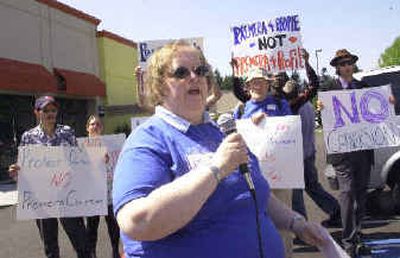
While he testified, about 40 protesters outside shouted “Premera for people, not Premera for profit!” and “Health care needs, not corporate greed!”
“It is obvious that just about everyone but Premera is opposed to their plan,” said Ellen Dewey, a Lynnwood member of Washington Citizen Action, which organized the protest.
Barlow, who walked through a gantlet of chanting protesters during a lunch break, repeatedly said there’s little difference in business practices between a nonprofit and a for-profit company. He said both, if they are to grow, must earn a profit.