
All washed out
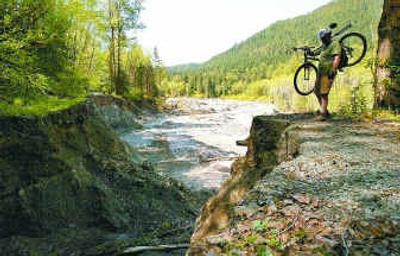
Nature lovers seeking the beauty in portions of the North Cascades could face a frustrating summer of blocked trails, impassable streams and upended bridges, courtesy of last October’s floods.
The floods, which caused an estimated $12 million worth of damage in the Mount Baker-Snoqualmie National Forest, left behind unprecedented damage to roads, bridges and trails in the forest’s Darrington Ranger District, about 60 miles northeast of Seattle.
“You won’t be able to get to some of the best trails in the North Cascades,” said Elizabeth Lunney, executive director of the Washington Trails Association. “Any place that was below a big glacier just got nailed.”
“I thought it looked a little like the aftermath of Mount St. Helens,” said Gary Paull, wilderness and trails coordinator for the national forest. “I’ve lived here all my life, but I’ve never seen a storm like that.”
In one 24-hour period on the weekend of Oct. 17, more than 6 inches of rain fell on Darrington, and more than 10 inches drenched the flanks of Glacier Peak, the 3,200-foot mountain about 20 miles east.
Half of the 500,000-acre Darrington ranger district is now inaccessible, Paull said. Sections of 40 forest roads and 20 sections of trail were washed out and 24 trail bridges were destroyed.
Hardest hit were roads and trails on the western side of Glacier Peak, where a roundtrip hike is now 20 miles longer. The Mountain Loop Highway from Darrington to Granite Falls is closed and a 50-mile detour has been added to the Pacific Crest Trail.
Forest officials have applied for $8 million in emergency federal road repair money. Highway officials have so far approved spending roughly half that amount.
But even if the rest of the money is approved, replacing major bridges and rerouting some roads could take another three years.
Mount Baker-Snoqualmie officials plan to replace all the lost structures, said Terry Skorheim, Darrington district ranger. But that could change if forest officials run into conflicts with rules governing endangered fish species, wild and scenic rivers or forest reserves.
And officials aren’t sure where they will get the money to fix an estimated $4.2 million in trail damage.
They’ve asked the Federal Highway Administration to allow them to use emergency road money to reconstruct major trails, which would set a new precedent for the use of that money. Forest officials say they’ve been told things look promising, though they haven’t received a definite answer.
Congress could also fund trail repair with a special supplemental appropriation. A spokeswoman for Sen. Patty Murray, D-Wash., said her office has already made an appropriations request.
Meanwhile, officials are advising anyone heading out to the forest this year to check Web sites or call local ranger stations to get updates on conditions.
“There is going to be frustration,” said Ron DeHart, the forest’s spokesman. “What Mother Nature did in three days of real hard rain will probably take the Forest Service and dollars from multiple sources three or four years to fix.”