
Law professor helped prepare Iraqi judges for Saddam’s trial
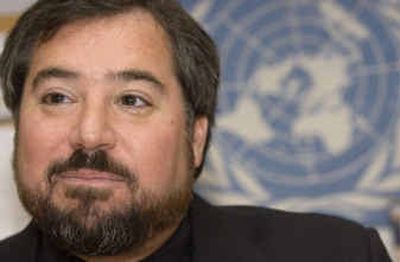
CLEVELAND – Some of the Iraqi judges who are being prepared to handle Saddam Hussein’s trial haven’t handled anything more complicated than a traffic case, says an Ohio law professor who helped train them.
Despite the judges’ lack of experience with complex litigation, Case Western Reserve University law professor Michael Scharf said he was impressed by their knowledge.
“They’re lower-level court judges and the reason for that is because the higher-level judges were seen as corrupted,” said Scharf, who participated in a weeklong seminar for the Iraqi Special Tribunal last month in London. He was one of five international law experts selected by the Justice Department for the training.
Some of the Iraqi judges will act as prosecutors, others will preside over the case and the remainder will hear any eventual appeals.
“Whether they were low-level or not, they’re the smartest people in their country,” said Scharf, a former State Department attorney responsible for international war crimes issues in the first Bush and Clinton administrations. “The kinds of questions that they would ask would be so nuanced it was far more than I get, for example, from law school students.”
Because of security fears, some judges withdrew their names from consideration for the tribunal before the final 39 judges were selected.
“These are very courageous people,” said Lt. Col. Michael Newton, who teaches at West Point and also participated in the seminar. “They’re of course concerned, but that doesn’t dissuade them.”
Scharf said he told the judges genocide will be the most difficult charge to prove. Saddam also will be the first person tried for the crime of aggression since the Nuremberg trials of Nazi officials following World War II, and the case will define aggression for the International Criminal Court.
“The judges that I was working with were very conscious of the fact that they were going to be making history,” Scharf said. “I reminded them on several occasions that in 20 years people will be looking back and talking about the cases that they’ve decided.”