
Bridge

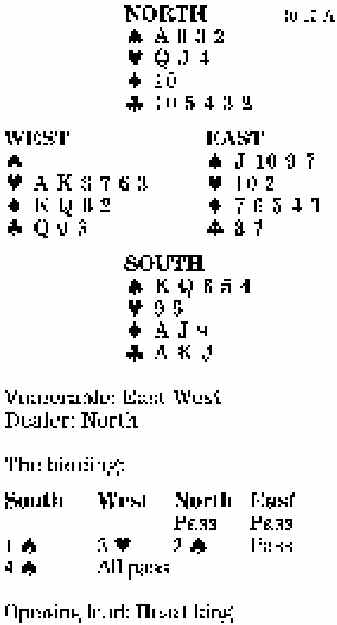
The difference in approach between teams (or rubber bridge) and pairs cannot be better illustrated than by a deal like this one, where declarers’ strategies will vary dramatically, depending on the importance of making an overtrick.
Say you were playing pairs, where overtricks are vitally important, particularly if you assume everyone will be playing the same four-spade contract. West starts by leading the king, ace and a third heart, with East ruffing deceptively with the spade 10. Since the contract does not appear to be at risk, declarer is likely to overruff with the queen and play the king of trumps. When he finds he has a trump loser, he will have to fall back on the club finesse and go down a trick. Does that mean that declarer has misplayed the deal? Not really; his chance of an overtrick was so much better than the chance of going down by following this line that he was making the right pairs play.
At teams, though, the importance of the overtrick is not nearly as great as the value of making a game contract. While the chance of running into the hostile distribution that actually exists may be small, you can avoid any risk of going down in four spades. The way to do that is simply to discard the club jack at the third trick. Now you can ruff two diamonds in dummy at your leisure and draw trumps in comfort. You will make 10 tricks with no problem.
Bid with the aces
South holds:
| •—- | |
| •A K 8 7 6 3 | |
| •K Q 8 2 | |
| •Q 9 6 |
| South | West | North | East |
| 1 • | Pass | 3 • | 3 • |
| ? |
Answer: Bid four diamonds. This is not a slam try but an attempt to tell partner where you live, helping him work out what to do over the inevitable four-spade bid from one opponent or the other. Particularly when the opponents have spades and you have hearts, you may need to plan the auction to get partner in on the act.