
Treasures
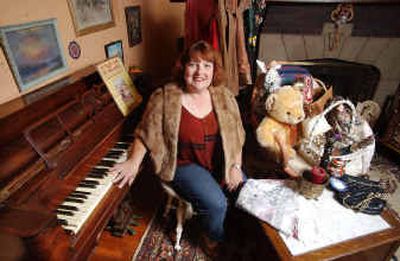
MILWAUKEE — Marylyn Kruger just can’t understand it. Carpets, a mink stole, cashmere sweaters, a piano, a marble-top coffee table. “I don’t know why people throw these things out,” she says of the things she has pulled from the side of the road. “I can drive around on a Saturday and go rummaging and not spend a cent.” On her wish list: “I’m looking for a harp. I want the Irish harp, not the big ones with peddles. What are my chances of finding that on the streets?”
Based on her 20-plus years of experience, the chances are probably quite good. Kruger is one of a legion of curbside hunters and pickers, ever alert to the things that have been cast aside by others.
Kruger can offer a quick course in what all such treasure hunters know. There are four keys to success, she says: “Luck, timing, weather and transportation of items.”
The first is self-explanatory. Lord only knows what might turn up on the curb. Timing means being there when luck strikes, and acting fast. Good weather keeps things in good shape until you find them.
Having the right wheels makes getting things home a lot easier. For example, a minivan or sports utility vehicle works better than, say, a bike.
“I’m lucky. I have a convertible,” Kruger says.
Summer is prime pickin’ time for Kruger and others like her, and with the start of fall, it makes sense to see what these hunters found.
Here are some notable stories of castoffs reclaimed.
Let’s start with the mink. Kruger found it just sitting there, all proper, in a zippered bag. Then there are the cashmere sweaters. They were in a box.
“I happened to look in,” she says. “They’re so soft, they’re 100 percent cashmere. One has a label in it that says ‘Harrods of London.’ “
The biggest and best find has to be the piano. Some men had just put it at the curb. They said they’d been hired to clear out a house and toss everything. She asked if she could have the piano and they said sure, go ahead. She pondered just how to get it home, offering to pay them to take it to her house, just around the corner on the east side, but they declined.
“So I ran home, and luckily, we had a sturdy garden cart on wheels, so my son and husband brought the cart to the piano and pushed it home,” she says. A piano mover got it from the garage to the house for $50. The mover wanted to buy it, but she said no. She had it tuned and replaced some keys with ones from an old piano.
“I play my piano every day and always get compliments from people who come to my home and see it for the first time, and I love to tell them how I got it.”
For years, Char Powers has scoped trash heaps on evening walks through her neighborhood. She goes the night before trash is collected.
Her collection of treasures can be found both inside and outside her home: Three wooden ladders (small, medium and large), which she “dragged home from around the corner”; Cream City bricks; a wooden table she uses in her kitchen; two sections of picket fence; a wicker chair; two old crocks; an old trunk; and, the pearl among these treasures, an antique brass sprinkler with a heart design.
“My friends have started to drop off what they find on their walks,” she says. “A push lawn mower appeared one day.”
Give and take and give again Karen Carnabucci calls herself an “urban archaeologist.” She loves the idea of “finding treasure in trash.”
A creative arts therapist, she uses found items in her work – beads, pencils, silk flowers, magazines, toys, glittery Christmas decorations.
Carnabucci has even pulled household items from discarded piles and donated them to charities that serve the poor, the homeless, runaways.
Her best find was a 1943 Green Bay Packers game program, tossed by a neighbor.
“I donated it to my church auction and it raised $70.”
From the what-are-the-odds files comes this tale from Rick O’Connor. He and his wife, Joanne, were buying a new stove and were appalled at the cost of an extra oven rack: $50. They bought the stove and forgot the rack, until one morning when Rick was jogging in Shorewood.
“A wire-type object caught my eye, so I stopped to check it out. There were two oven racks, but the odds of them fitting in our stove were very low. And I thought, ‘I wonder if those would fit.’ “
They did, so he got two racks for nothing instead of one for way too much.
“The only other thing I found that was any good was a snowblower,” he adds. He cleaned it up and replaced a spark plug.
“I’ve been using it for six years.”
One man, one television, few words The e-mail message was short and sweet: “I found a Hitachi 52-inch projection TV. Six years old. Works perfect. Been offered $900 for it.”
Ronald Kutnyak found the television in a neighbor’s driveway. Kutnyak went home and got his wife. They looked it over and asked the neighbor what was wrong with it.
“He says, ‘It shuts off,’ ” Kutnyak says. The man had spent $300 two years earlier to fix it and didn’t want to spend more. Kutnyak and his son loaded it onto a truck and got it home. A friend who works on televisions told Kutnyak to remove a panel and check for dust. Kutnyak says he found an inch of dust, which he removed with a brush and a vacuum cleaner.
“I plugged it in, ran it for two days in my garage,” he says. The television never shut off.
Other finds: Stereo components, vacuum cleaners, bicycles and a safe (the owner had lost the combination; Kutnyak is getting a replacement from the manufacturer).
“I go rummaging on Tuesdays and Fridays, when the garbage collection is,” he says. “This is a throw-away society, and people don’t realize what they’re throwing away.”
Stephanie Erbes lived in Portland for four years, and she has traveled the world, but she believes Milwaukee has an especially tempting array of curbside castoffs.
Her family jokes that most of her stuff comes from “the side of the road,” and she figures they’re probably right. A single mom with 31/2-year-old twins Bijoux and August, she’s always looking to save money.
So far, she’s been able to get lots of stuff for the twins this way. All of their beds, with the exception of their first bassinets, were found on the side of the road. She’s also picked up ride-on toys, potty chairs, rugs, outdoor tables and benches, a Singer sewing machine and a push lawn mower.
One of her favorite finds is a vintage Underwood typewriter. “Still functions, no broken parts,” she says.
Another neighbor noticed her habit of street shopping and came to her door and said, “I’m wondering if you’d like to take a walk through my place and take what you want – as I notice most of it is ending up over here anyway.”
Brad Smith was driving to work in a suit and tie when he spied something curious. Leaning up against a tree, near the curb, was a car hood. Upon closer inspection, he saw a Milwaukee Brewers logo and “a bunch of scribbles in blue paint.”
“I jumped out to get a closer look at what appeared to be the hood of a pace car with a bunch of Brewer veterans’ autographs,” he writes. “I recognized a few names, but most I could not read.”
He figured it wouldn’t stay there long, so he acted. “Like an ant with a large crumb, I picked the hood up and scurried down the road to my house and stashed it out of sight.
“Turns out one of the ‘scribbles’ was Paul Molitor, who, since his induction into the Baseball Hall of Fame this summer, just raised the value of my curbside find,” says Smith, who keeps it in his garage.
“Either I’ll build a room for it or donate it to a local bar and maybe get an open tab for a while for compensation – and some bragging rights.”