
A lump of coal for toy retailers?
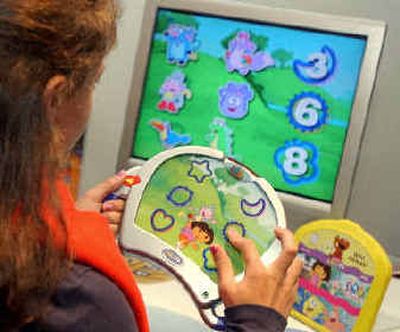
LOS ANGELES — Toy makers and major retailers are bracing for potentially weak Christmas sales this year amid concerns that consumers, many squeezed by skyrocketing gas prices or uneasiness over the economy, will spend less on holiday shopping.
On Monday, No. 1 toy manufacturer Mattel Inc. and No. 2 Hasbro Inc. both reported weak third-quarter sales. They also warned investors their fourth quarter earnings might suffer if the consumer sluggishness carries forward into the critical holiday season.
Robert A. Eckert, Mattel’s chairman and chief executive officer, told Wall Street analysts Monday the company is contending with “challenges unique to the toy industry.”
“It can’t be good for the industry when major retailers are saying they expect sales of discretionary items like toys to lag until fuel prices come back down and we see more positive consumer attitudes,” Eckert said.
Alfred Verrecchia, Hasbro’s president and chief executive officer, also warned it would be unlikely the company will reach its goal of revenue growth for 2004, citing “the uncertain retail environment.”
This year, retailers have ordered less inventory than in the past, said Tim Conder, a leisure analyst for A.G. Edwards & Sons Inc. in St. Louis.
“Retailers are being very cautious,” Conder said. “The way it’s looking, this is going to be a lackluster season, not a disaster, but not gangbusters either.”
Apart from the concerns over consumers, retailers are simply managing their inventories more aggressively these days, said Carl Steidtmann, chief economist at Deloitte Research.
“They’re basically unwilling to go into the holiday season as flush with toys as they have in the past,” Steidtmann said.
Rising fuel costs operate like a tax increase, cutting into consumers’ purchasing power, Steidtmann said.
“I would expect this holiday season to be a bit softer than last year,” he predicted.
Another factor that may dampen sales is the apparent absence of a standout toy so far this season, Conder said.
“It’s just a lack of an absolute must-have toy,” Conder said. “There’s nothing that indicates you’re going to have this mad rush.”
Despite the challenges, Eckert said it’s still too early to write off the holiday season.
“We certainly haven’t,” he said.
Still, how well the company’s flagship Barbie toy line — currently undergoing an extensive makeover — does this season will determine how much retailers invest in the iconic brand next year.
Many retailers, who have seen weak sales of the doll line the past two years, have cut back on shelf space and ad promotion investment for the brand this year, Eckert said.
Mattel said its third-quarter profits fell 5.2 percent due to lower worldwide sales of its Barbie, Hot Wheels and Matchbox toy lines. Worldwide gross sales of Barbie declined 13 percent.
The El Segundo-based company reported net income of $255.9 million, or 61 cents a share, in the July-September quarter, down from $270 million, or 61 cents a share, last year.
Mattel said worldwide net sales for the quarter were $1.67 billion, down 2 percent from $1.70 billion in the same period last year.
Hasbro reported revenue fell in the third quarter as sales in its domestic toy and games segments slipped. Sales were $947.3 million for the quarter, down about 2 percent from the $971.1 million generated a year ago.
The Pawtucket, R.I.-based company reported higher earnings for the quarter ended Sept. 26 compared with results depressed by a $17.3 million accounting charge a year ago. Hasbro earned $88.7 million, or 45 cents per share, for the quarter compared to $68.5 million, or 38 cents a share, last year.