
Exploring new paths after Kaiser
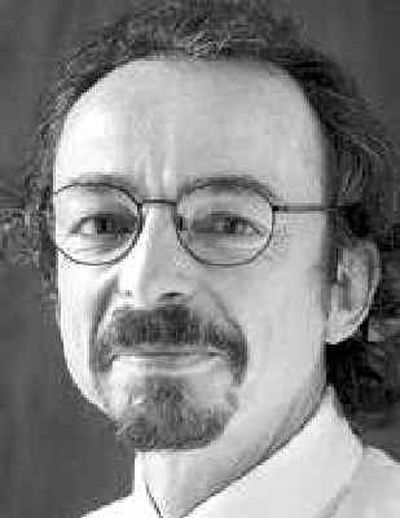
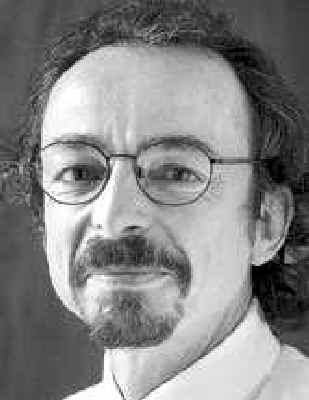
As salvage crews scrap out Kaiser Aluminum Corp.’s Mead smelter, some former workers are retraining for positions in health care. They are swapping crowbars for textbooks, the gritty casting room for gleaming surgical suites. Despite recent reports of layoffs at Spokane’s major hospitals, they are optimistic their new skills will ensure the future Kaiser took from them when the company filed for bankruptcy in February 2002.
“The jobs are out there,” says Tim Charbonneau, who expects to complete his training as a nurse late next year.
Charbonneau put in more than 29 years at Mead. He was among the 30 workers who mothballed the plant when it shut down permanently in December 2000. The closure entitled Charbonneau and hundreds of other laid-off Kaiser workers to federal government help with job training expenses. His oldest daughter, a nurse, suggested he consider the profession. He had to wait a year – and brush up on his algebra – before he could begin his re-education.
“It’s a culture shock, that’s for sure,” says Charbonneau.
After banging on machinery for decades, he works constantly with people. Training rotations have exposed him to orthopedics and psychiatry, as well as a nursing home.
“There’s a whole lot more stress in this job,” says the former maintenance millwright. “You don’t want to make mistakes. It could be catastrophic.”
But patients reward him with smiles of thanks. “It makes you feel real good,” he says.
Charbonneau took some business classes at Eastern Washington University when Mead curtailed operations in the early 1980s, and he wishes he had earned a degree then. But with four children to feed, Kaiser’s big paychecks lured him back to the smelter. Hitting the books again has been hard.
“It’s pretty intense schooling,” Charbonneau says, adding “I don’t have any regrets, except right before a test.”
At 52, Charbonneau says he was too young to retire and, besides, “You don’t retire with enough money to live on.”
He lost one-third of his pension when the Pension Benefit Guaranty Corp. took over Kaiser’s program last month. He and thousands of other former Kaiser workers also lost their health care benefits.
Keith Bell says he sees former co-workers come into Holy Family Hospital with severe illnesses that might have been controlled sooner if a medical plan had covered the cost of a visit to the doctor.
Bell toiled at Mead for 11 years, mostly in the sweltering pot rooms where alumina was smelted into aluminum. After two years of retraining at Spokane Community College, he recently took a job as a respiratory therapist at Holy Family. He says the transition from back work to brainwork was tough, but he expects the career change will be better for him, and better for his family.
“We were really fortunate,” says Bell, who says more laid-off Kaiser workers should take advantage of the available training money.
At 47 years old, George McKenney says he is by far the oldest student in his anatomy and physiology class, but holds his own. He hopes to become a surgical technologist when he finishes school next spring.
“I wish I had quit (Kaiser) years ago. I wish I had known about Spokane Community College years ago,” says McKenney, who punched the clock at Mead for 25 years.
As a crane driver, McKenney held one of the most desirable jobs at Mead. As a specialist in restarting rebuilt pots, a process called blasting, he held one of the most dangerous. He misses the work and his crew, but not Kaiser, especially for the way the company treated workers when they returned in September 2000 from a United Steelworkers of America strike that had become a company lockout.
McKenney credits Charbonneau as well as his family for their support during a difficult transition. He says he tries to encourage other former Kaiser workers to train for new careers.
McKenney expects to earn slightly less as a surgical technician than he did at Mead, but says nearly two years without a paycheck taught him frugality, and domesticity. He learned how to use a washing machine, and fix the dishwasher in a home just a mile from where he grew up.
His modest financial goal is to hang onto his boat and some vintage vehicles until he and his wife can retire, for real. If hospital work proves as cyclical as aluminum smelting, they can deal with it just the way they did at Kaiser.
“There’s a lot of good things come out of this,” he says.