
Dam’s level raises worry among tribe
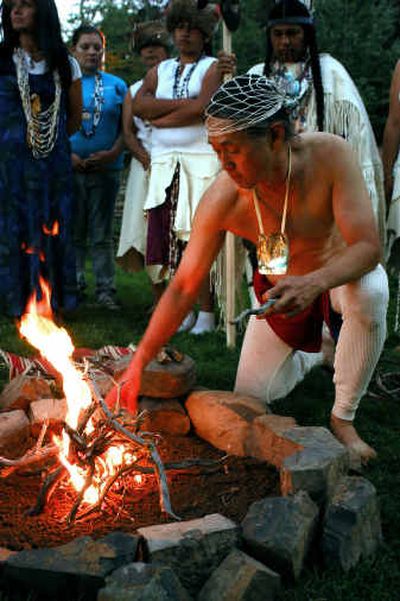
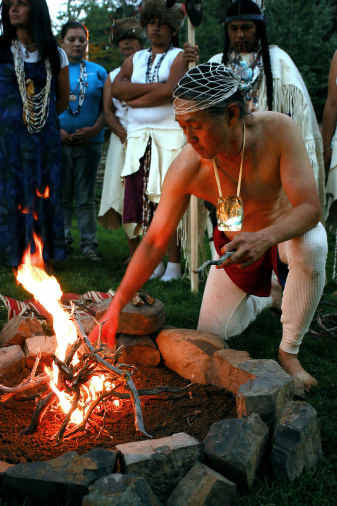
SHASTA LAKE, Calif. – Overlooking the deep blue of Shasta Lake, flames rose from rubbing two sticks together as the evening breeze picked up chanting and as the sun disappeared Sunday.
It’s the beginning of a war dance. The Winnemem Indians, or “Middle Water” people, say they are in a fight to preserve their culture.
For four days straight, they will undertake a dance older than the lake for reasons as new as the motorboats skimming its surface: There is talk of raising the lake level.
The last time the Winnemem tribe danced this way, there was no Shasta Dam. There was no Bureau of Reclamation. But there was the river.
In 1887, the government planned to build a fish hatchery on the McCloud River, one of four rivers now flowing into man-made Shasta Lake. The banks of the McCloud had been home to the Winnemem tribe, and the hatchery threatened their reliance on salmon. They danced the same ceremonial ritual.
They won salmon rights then, even though the fishery was built.
Now they want to save what they say are sacred ceremonial spots and burial grounds, which they say could be inundated if Shasta Lake’s capacity is increased.
“If we lose our sacred sites along the McCloud, we lose our heritage,” said Caleen Sisk-Franco, spiritual leader of the Winnemem tribe.
The small tribe, with 125 members, clings to a 42-acre ranch in Jones Valley, where 23 members still live. They describe a long, lopsided relationship with the federal government in which the tribe lost most of its homeland to Shasta Lake – and ended up with nothing in return, including no reservation land or federal recognition as a tribe.
Even a minimal boost in the reservoir’s capacity jeopardizes ceremonial grounds, already sometimes soggy but still used by tribe members near where the McCloud joins Shasta Lake, members said. Burial grounds and a place where girls pass into adulthood, called Puberty Rock, and another place called Children’s Rock, are the threatened sites.
“We want to work with them to get their water, but we don’t want to be wiped out. We have already given a lot to the state of California,” Sisk-Franco said before the dance started.
Construction began in 1938 on what is one of the largest concrete dams in the world. Shasta Dam, on the Sacramento River, provides flood control, irrigation and power.
Boosting the capacity of Shasta Lake is part of a massive state and federal undertaking to address the need for more water for more people, balanced against increasingly stricter environmental concerns, said Jeff McCracken, a spokesman for the U.S. Bureau of Reclamation, the dam’s owner.
There are proposals to raise the height of the dam by anywhere from six feet to 200 feet. Because of massive alterations connected to raising the dam by 200 feet, including moving a bridge on Interstate 5, something lesser seems more likely, McCracken said.
Upping the lake’s capacity also would give the bureau some flexibility in managing the water supply to improve conditions for salmon.
The bureau is in the early stages of researching the proposal, McCracken said. If Congress grants money for the undertaking, construction wouldn’t start until 2010.
The bureau is about to begin examining the effects of raising the dam on any cultural resources, which would certainly include the grounds of the Winnemem, he said.
An archaeologist with the bureau said even though the tribe is not federally recognized, its concerns are.
“We’re going to incorporate their concerns, but we don’t even have a project yet,” said James West, regional archaeologist with the bureau. “We’re not in a stage where we can fund more research at this time. We’re not ignoring them. We take them very seriously.”
Under the National Historic Preservation Act, the burial grounds and ceremonial sites would be reviewed, he said.
Even when the existing dam was built, the federal government sought to do some preservation work, West said.
But American Indians have become much more successful in preserving their heritage in the face of public projects, he said.
After the civil rights movement of the 1960s and 1970s, the voice of minorities grew and a lot more attention was paid to American Indian groups when they won gambling rights, West said.
“Now they have a political voice,” he said.
But Sisk-Franco said less than full recognition diminishes the tribe’s ability to negotiate concessions from any federal agency to protect what they hold sacred.
An attorney who works with the tribe said the issue over federal recognition has been clouded considerably over gambling issues.
“This is not a gaming tribe,” said Claire Cummings, the tribe’s attorney. “The effort to get the federal government to honor promises from years past, such as land in exchange for land now under water, is solely to improve the tribe’s position to preserve their sites.”
Sisk-Franco said the fight before the tribe now is more about a pact the Winnemem have to maintain fish and water, and federal recognition seems crucial to that, she said.