
Bridge
Eddie Kantar’s latest book, “Kantar on Kontract” (details of which can be found on kantarbridge.com.), is a combination of instruction and humor that tries to help you think like an expert.
Kantar’s tip is that if a contract looks hopeless, place the opposing cards where you need them to be. If the contract looks relatively easy, the expert will ask himself what can go wrong and what, if anything, can be done about it.
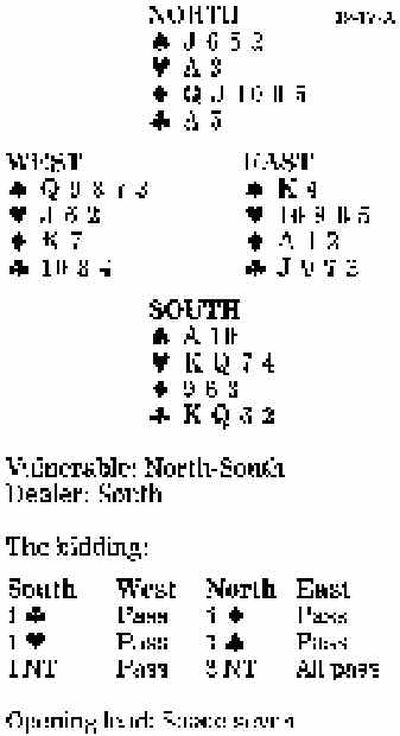
In today’s three-no-trump contract, East plays the spade king, and the ball is in your court. What is your plan?
Diamonds have to be established before the opponents can set up three spade tricks. If spades are 4-3 and West has the queen, as East’s play of the king suggests, the hand cannot be defeated whether or not you win the first spade. However, if spades are 5-2 and the diamond honors are divided, winning the spade ace is natural but very dangerous. East can capture the first diamond and return a spade, allowing West to win his spade queen and drive out the jack. When West gets in with the other diamond honor, he will run the spades and defeat you.
However, if you duck the first spade trick, win the second, and now knock out a diamond honor, you are home free. If East wins the trick, he has no spade to return, and the diamonds can be easily established. In other words, to protect against 5-2 spades and split diamond honors, duck the opening lead.
Bid with the aces
South holds:
| •J 6 5 2 | |
| •A 3 | |
| •Q J 10 8 5 | |
| •A 5 |
| South | West | North | East |
| Pass | |||
| 1 • | 1 • | Pass | Pass |
| ? |
Answer: Reopen with a takeout double. When your partner (playing negative doubles) passes over one heart, he either has a weak hand or is playing for penalties. Since it seems unlikely that he can be weak with your RHO a passed hand, double and hope partner can convert this to penalties, in which case the opponents may be going for a telephone number.