
Bridge
Bridge and strong emotions are poor bedfellows. We are all familiar with the experience of losing our cool after something bad has happened at the table. Equally, when things appear to be going well, it is easy to take our eye off the ball.
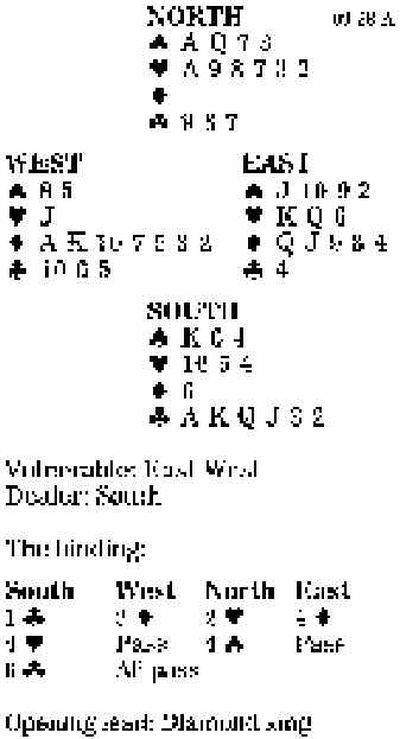
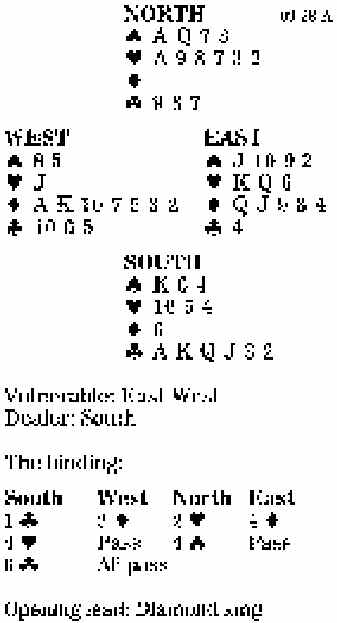
On today’s deal South was not so euphoric at reaching the excellent club slam that he took his eye off the ball. Consequently, he did not miss the best play for his contract. After ruffing the diamond lead and drawing trumps, declarer did not put all his eggs into one basket. Instead, he prepared to test the majors sequentially by leading a heart and ducking in dummy when West played the jack.
East decided to overtake with the king to return the spade jack. Declarer took this in dummy with the queen and cashed the heart ace. When East proved to guard the hearts, South returned to hand with a spade to the king. Rather than commit himself to relying on the spade division, declarer simply played off all his trumps, pitching all the hearts from dummy to keep the spades. Meanwhile, he watched to see if the heart queen would appear among the discards.
If East did not throw that card away, South’s plan was to run the spades and hope for the best. East was indeed forced to unguard the spades to keep his heart winner, and so South cashed out the spades to take the rest of the tricks and make his contract.
Bid with the aces
South holds:
| •J 10 9 2 | |
| •K Q 6 | |
| •Q J 9 8 4 | |
| •4 |
| South | West | North | East |
| 1 • | Pass | ||
| 1 • | Pass | 2 • | Pass |
| 3 • | Pass | 3 • | Pass |
| ? |
Answer: Bid five diamonds. Your partner’s three-heart call is the fourth suit, suggesting some length if not strength in that suit. That in turn implies your partner will be short in spades, so the two hands should fit well together, and diamonds figures to play better than no-trump.