
Bright idea
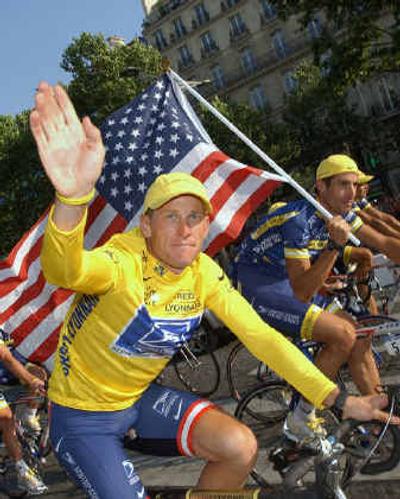
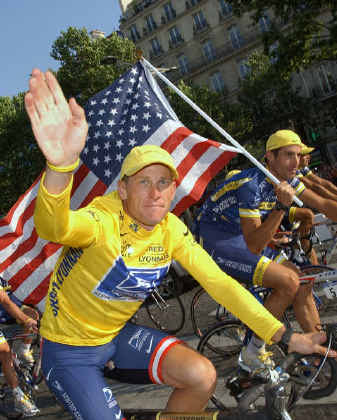
PORTLAND — The T-shirts were yellow. The bracelets were yellow. Even the wall murals had a yellow tint.
There was so much yellow inside the cavernous Oregon Convention Center where Nike shareholders met last week, that Nike executive Mike Parker pretended to shield his eyes as he stepped onto the stage. “Looking bright,” he announced to the several hundred stock owners, almost all wearing Lance Armstrong’s signature bracelet.
Yellow, the color of the jersey worn by the leader in the Tour de France race, has become synonymous with Armstrong.
But for Nike Inc., the company that designed the wristbands as a tribute to the cyclist’s sixth straight win in the wake of his battle with cancer, the bracelets represent one of its most successful stealth advertising campaigns.
Even though the bracelets — a thick rubber band inscribed with Armstrong’s “Livestrong” motto — were designed at Nike’s headquarters and even though the first five million were sold exclusively at Nike retail outlets, the bracelets do not have the Nike swoosh or the company name.
Most consumers don’t realize that the bracelet is part-and-parcel of the sneaker giant’s branding mechanism — and that’s exactly why the concept has been so successful, industry watchers say.
In the span of six months, more than 15 million bracelets have been sold for $1 each. Sales are now averaging 300,000 a day, and it’s recently become the jewelry of choice of both presidential candidate John Kerry and President Bush.
“By not putting a logo on it, they’re avoiding the impression of commercialism,” said Joseph Pisani, the recently retired president of the American Academy of Advertising. “Once the media picks up on it, suddenly Nike comes off as the good guy without ever having told you ‘Hey, look at what we’re doing.’ It’s what I would call a soft sell.”
Nike officials stress the bracelet was designed strictly as a tribute to Armstrong and that their intent was never to profit from it. They say all proceeds are going to a cancer foundation.
Still, they agree the effort has boosted Nike in subtle ways.
“Something like this creates goodwill. It creates a favorable impression and feeling toward the brand. I might wear Livestrong because I support Lance. It doesn’t mean I’ll run out and buy some Nike biking shorts, but maybe I’ll appreciate Nike for celebrating this athlete,” said Nike spokesman Scott Reames at the company’s corporate headquarters in Beaverton, a Portland suburb.
Nike, in the wake of its sweatshop controversy in the 1990s, has unveiled numerous efforts aimed at underscoring a commitment to social causes. Most of their campaigns — from a recycling shoe initiative to a fitness program for Native American youth — have gone largely unnoticed, analysts say.
And none has come close to the phenomenon of the yellow bracelets.
Corporate philanthropy efforts often backfire because they are seen as self-serving, said Paul Swangard, managing director of the Warsaw Sports Marketing Center at the University of Oregon.
“These charitable efforts come with a degree of cynicism in the minds of consumers,” he said.
Even though Nike maintains the bracelets were purely charitable, it’s clear the company sees the success of the “Wear Yellow” campaign.
When Nike shareholders arrived for their annual meeting here last Monday, they walked past tables full of yellow T-shirts and the Livestrong bracelets. In the main meeting room, a huge plasma TV screen flashed an image of Armstrong bathed in yellow light.
Armstrong was diagnosed a decade ago with testicular cancer. He beat cancer, then went on to win the Tour — not once but six times.
“Don’t you know you can’t do that?” Knight kidded the cyclist. “I didn’t know that,” Armstrong replied, as the shareholders roared with applause.