
Bridge
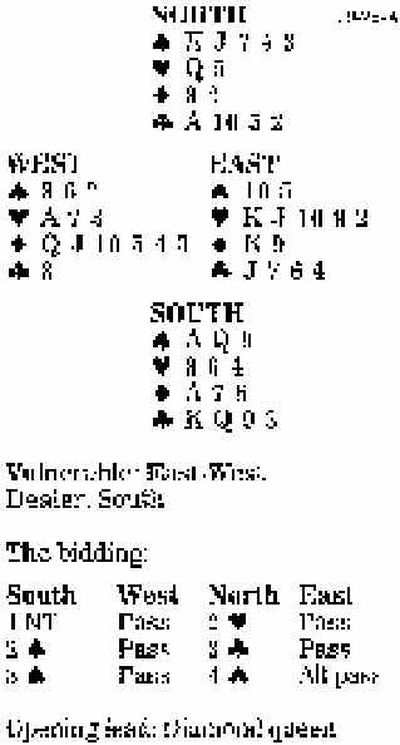
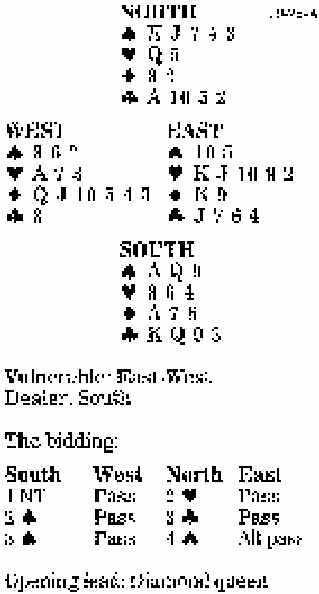
On today’s deal, West led the diamond queen against four spades. Declarer took the trick as East encouraged, then led a heart to dummy’s queen and East’s king. Back came the heart jack, and West let his partner hold the trick. So East cashed his diamond king and then got off play with a third heart.
Declarer ruffed in dummy as West followed suit with the ace, then drew three rounds of trumps. At this point South knew that he would have no problem if clubs split 3-2. If they did not divide, he would have to guess which defender was short in clubs.
It would have been easy to adopt the preconceived notion that the hand on lead might have led a singleton club at trick one, but here West might well have preferred to lead from a diamond tenace than to kick off with a singleton in one of the opponents’ suits. So South paused to consider whether there was any way that he could find out more about the defenders’ hands.
The answer was simple: South crossed to his club king and ruffed a diamond in dummy. When East discarded, it marked West with six diamonds, three hearts, and three spades, so not only could West be short in clubs, but he was actually guaranteed to have a singleton club.
Accordingly, declarer played to the club ace in dummy and, when West discarded, finessed against East’s club jack for his contract.
Bid with the aces
South holds:
| •K J 7 4 3 | |
| •Q 5 | |
| •8 2 | |
| •A 10 5 2 |
| South | West | North | East |
| 1 • | Pass | ||
| 1 • | Pass | 2 • | Pass |
| ? |
Answer: Settle for giving simple preference to two hearts rather than overbidding with a call of two no-trump. Your partner’s hand does not fit well with yours, so take the cautious route and hope that he can find one more encouraging bid — in which case you will have more than enough to go to game.