
Indie no more
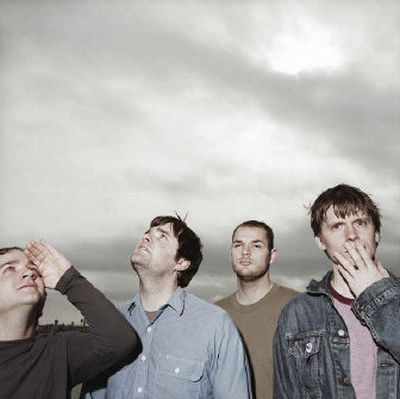
On the new album from Death Cab for Cutie, leader Ben Gibbard sings about sitting in a urine-stained intensive care unit, surrounded by ghostly vending machines, old magazines and death.
“Nervous pacers bracing for bad news/Then the nurse comes around and everyone will lift their heads,” Gibbard sings. “Then, I’m thinking of what Sarah said, ‘Love is watching someone die.’ “
So detailed and unflinching a scenario – relieved by a heartening twist – epitomizes Gibbard’s writing style. Since the late ‘90s, Death Cab has matched fluid rock melodies and open-hearted vocals to his well-chosen words.
“Music is always the most important element in a song,” Gibbard says. “But to make the lyrics an afterthought would be a bummer. I want you to know exactly where a song is taking place, who it’s about and what happens.”
With this approach, Death Cab has joined bands like Bright Eyes and the Decemberists in a valiant effort to bring back the power of the word in rock.
Now the Seattle band stands poised to bring that mission to many more listeners. On Tuesday, Death Cab will release its first major-label work, “Plans,” on Atlantic Records. That follows four indie releases on the indie imprint Barsuk.
Relentless touring, as well as regular plugs on the prime-time youth soap opera “The O.C.,” has helped Death Cab sell in six figures in the past few years. The band’s last CD, “Transatlanticism,” moved more than 330,000 units, and a side project fronted by Gibbard called the Postal Service pushed more than 500,000 copies of its “Give Up.”
Death Cab’s new work finds Gibbard at both an emotional and career crossroads. Now 29, and in his first satisfying relationship, he says he has “reached an age where that feeling of invincibility is gone and you end up being an adult in a more conventional sense.”
For Gibbard, this has inspired more writing about aging and demise. In the song “I Will Follow You Into the Dark,” lovers speak of their deaths and vow to “hold each other soon in the blackest of rooms.”
Despite the “Death” part of the band’s name, its origin is far from grave. Pop fanatics will recall it as the title of a song performed by the whimsical Bonzo Dog Band in the Beatles’ 1967 TV special “Magical Mystery Tour.”
“I was on a huge Beatles kick at the time,” Gibbard says. “But if I knew how many times I would have to explain the name, I would have chosen something more obvious.”
Death Cab began as Gibbard’s solo project when he was still an engineering student at Western Washington University in Bellingham. In 1998, along with Nick Harmer on bass and Chris Walla on guitar, he released the CD “Something About Airplanes.”
Although different drummers appeared on each of the band’s next three albums, it was able to develop a solid rapport with audiences, if not major commercial success.
All that began to change with 2003’s “Transatlanticism.” Not only did Death Cab’s music appear on “The O.C.,” but one of the show’s major characters, Seth Cohen, rhapsodized repeatedly about the band; it even appeared in one episode.
”(The show) is what it is,” Gibbard says ambivalently. “It’s not high art but it’s entertaining.”
During a stretch of downtime in the band’s touring and recording schedule, Gibbard cut the Postal Service album with synth player Jimmy Tamborello, an old friend. Though the two never toured, word of mouth and downloading spread their music so wide the duo wound up becoming a bigger seller than Death Cab.
“I think it’s more instantly accessible,” Gibbard says of Postal Service’s music. “And it’s been a long time since anyone had a hit with electro-pop. It’s a case of right time, right place.”
Having the major-label push should help Death Cab’s sales significantly. Although Gibbard was wary about signing with a conglomerate, he says, “So far there haven’t been any red flags.
“If it was a case of one album earlier, or one later, it would be the wrong time for us,” he says. “This is our little window of time.”