
Diversifying

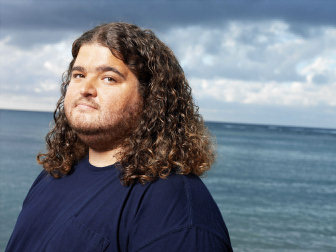
In the push for diversity in television – the campaign to add people of color to key positions on both sides of the camera – it’s not the beauty of the rainbow that ultimately brings the big networks around.
It’s the promise of a pot of gold.
There are many explanations why ABC, for example, has Hispanics in so many prominent roles in so many of its series of late – from Eva Longoria’s Gabrielle on “Desperate Housewives” and Jorge Garcia’s Hurley on “Lost,” to Sofia Vergara’s Lola on “Hot Properties” and Freddie Prinze Jr.’s title character on “Freddie.”
Not the least of those reasons, however, is that dinero talks.
“The genesis is good business,” says Stephen McPherson, president of ABC Entertainment. “We’re a broadcast network, and you look at the multicultural nature of this country these days and I think you would be making a big mistake as a broadcaster to not recognize that and program for it.”
With the fight for viewers ever-more competitive, thanks to the growing number of entertainment options, ABC has identified U.S. Hispanics – a population more than 40 million strong – as a target of opportunity, even if almost half their number watch mainly Spanish-language TV.
For one thing, it’s a growing group.
Going into this fall season, Nielsen Media Research determined that while the number of U.S. television households increased 0.5 percent from a year ago, to 110.2 million, the number of Latino TV homes rose 2.9 percent, to 11.23 million.
They’re closing the minority gap with African American homes (up 0.8 percent, to 13.2 million) and ahead of Asian homes (up 3.2 percent, to 4.22 million).
“This is now a business proposition,” says Alex Nogales, who heads the National Hispanic Media Council. “Latinos are now 14 percent of the U.S. population. That’s a lot of soap that we buy. We’re like the last frontier, the last group that’s been marketed to, so everybody wants a piece of the action.”
This has fueled a run on Hispanic talent in a bid to better reflect the world that would-be viewers actually live in. Or the world in which they wished they lived.
That’s part of why Jimmy Smits is a would-be presidential successor to Martin Sheen on NBC’s “The West Wing,” and why Benjamin Bratt stars on the Pentagon series “E-Ring.” It’s also part of why Fox’s “24” has Carlos Bernard and “That ‘70s Show” has Wilmer Valderrama.
CBS, meanwhile, this season has added Cote de Pablo to “NCIS,” while Roselyn Sanchez joins Enrique Murciano on “Without a Trace” and Eva LaRue joins Adam Rodriguez on “CSI: Miami.”
Beyond giving better roles to Latin performers and airing a pair of sitcoms centering on Hispanic families – “George Lopez” and “Freddie,” which has one character who speaks only Spanish – ABC this fall became the first English-language broadcast network to make its entire regular prime-time lineup available in Spanish through secondary audio program (SAP) dubbing and closed caption subtitles.
Fox is said to enjoy an advantage of more than 80,000 Hispanic viewers over ABC overall, but ABC is tightening the race and doing particularly well with Hispanics between the ages of 18 and 49. Among that advertiser-coveted demographic, ABC has the top six shows this season.
What’s most striking about much of its diversity is that a good deal of it isn’t that striking at all, unless and until one makes a point to sit up and take notice.
Why shouldn’t an ensemble hospital drama such as “Grey’s Anatomy” – which boasts broadcast network TV’s first African-American female prime-time showrunner in creator Shonda Rhimes – showcase people from a variety of backgrounds?
Why wouldn’t there be a Hispanic couple on upscale Wisteria Lane in “Desperate Housewives”?
The series “Invasion” is set in south Florida, so naturally top billing would go to an actor of Cuban descent, Eddie Cibrian.
Travelers, almost by definition, come from various places, hence the diversity of “Lost.”
And so on.
“You look at these big casts and all these diverse characters and what it allows is access points for so many different people,” says ABC’s McPherson, who recently became the first recipient of the Academy of Television Arts & Sciences’ Televisionary Award for his diversity efforts.
“If you go to any school now, go to the mall, go to the movies, you look around. This is a multicultural country. It’s certainly reflected in our music, and it’s only natural that it would be reflected in our broadcast television.
“Unfortunately, that agenda has been so forced in the past that you would have a show that has all white faces and you would say, ‘Oh, boy, we should really have the token character in there to have some diversity.’ With shows like ‘Lost’ and ‘Desperate’ and ‘Grey’s,’ all of a sudden there were casts that organically made sense.”
“Lost” not only boasts one of television’s most diverse casts, but also has a writing staff of eight men and two women that includes two Asian-Americans and a Hispanic-American.
“If you’re a broadcast network, you’re seeking to find as broad a palette as possible,” McPherson says. “You can’t then have 45-year-old white men writing all of your material and directing all of your material. I think you have to have people coming at creative from all different angles.”
It only makes business sense, and in commercial television, commerce is always going to be a prime concern.
“This is a business proposition to them, and we want it to be that way,” says the National Hispanic Media Council’s Nogales. “I hate it when people tell me it’s because, ‘We’re doing the right thing.’ The right thing would have been a long time ago. We were waiting and waiting for the right thing and it didn’t happen until we put the pressure on everybody.
“So I would rather they would be upfront and don’t even mention that. Just say, ‘We’re doing it because it’s good business.’ “