
Successful experiment
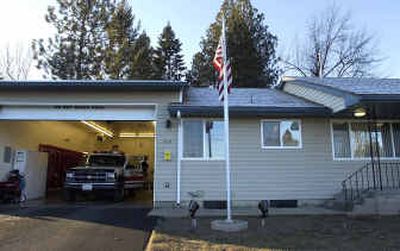
The Spokane Valley Fire Department launched an experiment last fall when it remodeled two homes and based a team of medics in each. It appears to have been a success, with average response times falling 36 seconds. “That’s huge,” said assistant chief Larry Rider. “It’s absolutely huge.”
Valley Fire now has 10 stations including the two medic houses and a new fire station that opened near Pines Road and Interstate 90. Previously, the department had seven stations, and Rider points to the new stations as the reason for the drop in response times.
Valley Fire calculates response times from when dispatch gets a call for help to when the first units arrive on the scene. The last time the department had a measurable drop in response time was when it reorganized the way units are dispatched, being careful not to pull every unit from a station without replacing them with one from another station. That only resulted in a five-second drop in response times, Rider said.
Keeping those response times down has been a constant struggle as calls for help increase. Firefighters respond to everything from heart attacks to car accidents to fires. In 2003 they responded 8,165 times. That number jumped up to 8,575 in 2004. The department covers Spokane Valley, Millwood, Liberty Lake and the Otis Orchards area.
“We have to cover 75 square miles,” Rider said. “It was very apparent that if we started from 10 locations we would have a lower response time.”
From November 2003 to January 2004 Valley Fire responded to 2,148 calls with an average response time of 6 minutes, 46 seconds. That includes nonemergency calls when firefighters don’t use lights and sirens. From November 2004 to January 2005 firefighters went to 2,131 calls with an average response time of 6:10.
Opening the medic houses instead of building traditional stations was done to save money, Rider said. It cost $1.4 million to build the new station near Pines and I-90. “We added an extra crew and that crew costs $1 million a year,” Rider said.
It cost $315,000 to remodel the medic houses. Most of the money was spent on garages to house the large SUV’s the medics respond in. There were no added personnel costs for the houses. “The crews were free,” Rider said. “I just reassigned where they were.
“That’s a huge savings compared to building two new facilities. We would have had to raise taxes three times as much.”
Station 9, the medic house near 16th Avenue and Bowdish Road, still looks like a suburban home except for the large black lettering on the garage door warning people not to block the driveway. The house is still zoned residential and is not open to the public. There is, however, an emergency phone outside the house that people can use to call for help.
It still looks like a house on the inside, too. The two bedrooms are sparsely furnished with a twin bed and a desk. Each firefighter who works out of the house has a locker to keep personal items in. There’s an office and a living room that boasts a big screen television paid for by the firefighters union. Exercise equipment is arranged in the garage behind the SUV.
Senior Lieutenant paramedic Terry Gese and paramedic Tony Ellerd are one of the two-man teams who staff the station. Teams are usually kept the same unless one member is one vacation. They have the same days off. “It’s good, though,” Gese said. “You get to know them pretty well. There are no surprises.”
One thing Gese has had a hard time with is the isolation. Previously he was part of a bustling fire station and now has only Ellerd for company. “Just hanging around with one guy is kind of quiet,” he said. “At Station 1 there was always a lot going on. Other than that, it’s fine. It’s a nice house.”
Ellerd declared that he likes the quiet. “I still have five kids at home,” he laughed.
The two, along with the other medic teams, are responsible for all the cleaning, lawn mowing and snow shoveling. They have a regular schedule of maintenance on their vehicle and training is frequent. But they know their position is important. “They had a big hole down here,” said Gese. “It’s our job to give the citizens the service they deserve and need.”
In their position they didn’t realize response times were down. But they have noticed that they are first on the scene a lot more. Sometimes they are the first to arrive at fires. Safety rules mandate that four firefighters must be at a fire before anyone can enter the house to fight the fire, which means they must wait for another unit to arrive.
“It’s happened several times,” Gese said. “We establish command and direct other units coming in.”
The firefighters union initially fought against the medic house idea, but the issue was resolved during contract negotiations. Rider said he knows that firefighters would like to see fire trucks at the medic houses, but the department can’t afford to hire the new crews that would be required. “We’d like to add fire apparatus to all those places,” he said. “There are big economic questions about the decisions we make.”
Valley Fire Commissioner Monte Nesbitt said he wants to examine the numbers in more depth before passing judgment, but is encouraged that response times are down. “That’s good,” he said. “I want to see how much those medic houses have improved our response times. I want to see if we need any changes. I just want to make sure we’re doing the best we can.”