
The documentary game
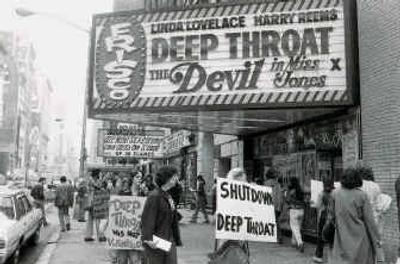
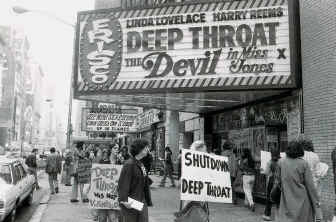
They may be informative, enlightening, clever or comical, but one thing is certain: Hollywood is taking documentaries seriously.
“It’s a really exciting time right now, thanks to people like Michael Moore,” says Randy Barbato, co-director of “Inside Deep Throat,” a new documentary about the legendary porn film of the 1970s.
After the box office success of Moore’s “Fahrenheit 9/11,” which grossed $119.2 million last year, major studios have embraced documentaries with a new zeal.
Universal Pictures was behind the “Deep Throat” release. Paramount Pictures just bought “Mad Hot Ballroom,” about a dance competition between New York City sixth-graders, after seeing it last month at the film festival alternative to Sundance called Slamdance. It will open in the hotly competitive summer season.
“It’s a token of what has happened to the documentary arena that so many companies are now trying it on for size,” says Mark Urman of THINKFilm, which released the documentaries “Born Into Brothels” and “The Story of the Weeping Camel.” Both are up for the best documentary Oscar on Sunday night.
It’s little wonder that major studios have jumped into the documentary game in a big way. The movies can be made (or purchased on the independent market) for relatively low prices, and lately the returns on the investment have been substantial.
Whether the film is about McDonald’s and its toll on health (“Super Size Me,” which cost $65,000 to make and took in $11.5 million) or a youthful National Spelling Bee (2002’s “Spellbound,” which brought in $5.7 million), audiences of all ages are going to see them.
“In the past three or four years, the audience for documentaries has been growing and growing,” says Ross Kauffman, co-director with Zana Briski of “Born Into Brothels,” about the children of prostitutes in Calcutta.
“Now that (people) know documentaries are actually entertaining as well as informative and dramatic and thoughtful, they are much more likely to go,” he says.
Once the province of adult art-house audiences, documentaries now have significant youthful appeal, and filmmakers attribute that to reality TV.
“People don’t watch soap operas; they watch ‘The Real World,’ ” says Urman. “They don’t watch musicals; they watch ‘American Idol.’ Reality TV has re-educated mainstream entertainment.”
“For people in their 30s and younger, there’s not this distrust of the camera,” says Kirby Dick, who directed “Twist of Faith,” an Oscar-nominated documentary about a man molested as a child by a priest.
“People see the value of allowing their stories to go out even if they don’t have control over them,” he says. “When your story isn’t told at all, it’s seen as worse.”
Unlike the formulaic quality of studio movies that fall into about a half-dozen established genres, documentary subjects run an unpredictable gamut. That’s exemplified by this year’s Oscar contenders.
In addition to “Born Into Brothels,” “Super Size Me” and “Twist of Faith,” there’s “The Story of the Weeping Camel,” a chronicle of a camel in the Gobi Desert that cries when it is rejected by its mother; and “Tupac: Resurrection,” about the life of the late rapper Tupac Shakur.
“Audiences have become more sophisticated,” says Dick.” “They’re used to seeing stories being retread in mainstream films. So much of what they see they can reference to 10 or 15 other films.
“It’s part of the idiosyncratic nature of documentaries that it’s something fresh, something that hasn’t been seen before. When something comes out of the blue, a character you’ve never really seen before, there’s something really striking and appealing about that.”
As documentary topics have expanded, filmmakers’ styles also have grown more sophisticated.
“Documentaries have found a way to turn fact into entertainment,” says producer Brian Grazer. He produced “Inside Deep Throat,” but he typically works on more traditional films, such as “How the Grinch Stole Christmas” and “A Beautiful Mind.”
“The dial has just changed a little bit,” Grazer says. ” ‘Super Size Me’ is a really entertaining movie. ‘The Fog of War’ was a completely captivating film. Film technology has allowed you to mix up the visual images in different forms so the films are more dynamic. They have more style.”
Big-budget movie directors also are adopting documentary techniques.
“Look at ‘The Bourne Supremacy,’ ” says THINKFilm’s Urman. “It’s as if it was filmed by a hidden camera. Ten years ago, people would have looked at that and said, ‘Fire the cameraman.’
”(Documentary style) has definitely invaded fiction films and television. ‘NYPD Blue,’ ‘Homicide,’ even commercials are shot in a verite style.”
Urman says the turning point for that change was the sensation caused by “The Blair Witch Project,” a horror movie shot on a shoestring budget as a faux documentary that brought in $140 million in 1999.
“That film was a threshold turning point in accepting as real the unreal,” he says. “It’s all blurry now.”
Perhaps it is a sign of the times that documentaries are resonating as much as they do.
“Documentaries are about the links that one can make about what’s happening in different parts of the planet, connecting the dots,” says Urman.
“In the ‘50s, people challenged nothing,” he says. “But you can’t be stupid anymore because things can be very scary.
“Perhaps we have a surplus, but we at least have a lot of information. Documentaries take information and turn it into something phenomenonological. People love nonfiction, and now the world of film has caught up.”