
Boy, grandma reunited
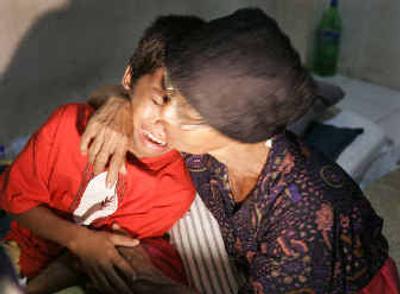
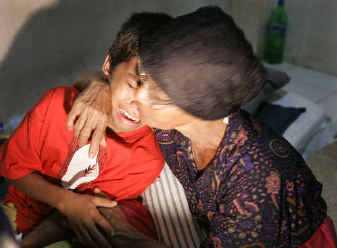
BANDA ACEH, Indonesia – Sitting on his bed in a Banda Aceh hospital, 10-year-old Zulfahmi Tarmizi hungrily eats the rice and vegetable soup his grandmother spoons into his mouth.
Days earlier, the pair were separated when U.S. troops ordered the grandmother off an evacuation helicopter to make way for casualties. Now, the Americans have reunited them in a good news story amid the tragedy that has enveloped Indonesia’s tsunami-shattered Sumatra island.
Both were sitting in an American helicopter Monday, when Zulfahmi was about to be airlifted to a hospital for treatment of a leg that was gashed to the bone when he was swept up in the Dec. 26 waves. The tsunami also took his parents and two siblings, all missing and presumed dead.
As the chopper prepared to take off, Zulfahmi’s grandmother, Adawiyah – his only surviving relative – had to get off.
“I was sitting in the helicopter when they told me to get out,” Adawiyah said Saturday through an interpreter. “I was distraught because my only surviving grandson was leaving me. I didn’t sleep all night. I asked everyone how to get to Banda Aceh.”
When the U.S. military heard what had happened, they set about tracking down Adawiyah, who like many Indonesians uses only one name.
One helicopter crewman on the USS Abraham Lincoln said Navy sailors passed the boy’s photograph around Sabang Island in their search for the grandmother. The pilots who brought about the reunion were from the Bremerton-based USNS Rainier, another ship in the U.S. military’s relief mission.
The grandmother has mixed feelings about how the U.S. military handled the rescue.
“Last night somebody came and told me I had a seat on a helicopter,” she said. “I’m grateful to the Americans for taking my grandson away, but it was tough being separated from him. … I didn’t know if I would see him again.”
Before Friday’s reunion, Zulfahmi would lie awake at night weeping, for his lost parents and siblings and for the grandmother he knew was alive but feared he would not see again.
“The little boy cries at night and he’s very bad when there are aftershocks,” said 45-year-old Marhaban, who is from the same village as Zulfahmi and shares a small hospital room with him and two other men. “He is very traumatized.”
After the tsunami, Zulfahmi and his grandmother fled to higher ground, surviving there on coconuts until he was evacuated.
“This was the toughest week of my life,” Adawiyah said. “My son is dead and I only have this little grandson left.”