
Anxious Brits will return to Tube
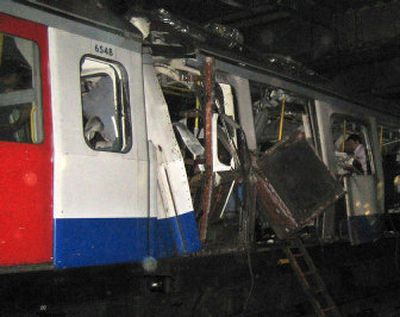
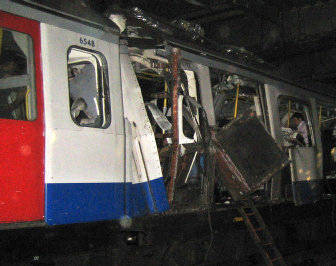
LONDON – Although the terror attacks on the British capital’s transit system will be a life-changing event for the bereaved and injured, most Londoners won’t be left with permanent psychological scars, experts predict.
“The vast majority of people are going to go back to using the Tube quite quickly, however nervous they may be, because they have to,” said Martin Alderton, a trauma specialist at the Center for Crisis Psychology in Yorkshire, England. “However, there will likely be a slightly heightened anxiety for a long time.”
That reaction does not mean someone is traumatized, added Dr. Michael Reddy, chairman of Independent Counseling and Advisory Services, a British-based international private network of psychologists that works with trauma patients.
“It may become a very persistent habit in some people, but it is a natural reaction that is in no way pathological,” he said.
Thursday’s attacks, which involved explosions on three subway trains and one double-decker bus during the morning rush hour, killed dozens and left 700 wounded. A group calling itself The Secret Group of al Qaeda’s Jihad in Europe claimed responsibility in a Web site posting, saying the bombings were punishment for Britain’s involvement in the war in Iraq and invasion of Afghanistan. The claim couldn’t be verified, but some U.S. officials said they were taking it seriously.
Londoners are intimately connected with their subway system, known as the Tube. It is the oldest underground rail network in the world, dating to 1863. The capital’s red double-decker buses are also one of its most recognizable symbols.
These days, Londoners take 3 million trips a day on the tube to crisscross a city that sprawls over about 620 square miles.
In addition to a long tradition of use, the Tube has a sort of mythical status among Londoners because of the role it played during World War II, said James Thompson, lecturer in psychology at University College in London.
“It was a place of safety during the war. People went into the Tube because it was underground and the German bombs couldn’t get you there,” he said.
But now, with the realization that it could be a terrorist target, the perception of the subway has shifted from haven to death trap.
“Virtually everyone there knows that they are sitting ducks. To even suggest that the Tube could be bombed is alarming, and the fact that it has been bombed now is alarming to people,” Thompson said.
“This is hard for us because so many of us are tube users. But whether it will be for us what Sept. 11 was for America, I would doubt, because we have so much more experience with this sort of stuff.”
Reddy agreed that previous experience is a crucial factor in determining how well a population fares psychologically after a tragedy.
While the United States had never considered itself vulnerable at home until Sept. 11, 2001, London has had a long experience with attacks – from the Nazi blitz during World War II to the Irish Republican Army.
What also will help Londoners recover more quickly is that there is no sense of surprise over why attackers may have struck, Thompson added.
“In the Sept. 11 incident, there was a colossal sense of bafflement over ‘What have we done to deserve this?’ I don’t think in England anyone is saying: ‘Why do they hate us?’ ” Thompson said, noting Britons have long been aware throughout history that their foreign policy is unpopular with some.
Also critical to psychological recovery is the meaning that individuals, or the society, give to the attacks, the experts said.
“How you interpret anything is key,” Reddy said. “Two people can experience the exact same situation and one says ‘Gosh, I was lucky I wasn’t killed,’ and the other says ‘This has ruined my life.’ The result is totally different, even though the original experience is the same.”
Experts said that because of Britain’s history of resilience in the face of attacks, it is unlikely that Londoners will adopt a disempowering interpretation of Thursday’s events.
But even before these factors play out, experts said they are certain London will recover.
“After Sept. 11, everyone assumed there would be a massive rate of traumatism of people, and largely that didn’t happen. So I hope London doesn’t make this incident worse by assuming the whole city is traumatized. The whole city isn’t traumatized,” Thompson said.