
Heading West

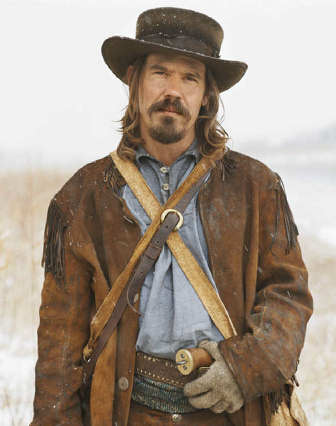
Just a few years ago, the TV miniseries seemed headed the way of the dodo bird, a victim of restless audiences and shrinking network budgets. But the format has experienced a comeback on cable. The Cecil B. DeMille of this surprising revival is Steven Spielberg, who has produced expensive and expansive miniseries for HBO (“Band of Brothers”) and the Sci Fi Channel (“Taken”).
Now Spielberg’s most ambitious TV project yet, “Into the West,” is coming to TNT. The 12-hour saga will unfold over six Fridays (with multiple repeats) starting tonight.
A sprawling, multigenerational drama spanning the years 1825 to 1890, it recounts the great Western migration through the stories of two families – one settler, one Native American – and the ways they clash and coalesce over the decades.
Along the way, the characters participate in a remarkable range of historical events: gold rushes, the building of the transcontinental railroad, the founding of the Carlisle Indian School in Pennsylvania, the Sand Creek Massacre, Little Big Horn and Wounded Knee.
The series employs the proverbial cast of thousands, including Sean Astin, Tom Berenger, Beau Bridges, Josh Brolin, Gary Busey, Jessica Capshaw, Keith Carradine, Rachael Leigh Cook, Matthew Modine, Judge Reinhold and Keri Russell.
The actors and extras were outnumbered only by buffalo during six months of shooting in Calgary, Alberta, and New Mexico.
“There were literally thousands of buffaloes,” says Justin Falvey, co-head of DreamWorks Television and an executive producer.
“We had a whole separate buffalo unit. On those sequences, they decided how many real ones we’d have and which ones would be CGI (computer-generated image) buffaloes.”
Astin, who portrays prospector Martin Jarrett, says the series picks up where documentaries leave off.
“You’re showing a more complete story than what we read about in the sixth grade,” he says. “In one scene, you’re identifying with the settlers, then in another, you feel the pain of the Native American.”
“It’s not a history lesson; it’s how these events affected these people’s lives,” adds Simon Wincer, one of the series’ six directors.
Wincer, who directed the TV classic “Lonesome Dove,” was responsible for the second episode, “Manifest Destiny.”
“We begin to understand why natives attacked wagon trains, stuff we’ve only been told about in a Hollywood way before,” Wincer says. “It’s quite revisionist but it doesn’t take sides.”
“Into the West” goes to enormous lengths to re-create period detail, especially the culture of the Plains Indians.
Zahn McClarnon, a Hunkapapa Sioux who plays Running Fox, a Lakota, recalls: “When we went up to rehearsals (in Calgary) in August, I walked into a gymnasium full of bulletin boards covered with information about Native American lodging, clothing, ceremonies, history.”
Throughout the series, the native characters speak in authentic tribal dialect that is translated in subtitles. McClarnon studied with Charlie White Buffalo to learn a historically correct version of Lakota.
“He made sure we were accurate down to the last syllable. I’m talking about even guttural sounds,” McClarnon says.
” ‘Dances With Wolves’ did a good job of humanizing the natives, giving us emotions and feelings,” says Joe Marshall, an Ogalala and Rosebud Sioux who served as a “West” technical adviser and dialogue coach. “We’re usually just the grunting savage in the background.
“That movie opened the door. This movie takes it one step further.”
Of course, such a painstaking duplication of period detail doesn’t come cheap. TNT shelled out $50 million to make “Into the West,” and that investment shows up on the screen.
“For the railroad scenes, they shipped up all these incredible antique trains from South Dakota,” says Cook, who plays Clara Wheeler. “I couldn’t wrap my mind around that.”
For Skeet Ulrich, who plays Jethro Wheeler, one of the central characters, panning for gold meant a good deal of time in the water.
“I was in four different rivers,” says Ulrich, whose climactic sequence was shot in December.
“It was 25 below,” he says. “They would break ice off this river for me to get in and shoot. It was brutal.
“They had defibrillators waiting on the bank. I have never been that cold in my life and hope to never be that cold again.”
Even the most pedestrian scenes were taxing, according to Russell, who plays Naomi Wheeler, a settler who later lives with the Cheyenne.
“Sometimes it was really, really hot and sometimes it was snowing,” she said on the phone from Los Angeles. “You’d be walking in the prairie grass in period skirts, sometimes holding a child. The physical stuff was as much a part of the acting as the dialogue.”
The conditions were even worse for the Native American actors.
“The ‘settlers’ had saddles; we had to ride bareback,” McClarnon says. “For the third episode, it was below freezing in the mornings and we were half-naked in all our scenes. In between takes, we’d put on jackets.”
Incredibly, TNT has spent another $50 million to promote the miniseries, including movie-house promos, incessant ads during the channel’s NBA playoff games, and a mammoth billboard that has loomed over Manhattan’s Times Square for the last two months.
The challenge is getting today’s short-attention-span viewers to sit still for 12 hours of history-intensive drama.
“I hope people are entertained,” McClarnon says. “It’s not a documentary. It’s more of an adventure. It’s a love story. It’s a story about families. There’s tragedy and a lot more.”
Thanks to Spielberg, a whole lot more.