
Watering your lawn can be delicate balance
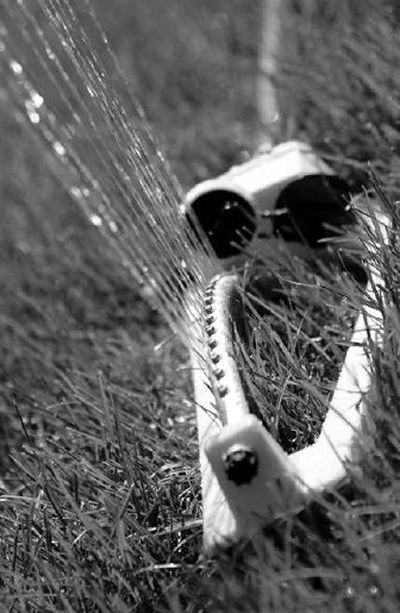
A little water here, a little water there. Water is one of the key ingredients in keeping your lawn healthy. However, you just can’t turn on the sprinkler and let it run for a couple of hours.
As with any recipe, you need to know how much water to use and when and how to apply it.
•If you’re like most people, you probably don’t think much about watering your lawn until the weather starts heating up. While the first warm days of summer are a good sign, they don’t necessarily mean you need to water your lawn right away. Allowing your lawn to undergo some mild drought stress will increase its rooting. As long as the grass is green and springs back when you step on it, your lawn is fine. If the grass is starting to wilt and you can see your footprints, it’s time to start watering it.
•Most lawns require an inch to an inch-and-a-half of water per week, or about 640 gallons per 1,000 square feet. Rainfall should be considered part of the weekly total, and generally, one deep watering is better than several light ones unless you have a newly seeded or sodded lawn. More frequent waterings will simply promote shallow root systems and result in more weeds. For deeper, healthier root development, you should water your lawn to a depth of 4-to-6 inches once a week. To measure the depth, place an empty tuna can upon your lawn. When it is full or you notice water running off the lawn, you can stop watering.
•Depending upon the weather and the type of soil you have, you may need to increase your waterings. If it is really hot outside, you should water your lawn every three days. Water tends to slip through sandy soil, making absorption difficult, so if you have a sandy lawn, you should water it twice a week to ensure absorption. If you have clay or loam soil, watering your lawn once a week will suffice.
•However, with clay soil, water is absorbed slowly, so you may need to water your lawn four times a day instead of once. To aid absorption in sandy and clay soils, add some organic material to your lawn, like compost or peat moss, and use mulch around your plants.
•If at all possible, you should water your lawn early in the morning when it is still wet with dew. The rate of evaporation will be low and the sun will quickly dry the grass, reducing the chance of disease. You can also water it during light rains and at night when the rate of evaporation is low.
•However, keep in mind that if you water your lawn at night, you will increase the risk for disease, as the water will sit on the grass blades all night and improve the breeding ground for disease. To control where the water goes, avoid watering your lawn on windy days.
•You may hose down your lawn or use a sprinkler. Just make sure you apply the water only as fast as the soil can absorb it and keep the coverage even. Avoid flooding spots or skipping areas and watch for excessive runoff on hills and slopes. You may have to do two applications on hills and slopes to ensure the water soaks in. Once the surface is wet and the water begins to run off the grass, the watering is complete. To help conserve water, mow higher, limit lawn traffic and control thatch and soil compaction.
•Keep in mind that once you start watering your lawn, you need to keep doing it. If you don’t, you will put more stress on your grass and cause it to lose large amounts of food reserves. If you think that you’re not going to have the time to keep up with the watering, let your lawn go dormant at the start of warm weather and leave it be. It may not look as nice as you would like, but it will fare better than if you give it just enough water to make it green and then let it go dormant.
•Regularly watering your lawn will keep it healthy. However, over or underwatering it could kill it, so make sure you do your homework.
Learn what the right amount of water is for your lawn and the best time and way to apply it.