
Remote town takes a look at nuclear power
ANCHORAGE, Alaska — Electric stoves are a convenience, but in the Yukon River city of Galena, many people pass them by — the appliances suck up more juice than residents can afford.
With Galena tucked into the western part of Alaska, diesel oil that powers the electrical plant must be towed 350 miles by barge. Customers pay 30 cents per kilowatt hour, compared to a national average of 8.71 cents, so they cook with propane, turn off lights and limit television time.
In need of relief, the community of 700 people is turning to nuclear power. But Galena’s plant would be far different from other U.S. commercial nuclear power plants — at 10 megawatts, it would be downright tiny.
City officials met recently with staff from the Nuclear Regulatory Commission to discuss licensing a plant being developed by Toshiba Corp. that could be a test case for providing cheap power to rural communities.
“Some people believe nuclear is coming around again,” said Marvin Yoder, Galena’s city manager.
The smallest U.S. commercial nuclear power plants are the Fort Calhoun Nuclear Plant, 19 miles north of Omaha, Neb., and the Ginna Nuclear Plant, east of Rochester, N.Y. Both have electrical output of 470 megawatts, roughly 45 times larger than what Toshiba is contemplating, said NRC spokesman Scott Burnell.
Joe Williams, an NRC senior project manager in the new reactors section, described the meeting with Galena officials as a get-acquainted session to hear about the city and lay out the formidable process for building a nuclear plant.
Williams and Burnell stressed that the commission’s role is not to discuss whether nuclear power is a viable alternative for rural America, but to ensure that reactors are safe.
Few places are as rural in America as rural Alaska and options for low-cost power are few. Galena is 185 miles west of the nearest link to the nation’s highway system. Diesel oil is shipped to residents on the Yukon and Tanana rivers.
Like all of interior Alaska, Galena experiences wild temperature extremes, from a summer high of 92 to a winter low of 64 below zero.
“It’s a little bit like people in Florida getting used to hurricanes,” Yoder said.
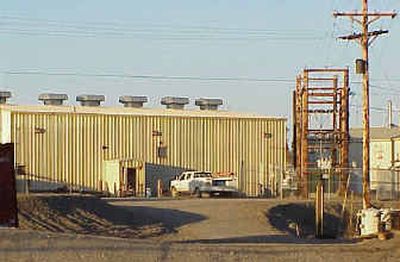
A reactor would be a dramatic contrast with Galena’s austere infrastructure. Its roads are gravel, and only a few homes are on a piped water and sewer system.
Galena began considering nuclear power after determining that wind and solar power were impractical and that coal was too costly. After discussions with Toshiba, city officials concluded nuclear power would be the cleanest and least expensive alternative, lowering costs to 10 cents per kilowatt hour.
Toshiba officials said the small reactor would not be operational for five to 10 years. The actual reactor would be about 7 feet tall and 30 inches in diameter and would be near the bottom of a concrete tube about 60 feet below the ground.
The reactor’s fuel, which has not been specified, would stay encapsulated for 30 years, unlike fuel at a conventional reactor that is routinely replenished.
Yoder expects an encased reactor, with few moving parts using a low-grade plutonium or other fuel that could not be reused for weapons, would be cheaper to operate and protect than a conventional reactor.