
Selling Mandela
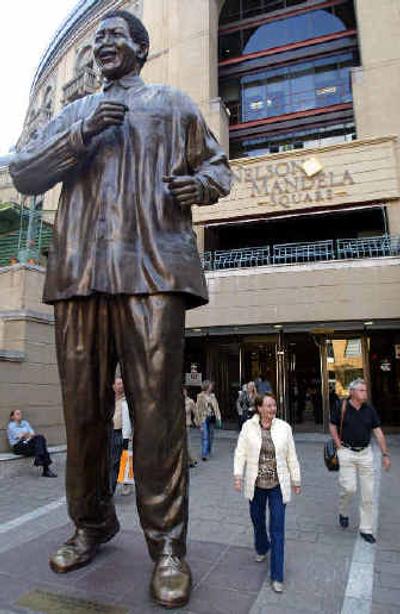
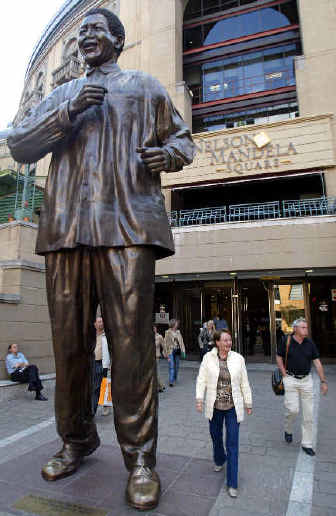
CAPE TOWN, South Africa — Anti-apartheid hero. Icon of peace and racial reconciliation. Father of the nation. Brand name on everything from gold coins to clothing?
Adored and admired the world over, Nelson Mandela has deployed a team of lawyers to make sure the commercial label doesn’t stick, going after the opportunists, criminals — and now even an old friend — accused of trying to exploit his name by attaching it without permission to a range of products and causes.
The 87-year-old former South African president and Nobel Peace Prize laureate is locked in a legal battle against his former attorney and adviser, Ismael Ayob, over what happened to the profits from Mandela’s brief flirtation with drawing and whether his signature was forged on a series of lithographs of his Robben Island prison.
In what promises to be a painful struggle against Ayob, Mandela has drafted George Bizos, the celebrated lawyer who represented him during his treason trial for fighting the white racist regime four decades ago.
“I don’t think that Mr. Mandela or I expected — or are enjoying the prospect of — this litigation,” Bizos told The Associated Press in an interview, adding he expected to file the case in the Pretoria High Court “in the next few days.”
The case will illustrate the complexities of protecting Mandela’s name from commercial predators while allowing his legions of fans to re-christen roads, squares, bridges, universities and shantytowns in his honor.
“Mr. Mandela’s instructions are very clear and emphatic,” another of his lawyers, Don MacRobert, said in an interview.
“If you want a museum or municipality named after him, he will agree if you get his approval. If you have a commercial concern — such as T-shirts, or hats or diamonds, the short message is, `No,”’ said MacRobert, adding that Mandela is determined to prevent attempts to “Disney-ize his name.”
MacRobert, a 65-year-old copyright and patent law attorney, says he is involved in about 45 cases for Mandela. He reeled off a list of recent alleged offenders:
• A man in Sydney who registered the Internet domain name of nelsonmandela.com. After threats of legal action, he transferred the name to Mandela in January.
• A woman in the Netherlands who wanted to register the name Nelson Mandela for an educational company. When challenged, she insisted “Nelson Mandela” was a holy Sanskrit name.
• A clothing company that applied to register Mandela’s prison number, 46664. MacRobert put his objections into verse and the company relented — then went out of business.
• A South African vehicle repair company, Nelson Mandela Panel Beaters.
• A South African company that wanted to mint gold coins bearing Mandela’s name and image.
• Swindlers who set up nelsonmandelafoundation.com and solicited gifts for Mandela via a Cyprus bank account. The police agency, Interpol, and the bank in question got involved and the scam ended, though it’s not clear how much the thieves pocketed.
MacRobert said he took over intellectual property questions from Ayob, who left a “mess” when he was squeezed out of Mandela’s inner circle last year.
Ayob’s business associate, Ross Calder, was the impresario behind a series of lithographs titled “My Robben Island,” where Mandela spent 18 of his 27 years in prison, issued in 2002 and 2003. They included sketches of his cell. Subsequent series were based on Mandela’s hand.
The original works were snapped up by celebrities, including Oprah Winfrey and former President Bill Clinton, selling for tens of thousands of dollars in some cases. Hundreds of lithographs were made — all purportedly with an original signature by Mandela, and the proceeds were to go to AIDS and educational charities.
Mandela’s lawyers have alleged that many of the signatures were forgeries. Bizos insists Mandela had not autographed any lithographs “for at least 18 months,” even though new lithographs were in circulation supposedly bearing his signature.
Bizos was tight-lipped about the exact contents of the lawsuit, but indicated it will revolve around the alleged forged signatures as well as what happened to the profits.
“We don’t know how much money there is and how much money there should be and where it is,” he said. “We do believe it is under the control of Mr. Ayob.”
Press reports say millions of dollars may be missing. Ayob and Calder could not be reached for comment but have disputed the allegations in the South African media.
Bizos has disputed accounts circulated by Ayob and Calder that profits from the sale of the art went to the Mandela Trust, which is controlled by Mandela’s daughters, Zenani Dlamini and Makaziwe Mandela.