
Book chronicles adoption highs, lows
Back in 1997, journalist Jill Smolowe wrote a memoir about her rocky road to parenthood by way of China, adopting a 7-month-old girl.
As the years passed, that kind of personal narrative, along with how-to books for prospective adoptive parents (there’s even an “Adoption for Dummies” title), dominated adoption literature. At the same time, those concerns were fading for Smolowe, dealing with diapers, play dates, piano lessons – and how much she should expose daughter Becky, now 11, to Chinese culture.
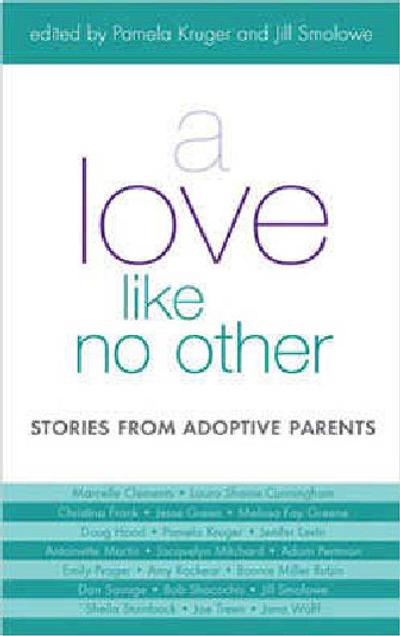
So the Montclair, N.J., resident jumped when fellow author and adoptive mother Pamela Kruger of Millburn, N.J., asked her to co-edit a book of essays by writers on the joys and challenges of raising these children, now 1.6 million strong in the United States. The result is “A Love Like No Other: Stories From Adoptive Parents” (Riverhead Books, $23.95).
“I have an older biological daughter, so I had experience as a parent, but things were coming up that weren’t in any parenting books out there. They just don’t address the issues of adoptive parents,” Kruger said.
The editors said they wanted the 20 pieces, by award-winning writers, to reflect the range of experiences and diverse families adoption creates, but also to resonate with all adoptive parents.
Just don’t expect any advice.
“We were not looking for answers. We wanted to share experiences, conundrums and debates, and make people feel more comfortable discussing the issues,” Smolowe said.
So perhaps it was fitting that the first – and probably the best known – author to sign on to the project, Jacquelyn Mitchard, railed against people who aren’t comfortable with her blended family of seven children, including a stepdaughter and four adopted kids. What irks her the most is when she is asked which of her children are really hers.
“You’d think by now that adoption’s so deep in our culture that the next thing we’ll be giving our kids is Barbie’s Chinese Baby, but our families are still a curiosity – still regarded as a little on the shady side of regular,” writes Mitchard, whose novel “The Deep End of the Ocean” was the first selection of the Oprah Winfrey Book Club.
Smolowe and Kruger weigh in on debates in the adoption community – how much should parents immerse a child in her culture of origin and whether to track down the birth parent in an international adoption, a decision that wasn’t possible before the advent of the Internet.
Smolowe writes that “we continue to treat race largely as a nonissue in our household,” largely because that is how her daughter seems to treat it. For her, the best way to negotiate “this business of race” is to keep affirming the way her daughter identifies herself – however that may be. It is, she admits, “not a p.c. (politically correct) attitude.”
In contrast, writer Emily Prager hired Chinese babysitters, sent her daughter LuLu to Chinese schools and took her back to China.
Kruger, a contributing editor at Child magazine, agonized whether she should find the birth parent of her daughter, adopted from Kazakhstan, and risk the nightmare that the birth mother would want her child back.
Finally she decided to do it because the trail could turn cold by the time her 4-year-old could search for herself. “It’s a very charged issue,” Kruger said. She now has photos and a note from the birth mother – as well as relief knowing the adoption was legal.
Joe Treen, Smolowe’s husband, writes about his ambivalence and then his heady embrace of fatherhood.
Not all the stories end as happily: Bonnie Miller Rubin, a Pulitzer Prize-winning journalist, relates how love and years of intervention couldn’t help her adopted, developmentally disabled daughter, now 17 and living in a residential facility.
“Despite all our efforts, we were no match for a bunch of neurotransmitters. All these years I had thought that my achievements – the strong marriage, the good job, the healthy son – were because of hard work. Now I realize I was just lucky,” she writes.
Dan Savage, who with his male partner has an open adoption with their son’s mother, struggles with how to explain to the boy why his mother, a homeless street woman, doesn’t call or visit. Antoinette Martin deals with the break-up of her marriage, finally coming to grips with the fact that her ex-husband left her but not the children they had adopted together.
In one of the most touching pieces, Melissa Fay Greene fears that the adoption of a 4-year-old whom she initially calls “the interloper” is a mistake.
“Do I love him yet?” she keeps asking herself, panic-stricken. Her friends counsel her to “fake it,” since the boy, from a Bulgarian orphanage, will never know the difference.
Cliched as it might seem, it’s the child’s love for her that wins her heart. After she cuts herself while slicing him a bagel, he hands her a plastic knife that can’t hurt her.
“What was it I felt at that moment, as I laughed and wept and accepted the picnic knife and hugged him? Was it, actually … could it be. …?” she asks, concluding, “…If this wasn’t the beginning of an old-fashioned sweet mother-son relationship, this repentant little boy handing me, so earnestly, a plastic knife, I didn’t know what was.”