
High-stakes games

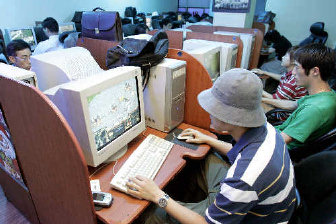
SEOUL, South Korea — Jun Mung-gyu remembers the throbbing pain in his head and shoulder aches from spending as many as 15 hours a day hunched over a computer keyboard battling his online foes.
“You have no life, you only focus on gaming, putting off everything, like getting a haircut,” recalled the 27-year-old Jun, who was able to kick the habit earlier this year though he remains in the milieu, running an Internet cafe in southeastern Seoul.
For others, the addiction has become all-consuming, raising concerns about the health of the millions of gamers in the world’s most wired country.
The habit has even been deadly: In August, a 28-year-old man died after nearly 50 straight hours of playing online computer games. The man, whom police refused to identify by name, was moved to a hospital after he collapsed while gaming and died three hours later.
Many of South Korea’s 17 million gamers — some 35 percent of the population, principally males in their teens and twenties — are obsessive. At the 1,000 won-per-hour ($1) Internet cafes popular among young South Koreans, they’ll sit eyes glued to monitors for hours on end. Sometimes play will extend for days.
“I’ve seen people who play games for months, just briefly going home for a change of clothing, taking care of all their eating and sleeping here,” Jun said.
Gamers camped out at Internet cafes typically live on instant cup noodles and cigarettes, barely sleeping and seldom washing.
In this country of 48 million people with the world’s highest per-capita rate of broadband connectivity at 70 percent, the rise in addiction to multiplayer online gaming is alarming psychologists.
The number of counseling sessions for game addiction quadrupled last year, the government says. There were 8,978 sessions in 2004 compared with 2,243 cases the previous year, and the first seven months of this year saw 7,649 sessions.
This year’s gaming death wasn’t the first such case of someone dying at a computer terminal in this game-crazed nation: In 2002, a man died in Kwangju after 86 hours of marathon gaming.
The latest casualty collapsed Aug. 5 in the southern city of Daegu after having eaten minimally and not sleeping.
Computer games can also be a path to big rewards. Three cable channels are devoted to broadcasting game matches and a total of 4.5 billion won ($4.4 million) is given out as prize money in competitions each year.
Hong Jin-ho, a 24-year-old professional gamer, earns more than 133 million won ($130,000) a year, living and training with his fellow game team members in an apartment in central Seoul.
Hong, who specializes in Starcraft, a science-fiction strategy game, says he has never thought of video games as an addiction.
He admitted, however, that the seven to eight hours of daily training — which sometimes drags on for nearly 24 hours before competitions — can be physically challenging.
“My body doesn’t welcome it, but I do it to win,” Hong said.