
Boise dismounts police on horses
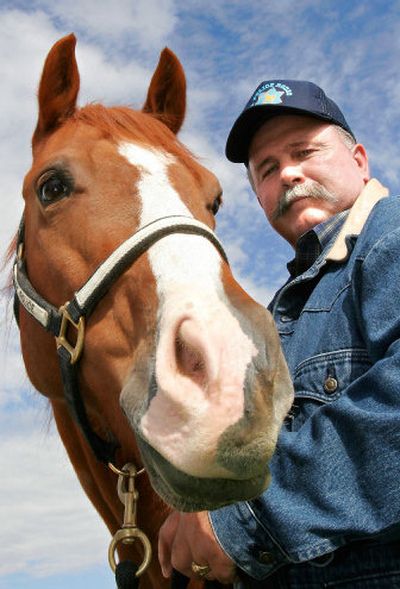
BOISE – When Boise police officials went looking for ways to save money, they found an easy target – the department’s small mounted unit. Last month the department sold off its horses and equipment, to the dismay of some locals.
Similar decisions in other cities have silenced police hoofbeats around the country. But fans of mounted police argue that cities are giving up valuable tools to control crowds and win over the community. And some departments have revived their horse units.
“That was the biggest public relations tool they had,” said Rene Ducroux, who sold the Boise police a horse two years ago and bought it back at the auction. “Families will go up to a police officer on a horse and actually have that interaction. On a horse, it breaks that wall down.”
Mounted police units come and go, said Patrick Muscat, who led the Detroit mounted police unit for 21 years and wrote a book about their history. He estimates there are still 300 mounted police units, some of them very small, in the United States.
“I think it’s on a decline these last few years,” Muscat said.
Dian Cecil, who raises and sells police horses from her farm in Lexington, Ky., agrees.
“Sadly, it happens often,” Cecil said. “They may have bicycles, motorcycles, dog teams, SWAT teams, scuba, and when the city goes through hard times, then a lot of the specialty units will be disbanded.”
The Boise mounted patrol unit was formed in 1987 with three horses and three riders, and stayed that size for the next 18 years. They were the only full-time mounted patrol unit in the state, police spokeswoman Lynn Hightower said.
When Ducroux went to the police auction, he was dismayed to see no signs the mounted unit would ever return.
“They sold even the bolts to the floor that held the barn, the vacuum cleaner, rags, halters, tack. Everything that wasn’t nailed down they sold. It was like they wanted to be done with it,” Ducroux said.
Detroit disbanded its 112-year-old mounted police unit this month. A businessman there, Bob Raisch, is raising private donations to try to bring them back.
“They’re the best crowd control device ever invented,” said Raisch. “More than that, it’s just the feeling of security and well-being and sophistication that a mounted policeman conveys to both citizens and visitors.”
Sprawling Boise rarely has crowd-control problems, Hightower said.
“Horses are part of our western heritage that we love to celebrate; from that point of view it really is kind of a sad day,” Hightower said. “But it’s also a day where the department needs to be accountable to taxpayers.”
Ducroux and Todd Johnson, who owns Flynn’s Saddle Shop in Boise, both said they would have contributed their own money to keep the unit together if they had known earlier it was being dissolved.
“I was a little disappointed they didn’t see if there were people in the public who wanted to carry the program forward,” Johnson said.
Hightower thinks it unlikely the Boise unit will return anytime soon. But the people who love police horses tell many stories of units that came and went with the rise and fall of new leadership. Toledo, Ohio’s seven-horse mounted police unit was established in 1989, disbanded because of financial problems in 1991, and re-established in 1995.
“It is somewhat of an expensive unit to maintain,” said Capt. Diana Ruiz-Krause, a spokeswoman for the Toledo police. “But when we have the big events downtown, there’s really nothing that works like a police officer on top of a horse.”