
King fights wilderness bill
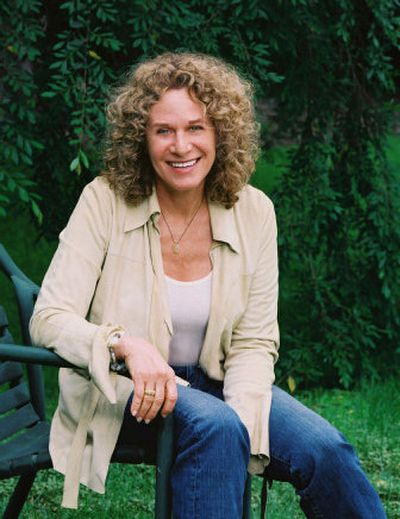
BOISE – Singer and environmental activist Carole King, one of Democratic presidential candidate Sen. John Kerry’s campaign trail troubadours last year, is heading to Washington, D.C., next week at the invitation of Republican lawmakers to testify before Congress against a bill creating more protected wilderness in Idaho.
Has the Earth moved under her feet?
“I know it sounds ironic, but I have a good relationship with members of both parties of Congress,” said King, an Idaho resident who was encouraged to testify at Thursday’s hearing by the bill’s sponsor, Rep. Mike Simpson, R-Idaho. “Mike well knows I oppose his bill and why, so I have to believe that by inviting me, he is trying to make a fair presentation.”
Simpson said he also asked the majority Republican leadership of the U.S. House Resources Forests and Forest Health Subcommittee to invite other opponents of his bill. It would set aside more than 300,000 acres in the Boulder and White Cloud mountains in central Idaho as new wilderness while giving local governments millions of dollars in compensation plus an estimated 6,000 acres in public land to develop as they see fit.
Although the formal witness list has not yet been released, Simpson acknowledges critics of his bill may outnumber supporters at the hearing table.
The one witness that minority Democrats on the panel are allowed to invite is expected to be a former Sawtooth National Recreation Area official, who, like King, believes Simpson’s bill is larded with provisions that threaten protection of the recreation area, a rugged 756,000-acre section of jagged peaks set aside for preservation by Congress in the 1970s.
King is a Brooklyn, N.Y., native who first moved to Boise 28 years ago, then relocated a short time later to rural Custer County. She said her testimony is intended to counter the endorsement given to the bill by the Idaho Conservation League, The Wilderness Society and the Campaign for America’s Wilderness.
“Any conservation group that tells you this is a wilderness bill, that’s like saying a hand towel is the same as a blanket on a cold night,” said the 63-year-old Rock and Roll Hall of Fame grandmother, whose signature album is 1971’s “Tapestry.”
King is lobbying for an alternative to Simpson’s bill that would protect a much vaster swath of the Northern Rockies – including the Boulder and White Cloud areas – in Idaho, Montana, Oregon, Washington and Wyoming as federal wilderness. Called the Northern Rockies Prosperity Act, it is sponsored by Rep. Chris Shays, R-Conn., and King likes to point out it has 184 co-sponsors in the House while Simpson’s bill has just one co-sponsor.
“I’ve told Carole, you can hold out for your bill until the cows come home, but it’s not going to happen in our lifetime,” said Simpson. “In politics, you learn to take what you can get when you can get it.”
But King argues Simpson’s bill doesn’t get enough for what it gives away.
Besides privatizing 6,000 acres of public land and making $20 million in compensation payments to neighboring counties and towns, the Simpson wilderness bill does not reserve federal water rights in the protected areas, would allow motorized travel on many foot-traffic-only trails in the existing Sawtooth recreation area and would release 131,616 acres now being studied as potential wilderness for development or other non-wilderness uses.
King said Simpson’s bill represents a dangerous trend of “quid pro quo” wilderness legislation that true conservationists should recognize as wilderness in name only.
“This is really the hinge of history in terms of the wilderness protection movement,” she said. “If this goes through, we are well on our way to a new era of public land giveaways.”