
Original ‘Kings’
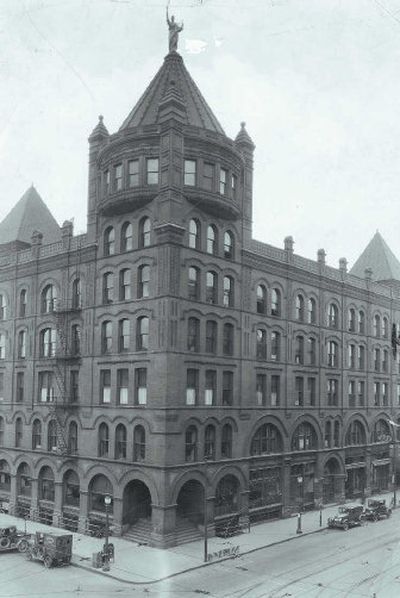
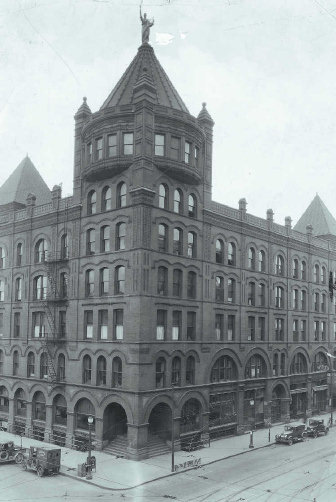
When we say in this section’s cover story that the upcoming six-week run of “The Lion King” is the biggest theatrical event in Spokane’s history, we mean it.
A dive into the theatrical archives has uncovered no other national touring show that has stayed for this long (six weeks) or played to more people (about 120,000, if it sells out).
However …
It’s true only as far as it goes. Spokane’s theatrical history is full of events that were, for their time, every bit as sensational.
And don’t think for a minute that theater in Spokane is better attended today than it was before talkies and TV arrived. Old Spokane might even have a theatrical world record or two to brag about.
Read on.
“World-class theatrical spectacles – When “Ben Hur” came to Spokane as a road show in 1905, it was considered the most extravagant production in American theatrical history. Spokane audiences soon found out why. The exciting climax featured a live, loud, violent chariot race with real horses, running on a state-of-the-art treadmill.
This show made such an impact that several weeks later The Spokesman-Review ran a story about three boys who had made three “chariots” out of soapboxes and re-created the famous race on Second Avenue. The boy playing Ben Hur wore a “real tin helmet, saved from the last Christmas tree.”
“Major international stars – Rarely has any day rivaled, for sheer theatrical excitement, the day in 1891 when singer-actress Sarah Bernhardt played the Auditorium theater.
She was the biggest star in the world (opera or otherwise). She traveled in her own train, which included her private car, two baggage cars, a passenger car and the Hazelmore, “an elegant buffet car.”
The Auditorium’s capacity was 1,400 but somehow 1,800 people managed to shoehorn themselves in.
The newspaper’s drama critic practically had a meltdown in print the next morning: “The average man finds it impossible to withstand Bernhardt’s witcheries … her individuality is as immense as her luggage and her influence is as benumbing as a red hot stove at an experience meeting.”
“Numerous road shows – In 1900, Spokane hosted 152 road shows.
This year, the Best of Broadway series will present four road shows – although one of them is massive.
Almost all of those touring shows in 1900 were in and out of town in less than a week.
“Massive attendance – Before talkies and TV began to make serious inroads, live theater was Spokane’s primary form of mass entertainment.
In 1925 alone, the Auditorium theater sold 750,000 tickets for its popular “stock company,” the Maylon Players. Of course, this was not for just one play. A stock company consisted of a set group of actors who performed a series of plays, usually a different one each week.
Those incredible audience numbers were made possible by a grueling schedule: two complete performances per night, plus three afternoon matinees per week, equaling 17 performances per week.
“Record-setting consecutive performances – The Maylon Players and an earlier stock company at the Auditorium, the Jessie Shirley Players, hold a special distinction in American theatrical history, at least by some accounts.
The Jessie Shirley Players set a world record in the first decade of the 20th century with 957 continuous stock performances. The Maylon Players, at the same theater 20 years later, surpassed that by racking up more than 2,000 consecutive performances over five years, although with the traditional summer breaks.
A 1937 Spokesman-Review article claimed that The New York Times cited the Maylon feat as a record that “has never, to our knowledge, been challenged.”
Both of these claims have been repeated in print in Spokane numerous times, yet are impossible to verify.
“One event that was even bigger: Don’t forget that Spokane once hosted an entertainment event that lasted nearly seven months and had attendance of more than 5 million.
It was called Expo ‘74, Spokane’s World’s Fair. But it would be a stretch to call that “a theatrical event.”
The Lewis and Clark Report: These were momentous days for the Lewis and Clark Expedition, 200 years ago. On Oct. 16, 1805, they finally touched the waters of the Columbia River.
On Oct. 23, they arrived at the great Narrows of the Columbia. While portaging around Celilo Falls, an Indian chief informed Clark that “the (Indian) nation below intended to kill us.”
Clark responded by double-checking all of the guns and ammunition.
100 years ago in Spokane: The importance of railroads in Spokane’s economy was illustrated by this fact: On Oct. 21, 1905, more than 21 miles of trains rolled through Spokane.
Yes, miles. The Northern Pacific routed 55 freight trains and 16 passenger trains through the Spokane area that day. The Great Northern accounted for about another 20 freight trains and several passenger trains.
Those numbers were not unusual. The Spokesman-Review called them a “fair average.”