
Evacuees flood back to Mississippi
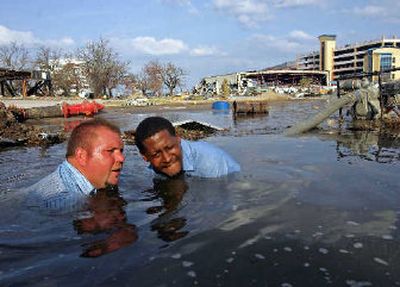
GULFPORT, Miss. – The first signs of a massive rebirth appeared Tuesday across this landscape of wind shear and woe, as business owners opened their doors – and their arms – to communities crushed by Hurricane Katrina.
From chain drugstores to corner mom-and-pops, work crews and store managers dusted off and pushed forward, trying to regain some semblance of normalcy along the shredded Gulf Coast. The sense of re-established routine was everywhere, as insurance agents made emergency payouts and Brinks and Coca-Cola trucks hustled from stop to stop.
But the roads were filling up fast with more than just delivery trucks: There were signs throughout the region that scores of residents who had fled the storm were now heading back home, vying for traffic lanes with relief and construction convoys all heading to the same place.
Westbound Interstate 10 was clogged much of Tuesday; many cars bore tags from Biloxi, Gulfport and points west. Main arteries, such as Pass Road and Highway 49, also were backed up at major intersections, most still without traffic lights, a few regulated by police or soldiers.
Despite the flurry of businesses opening their doors, the backdrop remained a sobering and often frightening place.
Gov. Haley Barbour said in Jackson that the death toll in Mississippi now stands at 196. Most of them died in the six coastal counties, he said, adding that he expects the number to grow.
As he spoke, search teams were making a final pass through the rubble, and armed troops cordoned off refrigerator trailers believed to contain the bodies of storm victims. Electric companies pressed on with a power restoration almost epic in scope. And parents continued to fret about where their children would go to school, as administrators tried to get their hands around an educational system savaged by floodwaters and wind.
Up and down the coast, plywood sheets spray-painted with “Open for Business” began popping up, to the great relief of owners and customers.
“Today is a turning point,” said Cynthia Shuttleworth, who with her husband reopened their chiropractor center in Gulfport. “We’re back on the upswing, and we’re reaching out to the community to come in and get help. This has been such an upside-down upheaval for so many of them.”
Despite fuel shortages, employees were back on the job and clogging roadways to deliver products such as tires and lumber. Often without basic necessities, entrepreneurs jerry-rigged ways to filter their water and keep generators running, even as looters threatened to steal the gasoline that kept the machines going. And where Internet communication failed, workers took the old-fashioned route to clients and vendors: paper files and Rolodexes.
Nationwide Insurance agent John French couldn’t invite policyholders to his Long Beach office because it doesn’t exist anymore, so he took his office to them. He set up shop in the back of his black Dodge Ram parked near a military checkpoint at the entrance to the now-evacuated downtown.
“I’ve got a notebook full of my customers’ rough losses, so that when my adjusters arrive tomorrow they can go right to work,”’ said French. “I’ve been here 25 years and I wanted to let people know I didn’t run out on them.
“I hate to say life is getting a little more comfortable for folks,” he added, “but compared to what it was this past week, this is a whole new world.”