
Teams set to help pets
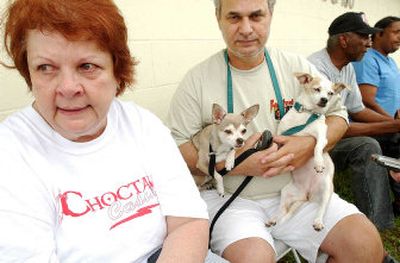
Anyone who has ever loved an animal would understand the horror: Hurricane Katrina left untold thousands of cats, dogs and other pets wandering debris-strewn streets, floating in floodwaters and trapped in houses, abandoned during the confusion and evacuation.
Working with local animal shelters and government offices, animal welfare groups have sent teams to help save pets from the danger zone and reunite them with their owners.
“To someone who owns a pet and considers them part of the family, this is just heartbreaking for them,” said Patricia Ellen Jones, spokeswoman for Noah’s Wish, based in Placerville, Calif.
The organization’s volunteers are coordinating with animal control officials in Slidell, La., across Lake Pontchartrain from New Orleans, to care for cats and dogs at a temporary shelter.
Noah’s Wish also has collected phone calls and e-mails from refugees in search of their pets, including this one from a 12-year-old boy: “I evacuated from Hurricane Katrina leaving my pet leopard gecko, Betsy … the gecko eats crickets, meal worms.”
Groups are sifting through thousands such messages, many desperate pleas for help. Best Friends Animal Society in Kanab, Utah, received this one:
“Please help. We have two cats stranded in a house in uptown New Orleans. Franco is a 10 lb orange manx, 6 yrs, and Zooey is a small 6 lb gray manx, 1 yr. They are our world. … I fear that even if they do not drown they will either starve or be eaten by fire ants before we can return.”
Some people unwillingly left their pets behind.
“We’ve heard horror stories about people being rescued, and they’re not allowed to bring their pets” on buses and helicopters, said Melissa Seide Rubin, vice president of field and disaster services for the Washington-based Humane Society of the United States, which sent rescuers to Mississippi.
Rubin said shelters often do not allow pets, forcing owners to abandon them or put themselves and the pets at risk.
Humans and animals are vulnerable to many of the same conditions, including dehydration, starvation and heat stroke.
“Animals are overlooked in a tragedy of this capacity,” said Jo Sullivan, spokeswoman for the American Society for the Prevention of Cruelty to Animals in New York, which has sent a contingent to the Gulf Coast. “We know there are 20 million things to do.”
The groups stress they are pitching in, without minimizing efforts to save people.
“We really don’t even have a concept of the extent of the disaster,” said Kathryn Jahnigen, spokeswoman for the American Humane Association in Englewood, Colo., which has rolled a big rig to Louisiana with emergency supplies and veterinary equipment.
Michael Mountain, Best Friends’ president, said his group is working to make sure saved animals are placed in homes, if they can’t find the owners. The idea, he said, is to comfort — to allow bereft owners to say, “If I left Fluffy and Fido behind, they’re now in a good home with someone who cares about them.”