
Yakima not state hot spot
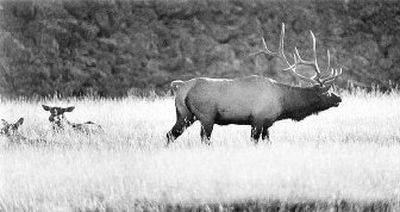
The Yakima Region continues to be the best elk producer in Eastern Washington, but it’s cooled from the hot spot it used to be.
“The harvest has been down a little the last two years, mostly intentionally because we’re trying to reduce the herd and we’ve been fairly successful at it,” explained Jeff Bernatowicz, Washington Department of Fish and Wildlife biologist in Yakima.
“We’ve cut back on the antlerless permits 10-15 percent and we’re mostly hunting spike bulls now, and there just aren’t as many of them, although I expect this year’s hunting to be similar to last year.”
The number of elk in the Yakima region has been reduced about 10 percent in the past few years, he said. “We issued antlerless permits to get the job done and they took quite a few calves that would be spikes this year.”
Yakima archers took a big hit last year when the state eliminated the antlerless opportunity for elk in the Colockum area. “We know that was tough on them and a lot of archers stayed away,” Bernatowicz said. “But the bowhunters who came back to hunt spike bulls found a lot less competition and most of them said they enjoyed the reduced crowd.”
The hunting crowd in the Blue Mountains has been greatly reduced in the past 20 years as elk herds declined dramatically starting in the mid 1980s. Hunters still find elk to hunt in the Blues and the success rate can skyrocket to 70 percent in some units if you draw a tag for a branch-antlered bull.
Surveys indicate the Blues should have as many or more spike bulls this fall as last year.
But even at success rates hovering between 5 and 8 percent for general season hunters limited to spike bulls, we’ll pry the 7mm Remington mags out of the cold, stiff fingers of some elk hunters who will never give up the tradition of hunting the canyonlands of the Blues.
The huge School Fire that burned 52,000 acres in the Blues might displace some hunters from their favorite campgrounds and trailheads, but it shouldn’t have much impact on where they find the elk, said Pat Fowler, WDFW biologist in Walla Walla.
The northern half of Tucannon Unit 166 was heavily burned, he said, “but the elk were in the southern half anyway. We followed radio-collared elk and found that they pretty much went to the edges of the burn.”
The fire extended east slightly into the Lick Creek and Peola units, but had little impact there.
However, the Wooten Wildlife Area is pretty much off limits to hunters this fall because of the fire, he said.
“It’s dangerous in some areas and other areas like Cummings Creek are obliterated so the presence of game will be minimal,” he said.