
McLaughlin advances in Northwest race
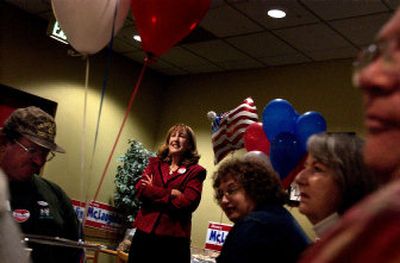
Northwest Spokane voters and first-time candidate Nancy McLaughlin will have to wait a week or more to find out the other name on the general election ballot for the District 3 Council seat.
McLaughlin topped a seven-candidate field in the race to replace Spokane City Councilwoman Cherie Rodgers. But when all votes from the poll sites and the first round of absentees were counted Tuesday, neighborhood activist Judith Gilmore and former Councilman Steve Corker were separated by 12 votes.
“I couldn’t be happier at the moment,” said McLaughlin, the co-owner of a construction firm who attributed her strong showing to an army of volunteers who helped plant signs and knock on doors throughout the district. “I think people are just looking for a change.”
McLaughlin finished the night with about 29 percent of the vote, while Gilmore, a consultant on research and community issues, edged ahead of Corker, a former advertising and public relations executive who teaches at Gonzaga University. At night’s end, both had about 25 percent of the vote, with Gilmore ahead by 12/100ths of a percent.
The No. 2 spot, and the right to advance to the general election, will be decided by absentee ballots that were mailed by Tuesday afternoon but have not yet been received or processed by the county elections office. Ballot counting is usually complete late in the week after the election, and a recount is mandatory if the candidates for a position are separated less than one-half of 1 percent.
“We always figured it would be close,” said Gilmore, who trailed Corker after the first round of absentee ballots were counted, but passed him when the votes from the polls were added in. “We’ll just have to see what we can do, and move forward.”
Corker said he was surprised, but pleased, to be so close to Gilmore for second place, noting he spent far less than the two candidates ahead of him. One possible concern for the remaining mail ballots: both McLaughlin and Gilmore sent campaign mailings to the absentee voters; Corker did not.
“I’ll guess I’ll wait and see what happens,” he said. “But if you don’t think a vote counts, look at our race.”
A wide gulf separated those three from the four other candidates in the seven-way race.
Joyce McNamee, a retired health care worker and real estate agent making her first run for office, had campaigned on her ability to quickly find out how things work and listen to the public.
Keith Springer, a retired airline pilot who said one of the things that prompted him to run was the suggested sale of Joe Albi Stadium, had called for the city to manage its resources more efficiently.
Barbara Lampert, a retired nursing assistant, who has run cheerfully but unsuccessfully for a range of federal, state and local positions in the last 10 years, again came up short.
Daniel Day, a designer for an engineering firm who said city government had gotten out of hand, suggested the city reward citizens who found ways to cut waste.