
Women on top

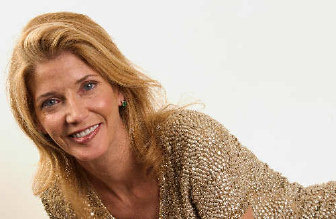
Candace Bushnell has traded in her cosmos for Cristal and swapped the bedroom for the boardroom.
In her new novel, “Lipstick Jungle” (Hyperion, 368 pages, $24.95), the “Sex and the City” author presents the swanky, jet-setting lives of three super-successful, fortysomething New York women at the white-hot peak of their careers.
There’s fashion designer Victory Ford, who heads her own global conglomerate. There’s movie executive Wendy Healy, clawing her way to the top of a Miramax-like corporation. And finally, magazine editor Nico O’Neilly, who is close to becoming the first female CEO of her multinational parent.
Mr. Big? Not here. These women are Ms. Bigs.
“Women with money and women in power are two uncomfortable ideas in our society,” Bushnell says during an interview at what seems a very Carrie Bradshaw location: poolside atop the roof deck of Soho House, a private club and hotel in New York City’s ultrachic Meatpacking District.
“We’re comfortable with movie stars having money,” she says. “We’re comfortable with a woman marrying a rich guy and having money. We’re not so comfortable with a woman independently working in business and making a lot of money.”
Bushnell began crafting “Lipstick Jungle” after watching clumps of professional women share intimacies and lunch at the same swanky Manhattan restaurants that were once the bastions of pinstriped men.
“These are women who’ve been working for 20 years and now they’re becoming really successful in their 40s. They have a different kind of outlook on life, a different spirit,” she says.
At 46, Bushnell is as rail-thin as she was while dancing the night away at Studio 54. She wears white trousers and a beaded tank top that likely cost the price of a tank. Her hair is straight and her wide-set eyes lend her an unusual beauty.
Her latest characters are certainly not the man-obsessed foursome we fell in love with in the pages of “Sex and the City.” They’re all grown up, hungry for success – and don’t need any man. Hear them roar.
Of course, this being Bushnell, there’s still plenty of glitz. Her characters wear Jimmy Choo slingbacks and Baume & Mercier diamond watches, they use black American Express cards and go cigarette boating in the Bahamas.
Two of the trio are married with kids, though one has a steamy affair with an underwear model and the other’s union is a lackluster affair. The sole single character is being wooed – poorly – by a Ron Perelman-like billionaire.
Vogue contributing editor Joan Juliet Buck is among the admirers of Bushnell’s book. “She’s really clever and subversive,” Buck says. “It’s very difficult to describe glittery people, and she does it very well.”
Bushnell uses her characters to plumb familiar ground – female bonding and sex, of course – but also some new territory: How do women act at the top? Do women have to sacrifice their careers for home life? Should they?
“I think what I’m really trying to say is people should do what works best for them and shouldn’t be constrained by gender,” she says. “If there are women who want to go out and work and be the breadwinner, that’s great.”
Women don’t need men to provide “self-esteem, self worth, a sense of purpose,” she adds. “If I were a man, and a woman was looking at me for those things, it’s too much pressure! No wonder men freak out.”
Bushnell grew up in a middle-class Connecticut family, arriving in New York in 1978 as a waitress, aspiring actress and freelancer. Despite her interest in glitz, she isn’t obsessed with wealth. She drives a PT Cruiser, not the Mercedes S600 sedan driven by one of her characters.
“There’s a real practical New England side to me. I hate the idea of buying something that’s really expensive and then it loses 50 percent of its value as soon as you drive it off the lot,” Bushnell says.
“That perspective comes from not having any money for so long,” she explains. “One year I made $10,000, and I think I was 33. That was just horrifying – to be 33 and people are looking at you like you’re such a loser.
“Having money isn’t the answer, but it makes your life a hell of a lot nicer.”
By the mid-90s, Bushnell started writing her New York Observer column called “Sex and the City,” drawing on her considerable knowledge as a young woman in the single scene. The columns became a book, and the book became a TV phenomenon.
Bushnell penned two other best-selling books – “Four Blondes” and “Trading Up” – and married New York City Ballet principal dancer Charles Askegard (brother of Dodie Askegard, artistic director of Theatre Ballet of Spokane) on July 4, 2002, after a seven-week romance.
Once a fixture on the New York social scene, she doesn’t party much these days, finding the nightlife a little too corporate. She laughs that even though her phone rings, she can’t always answer it: Her sleek, handheld PDA/phone device leaves her flummoxed.
While Carrie Bradshaw was her alter-ego years ago, Bushnell’s latest book offers a clue of the author today – a woman less interested in the gender wars and more concerned with women taking their place in the world.
And what about her book’s go-for-it, seize-the-day attitude?
“I am very much like that,” she says, “but believe me, I’d just as soon sit at home and watch ‘Dr. Phil.’ “