
Spanish version of U.S. anthem drawing fire
WASHINGTON – Oh say can you see – a la luz de la aurora?
The national anthem that once endured the radical transformation administered by Jimi Hendrix’s fuzzed and frantic Stratocaster now faces an artistic dare at least as extreme: translation into Spanish.
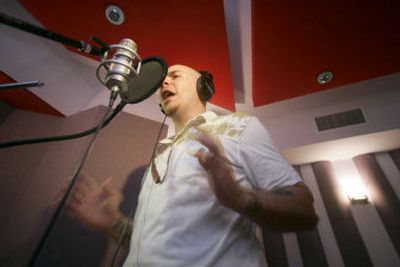
The new take is scheduled to hit the airwaves today. It’s called “Nuestro Himno” – “Our Anthem” – and it was recorded over the past week by Latin pop stars including Ivy Queen, Gloria Trevi, Carlos Ponce, Tito “El Bambino,” Olga Tanon and the group Aventura. Joining and singing in Spanish is Haitian American artist Wyclef Jean.
The different voices contribute lines the way 1985’s “We Are the World” was put together by an ensemble of stars. The national anthem’s familiar melody and structure are preserved, while the rhythms and instrumentation come straight out of Latin pop.
Can “The Star-Spangled Banner,” and the republic for which it stands, survive? Outrage over what’s being called “The Illegal Alien Anthem” is already building in the blogosphere and among conservative commentators.
Timed to debut the week Congress returned to debate immigration reform, with the country riven by the issue, “Nuestro Himno” is intended to be an anthem of solidarity for the movement that has drawn hundreds of thousands of people to march peacefully for immigrant rights in Washington and cities across the country, says Adam Kidron, president of Urban Box Office, the New York-based entertainment company that launched the project.
“It’s the one thing everybody has in common, the aspiration to have a relationship with the United States … and also to express gratitude and patriotism to the United States for providing the opportunity,” says Kidron.
However, the same advance buzz that drew singers to scramble for inclusion in the recording sessions this week in New York, Miami, Texas, Mexico, Puerto Rico and the Dominican Republic has also spurred critics who say rendering the song in Spanish is a rejection of assimilation into the United States.
Even some movement supporters are puzzled by the use of Spanish.
“Even our Spanish media are saying, ‘Why are we doing this, what are you trying to do?’ ” said Pedro Biaggi, the morning host with El Zol, the most popular Hispanic radio station in the Washington area. “It’s not for us to be going around singing the national anthem in Spanish. … We don’t want to impose, we don’t own the place. … We want to be accepted.”
Still, Biaggi says he will play “Nuestro Himno” this morning if the song reaches the station in time. But he will talk about the language issue on the air and solicit listeners’ views. He says he accepts the producers’ explanation that the purpose is to spread the values of the anthem to a wider audience. He adds he will also play a version of “The Star-Spangled Banner” in English.
In the Spanish version, the translation of the first stanza is relatively faithful to the spirit of the original, though Kidron says the producers wanted to avoid references to bombs and rockets. Instead, there is “fierce combat.” The translation of the more obscure second stanza is almost a rewrite, with phrases such as “we are equal, we are brothers.”
“Nuestro Himno” is as fraught with controversial cultural messages as the psychedelic “Banner” Hendrix delivered at the height of the Vietnam War.
Pressed on what he was trying to say with his Woodstock performance in 1969, Hendrix replied (according to biographer Charles Cross), “We’re all Americans. … It was like ‘Go America!’ … We play it the way the air is in America today.”
Now the national anthem is being remade again according to the way the air is in America, and the people behind “Nuestro Himno” say the message once more is: We’re all Americans. It will be the lead track on an album about the immigrant experience called “Somos Americanos,” due for release May 16. One dollar from each sale will go to immigrant rights groups.
But critics including columnist Michelle Malkin, who coined it “The Illegal Alien Anthem” nickname, say the rendition crosses a line that Hendrix never stepped over with his instrumental version. Transforming the musical idiom of “The Star-Spangled Banner” is one thing, argue the skeptics, but translating the words sends the opposite message: We are not Americans.
“I’m really appalled. … We are not a bilingual nation,” said George Taplin, director of the Virginia Chapter of the Minuteman Civil Defense Corps, part of a national countermovement that emphasizes border control and tougher enforcement, and objects to public funding for day-laborer sites.
“When people are talking about becoming a part of this country, they should assimilate to the norm that’s already here,” Taplin said. “What we’re talking about here is a sovereign nation with our ideals and our national identity, and that (anthem) is one of the icons of our nation’s identity. I believe it should be in English as it was penned.”