
Party leaders back Lamont
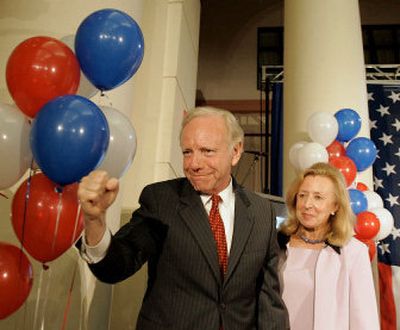
HARTFORD, Conn. – Democratic leaders embraced their new antiwar Senate nominee Ned Lamont on Wednesday, but his defeated rival, Sen. Joseph Lieberman, D-Conn., vowed to wage an independent crusade to save his seat.
At a unity breakfast in Hartford, state party officials, including Sen. Christopher Dodd, D-Conn., who had lined up almost solidly behind Lieberman in Tuesday’s primary, pledged their support for Lamont in the general election campaign.
In Washington, Senate Minority Leader Harry Reid and Sen. Charles Schumer, D-N.Y., chairman of the Democratic Senatorial Campaign Committee, said in a statement Lamont would have the national party’s support. Also laying on hands for Lamont were such powerful party figures as former President Bill Clinton, Sens. Hillary Rodham Clinton, N.Y., and Edward Kennedy, Mass., and House Minority Leader Nancy Pelosi.
In background conversations, Democratic officials gently signaled their desire that Lieberman abandon his independent candidacy but appeared reluctant to press him publicly. A senior Democratic official in Washington said leaders had met and decided to put off confronting Lieberman at least for a few days, to allow the senator time to absorb the implications of his loss and his new isolation from longtime colleagues and supporters. “There’s a feeling that the dust needs to settle,” the official said.
Lieberman, on the national ticket as Democratic vice presidential nominee six years ago, appeared committed to turning the general election into a contentious rerun of the primary. He said it would be “irresponsible and inconsistent with my principles” to step aside from the fall race. He also announced that he was shaking up his entire campaign staff, accepting the resignations of his entire team.
Meanwhile, Republicans showed their determination to try to exploit the results of Tuesday’s primary in the November elections by claiming that Democrats have been captured by the antiwar left. Vice President Cheney, in a call initiated by his office to wire service reporters, claimed Lieberman had been purged by a party ready to “retreat behind our oceans.”
Lieberman’s campaign also confirmed an ABC News report that White House deputy chief of staff Karl Rove had called the senator Tuesday night, but denied that the president’s top political adviser had offered help and support in the fall. “We would not have been interested, regardless,” said Dan Gerstein, Lieberman’s campaign communications director.
Lamont defeated Lieberman on Tuesday by 52 percent to 48 percent after a campaign in which Lieberman’s support for the war and what his critics said was a too-cozy relationship with the president were the dominant issues. When he announced his candidacy earlier this year, Lamont was a lonely figure in the party, enjoying the backing of so-called Net-roots activists and bloggers but little else. His campaign tapped into grass-roots antiwar, anti-Bush sentiment in the state and the race became a national symbol of the debate over the war.
Many Democrats see former President Clinton, who campaigned for Lieberman but now supports Lamont, or Dodd as a likely emissaries to make the case to Lieberman to halt his independent candidacy.
Speaking briefly at the Democratic rally Wednesday morning, Lamont laid out the three main issues of his campaign: bringing the troops home, expanding health coverage and improving education.