
Shining a light on Big Easy
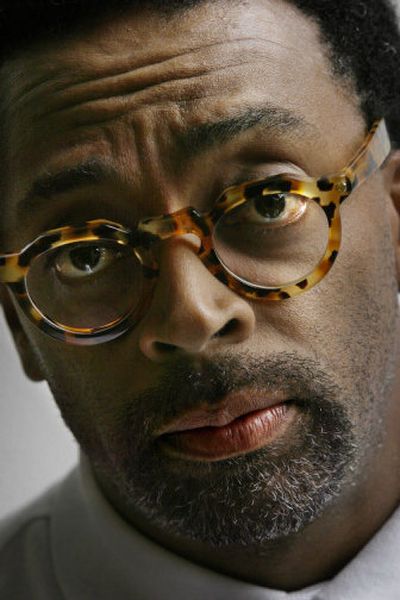

Spike Lee is not hiding his anger about New Orleans’ devastation by levee breaks following Hurricane Katrina and the government’s slow response to save lives.
And he hopes his new documentary on the subject will bring attention back to the region, where it’s needed.
“People are still in dire straits. We want to put the focus back here,” Lee said at a news conference in New Orleans last week.
“When the Levees Broke: A Requiem in Four Acts” premiered with a special screening Wednesday night at the New Orleans Arena, and will air in two two-hour segments Monday and Tuesday night on HBO.
It also will be shown in its entirety on the pay-cable channel Aug. 29, the one-year anniversary of Katrina’s landfall.
Several in Wednesday night’s audience wiped away tears as one man described his mother’s death in her wheelchair outside the convention center.
Former New Orleans resident Gerry Carter, who now lives in Baton Rouge, had to take a break midway through the screening.
“The dead bodies, that was hard to see,” she said, her eyes red and swollen. “And to see the children, what they must have felt being separated from their parents, their families.”
Though graphic, Lee says the documentary successfully captures the spirit of New Orleans through individuals sharing their stories. It contains actual footage supplemented by interviews, though at least one scene, a jazz funeral procession, was staged.
Lee interviewed more than 100 people, including Louisiana Gov. Kathleen Blanco, Mayor Ray Nagin and a host of musicians and other New Orleans residents.
Among them was Gralen B. Banks, who was working security detail at the Hyatt Regency when Katrina hit. Banks was laid off in June and is living in a federally issued trailer while renovating his New Orleans home.
Despite the hardships of the last year, Banks says he intends to stay in New Orleans.
“I just don’t fit nowhere else,” he said. “I just don’t.”
Lee has received criticism by some who got an early look at the film for not including more representation from Mississippi Gulf Coast residents and New Orleans’ white population.
He insists there is diversity in the documentary, but “because of the historical significance … we chose to focus here. That was my vision. I wanted to concentrate on New Orleans.”
In New Orleans, much of the city’s poor black population did not evacuate ahead of the storm and had to be rescued later.
Lee describes the levee failures and the delays in rescue operations as “a criminal act.”
“The devastation here was not brought on solely by Mother Nature,” he says. “People in charge were not doing their job.”
The documentary even includes theories about an intentional bombing of the levees, but Lee stops short of saying he believes them.
“I don’t know if it happened,” he said. “All I know is, I talked to the people who were there, and they said they heard what sounded like an explosion, something blew up.”
“When The Levees Broke” marks a career milestone for Lee, 49. Twenty years ago this month, his first feature film, “She’s Gotta Have It,” hit theaters to instant praise from critics.
Since then, he has released an average of one film every year, including this year’s “Inside Man,” his most profitable with $185 million in global sales.
Lee says “Levees” was originally going to be about two hours in length. Even at four hours, he says, “It’s incomplete. You can’t tell a story like this in four hours.”
He says he’s considering a follow-up documentary, perhaps focusing on how New Orleans’ black middle class has been gutted and what that may mean to the city.
For now, he’s spending little time pondering his 20-year milestone.
“What I’m trying to do is just get better,” he said. “Become a better storyteller. That’s what I do.”