
Spiders are creepy but vital
We got a few questions about spiders this week – I’m trying to answer them in this column.
Please tell me about spider spray. My neighbor had the 4-foot wide weedy area between our two garages sprayed this spring, and this year I have none of the hundreds of butterflies on my buddleia that we enjoyed so much last year. I’m suspicious. I have always considered spiders beneficial in controlling garden pests. Why do people spray for them?
Christy Bristow
I would like to know if you have a solution to the elimination or reduction of spider webs in the gardens and on hedges. I sweep them off in the mornings but they have reappeared by the next morning. Any ideas?
Bob Whitehead
Spiders are an integral part of the ecology of the garden and where they may give some of us the creeps, they mostly work hard to our benefit.
Spiders are highly effective predators to a number of what gardeners consider good and bad insects. To do their job, many spiders make webs in likely spots to catch a meal. Their webs are engineering marvels that can withstand a great deal of abuse.
Please consider this before you bring out the bug spray: Finding a number of webs in the garden is a good indicator that there are plenty of bugs to eat and that the garden is a healthy, vibrant ecological system – the very best you can do is to leave them be and celebrate what they signify.
When we spray for spiders outside or knock their webs down, we disrupt this food chain in subtle ways that we as gardeners probably don’t realize.
We will never know that the spiders warded off an invasion of a particularly bad insect because the spiders ate them for us. We may not know that the birds we enjoy watching are there because there was an abundance of insects, including spiders to eat. It goes on and on. Humans are the junior partner in all this.
The thing about insect sprays is that they usually kill more than one insect and their larvae. So that might be the reason for the reduction in the number of butterflies on the buddleia. Since I don’t know what was sprayed, I can’t tell you which other bugs might have been affected.
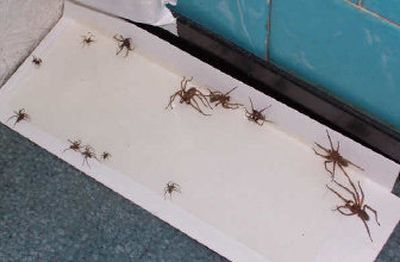
While we are on the topic of spiders, it’s mating season for the hobo spider and the males are beginning to wander. These large, brown spiders may seem aggressive, but when they run around the house they are really trying to hide from us. They come into houses through small cracks in walls, foundations and doors, and if they are really provoked, they can bite. They are often mistaken for brown recluse spiders which do not occur here.
Using sprays and foggers indoors doesn’t work well because the spiders hide in tight places that the fumes don’t get to. Once the fumes are gone, the spiders will come back out.
Instead, if you find yourself with a large indoor spider problem, set out a number of sticky traps along the baseboards especially in the basement. The spiders get stuck on the trap as they run around. I have had traps catch upward of 30 spiders each in a fall and winter season in my basement.