
Birds will entertain for food
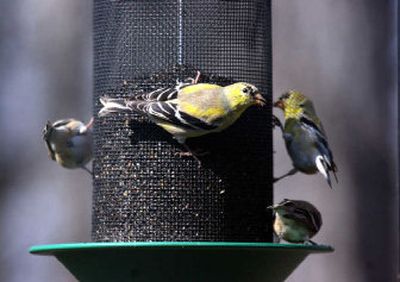
The morning we got our first dusting of snow, I was greeted with the raucous chattering of birds looking for breakfast in an empty feeder.
Winter bird feeding can be a lot of fun and easy to do. You are in the company of an estimated 65 to 70 million urban and rural Americans who feed birds. “Watching birds is much cheaper than a psychiatrist,” says Sherry Little of Wild Birds West. “They give you back 10 times what you give them.”
What birds eat
Birds are picky and are very adept at choosing seed with the highest energy content. If they don’t, they won’t survive
Black oil sunflower seeds are the most popular choice of chickadees, finches, grosbeaks, nuthatches, pine siskins, and titmice, California quail, doves, jays and woodpeckers. The seed is very high in the needed oils and protein that allow the birds to keep warm and has a shell that is easy to crack.
Niger thistle (not related to our noxious weed thistle) attracts goldfinches, pine siskins, dark-eyed juncos, chickadees, purple finches and sparrows.
Cracked Corn draws jays, California quail, juncos, doves and pheasants.
Millet draws doves, cowbirds, sparrows, juncos, towhees and Milo attracts doves and jays.
Summer insect-eating birds like woodpeckers, flickers, nuthatches and chickadees are drawn to suet cakes, peanut butter and even fresh fruit.
Don’t buy the cheap seed mixes. The birds know what they like and will kick the stuff they don’t like out of the feeder. Experiment to see what your birds like the best, and then buy accordingly.
Feeders
Tube feeders made of tough, clear plastic or polycarbonate and fitted with a rain shield are ideal for smaller birds like goldfinches, chickadees and nuthatches that eat thistle and sunflower chips.
Covered tray or platform feeders set on posts are best for larger birds like juncos, sparrows, towhees, quail and doves. The cover keeps rain and snow off the feed.
Suet cakes and peanut butter mixes packed in wire baskets or tea light-sized holes cut in wood for flickers, woodpeckers, nuthatches and chickadees. Secure the holder well to prevent marauders from stealing the food.
Clean feeders regularly with a brush and a 10 percent bleach solution to destroy disease pathogens. Little recommends using hulled seed in feeders to reduce debris on the ground. “I am much more a fan of keeping the ground free of seed (debris) to reduce the chance of disease,” she said.
Shelter and water
Place feeders near dense shrubs and small trees especially evergreens so that the birds can quickly escape if a hawk or a cat comes calling or have a sheltered night roosting place. Trim up the bushes so that a cat can’t sneak up on an unsuspecting bird.
Birds need an unfrozen water source to drink and to clean their feathers regularly to maintain their insulating ability. There are a number of heaters for bird baths available on the market to do this. “We don’t get enough sun to make the ‘solar’ ones work here,” says Little. Make sure any water source has gently sloping edges so the birds can wade in and out.