
Training has Olympic role
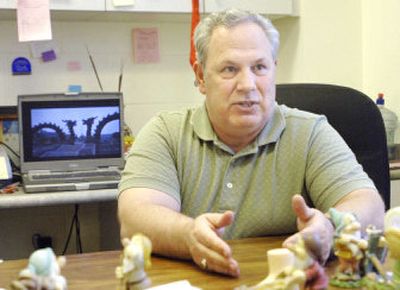
IDAHO FALLS – They might be competing with Americans at the 2008 Olympics, but physical therapist Jay Ellis has no reservations about teaching athletes and coaches in China how to keep their bodies in the best possible shape.
“If you’re going to be the best, you have to compete against other people who are the best,” he said. “If the best the other team has got is injured, you can’t prove you’re the best.”
Ellis, owner of Ellis Physical Therapy in Idaho Falls, has been to China twice this year to evaluate Olympic athletes and help correct training regimens that might be doing more harm than good. He will be going back at the end of January to work at the training center the Chinese government has set up in Guanzhou, a city of 11 million up the Pearl River from Hong Kong.
The job came out of a trip he took to China in September 2005 with Gerry Cook, president of Pneumex Co., an exercise and physical therapy equipment manufacturer based in Sandpoint.
Ellis lectured at five hospitals in five days about the Fitness and Sports Training program, and it was at one of the lectures that he met the Chinese team’s track-and-field coach.
The coach and his trainers brought athletes to be evaluated on the stretching machines the Americans had brought and discovered they could be doing better with “core strength,” something Ellis emphasizes a lot.
“They decided they needed a physical therapist and strength coach at their training center,” he said. “They would have me over all the time, but I’ve got a business to run.”
Ellis has an extra advantage in that he speaks Mandarin Chinese, which he learned years ago when he went on a mission to Taiwan for The Church of Jesus Christ of Latter-day Saints. He calls his ability “conversational,” adding that he needs a translator when they start talking about physiology.
Doctors in China are almost unanimously eager to learn how to keep athletes healthier, but coaches are a more mixed lot.
“Some of them are pushing them too hard,” he said. “It might be all they know.”
This is where diplomacy and tact are important.
“It’s a little like losing face telling them they’re doing something wrong,” he said. “You have to do it properly by praising them and complimenting them, then telling them how you can help make things even better.”
There is a profound difference between American and Chinese athletes, Ellis said.
“Our athletes, they perform because they love the sport, which is why we get such good results,” Ellis said. “The Chinese are sponsored from a young age by the government, and it’s a job.”
This is not to say the Chinese athletes don’t love what they’re doing, he said, but there is a difference in how the two cultures operate.
“In the U.S., our philosophy is, ‘What’s good for me? What’s best for my family?’ We strive to improve ourselves and our families, and if we can find a better job, we move on.”
In China, people are more focused on what’s best for the group, he said.
Still, considering the differences, it’s remarkable how alike American and Chinese athletes are, he said. They’re friendly, talkative and curious about America.
“Some of the (Chinese) kids, any American coach would love to have them on their team,” he said.
Ellis has all his expenses paid and receives a modest sum for his work – “the Chinese are very good negotiators,” he said – but money isn’t the point of what he’s doing.
“I’m looking for injuries and disabilities and to keep them safe,” he said. “I would almost do it for free.”