
Index recovers in Thailand
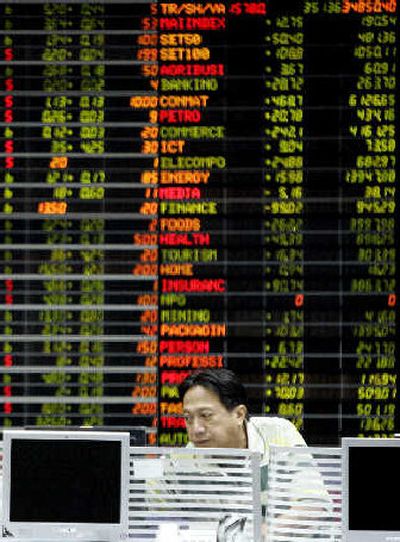
BANGKOK, Thailand – “The 820 Billion Baht Blunder.”
The headline in Bangkok’s The Nation newspaper on Wednesday reflected the damage wrought as investors fled the southeast Asian nation’s market on Tuesday after its military government imposed restrictions on foreign investment.
By the end of the day, the government partially lifted those restrictions – aimed at slowing the appreciation of the local currency against the dollar – but not before the benchmark Stock Exchange of Thailand’s SET index shed 15 percent of its value, or $22.9 billion, equal to 820 billion baht. It was its worst plunge ever.
Money wasn’t the only thing lost, analysts said. Even though stocks recovered some from their historic fall – the SET index rose 11.2 percent Wednesday – some of the confidence that foreign investors and others had in Thailand’s new, military government may have waned. And the sharp, sudden shock was a painful reminder that investing in emerging markets has its risks.
“It definitely hurts Thailand’s standing with the international investor community,” said Marco Sucharitkul, president of JP Morgan Securities (Thailand). “Foreign investors will remain wary of Thai monetary and economic policies for the next few months. It does not help that the government was appointed by military coup makers.”
Thailand’s leaders are still attempting to repair the country’s bruised image following a Sept. 19 military coup that ousted democratically elected Prime Minister Thaksin Shinawatra, who was widely criticized for corruption and abuse of power.
Domestically, the generals and the civilian government officials they appointed must still offer positive proof that they can tackle an array of pressing issues. These include rooting out endemic corruption, suppressing a bloody Muslim insurgency and restoring democratic rule by a promised deadline of October next year.
“It was really a big mistake on the part of authorities. It was a policy error. With the interim government, people are wondering what will happen,” said Hak bin Chua, economist at Citigroup in Singapore, of the decision to stem foreign capital inflows.
Government spokesman Yongyuth Maiyalarb said the impact on Thailand’s image will be short-lasting and the move was necessary to counter the baht’s strength.
He said that the coup leaders were not involved since they are only in charge of security affairs.
“There were some panic at first. Today, the market is not in the red as it was yesterday. Serious investors understand the situation better,” the government spokesman said. He said there would be no cabinet reshuffle in the wake of the market turmoil.